Whose Afraid of Artificial Intelligence?

Whose Afraid of Artificial Intelligence?

Well, there is certainly a lot of flap about artificial intelligence these days. The fear-ray has been activated as the prospect of robots taking every job in every sector of the economy becomes pretty much a sure thing. At first I thought, “what about pizza?”, but no, I suppose a robot could punch dough, flip it in the air, and shove it in the oven. Actually, you know, I can’t flip a pizza worth a darn, so is that danger or progress? Hard to say.

But what really got my tail feathers in a knot was this idea that humans have a monopoly on intelligence. I’m not going down the rabbit hole in suggesting that animals, I guess like rabbits, have intelligence, because, of course, they must, or they’d be sitting on the lawn somewhere saying “Dum De Dum” while coyotes tossed them in the air like, well, pizzas. No, I’m talking about the tools that have always been around, and by always around, I mean, who knows where they came from? 

Especially the Magic Eight Ball.

Look, magic is tricky. That’s why I never let my kids play with a Ouija Board. Scares the nostrils off me. They aren’t hard to find. I think Hasbro makes one, which isn’t all that surprising since they also make the GI Joe guys like Cobra Commander and Snake Eyes. They make Twister too, so I guess they know something about the human need to twist on top of people, which isn’t exactly what a Ouija Board does, but which is semi-creepy.

Anyway, the magic eight ball hasn’t grabbed anybody’s soul as far as I know – not like Captain Howdy and the Ouija Board took Linda Blair in The Exorcist. 

As far as I know  

… but, really … How WOULD I know? 

There could be kids upchucking sulfur clouds all over the world, and I wouldn’t know. Stop to think about it, kids are looking pretty strange these days… you know, kind of grubby and spaced out. 

Vaping? Tik Tok? Probably not the eight ball.

The thing is, I have figured out that the ball can only answer yes or no questions, which simplifies the process and explains why when I asked, “Where is Love Island?”, the answer was “Reply hazy, try again”. But chuck it any number of questions it can answer, and the future arrives the slosh of a twist.

Will I live to be 90?

“Don’t count on it.”

OK, will I live to be 80?

“Outlook not so good.”

Fine, 70?

“My sources say no.”

60?

“Better not tell you now.”

My hands are sweating, and I put down the buttered Twinkie I usually have for breakfast and consider my options. Either the ball is full of crap, and it won’t matter what I do, OR … the ball is right, and it won’t matter what I do.

I’m writing with my mouth full and ordering my Ouija board from Amazon.

The Rancid Panda

The Rancid Panda

Feckless. That’s one of a number of words describing my character in my final year as an undergraduate at a fine institution chock full of feck. I assume I was admitted as the college’s ability to meet payroll had become problematic and retained for the same reason. There hadn’t been much feck around during my primary and secondary years, but the feck factor slid to zero somewhere in the fall of 1964. Nevertheless, against all reasonable laws of man and God, I stumbled toward graduation some number of years later without the slightest hint of preparation for a life outside a cosseting institution. 

Allowance. Another word that characterized the length of rope from which I hung until I bid my college years a dazed farewell. I had been allowed to wallow in a life of ease provided by others and had been able to pay for the sundries I felt necessary (Dunhill cigarettes and Marvel comics) because I was sent a monthly allowance which lasted a week.

The which is to say, the specter of employment haunted the final days of my youthful cavorting. The title of this piece refers to my best stab at writing advertising copy for an eminent midwestern ad agency. I liked the idea of wearing a gray flannel suit tailored at Brooks Brothers so I completed an application which included the task of coming up with names for a number of products and enterprises, including an upscale restaurant in Chicago.

I was not familiar with Chicago, but I had heard that the city boasted a number of ethnicities and highly regarded ethnic restaurants. My first stabs at summoning Italian and Greek cuisine were unfortunate; I spent the day searching for an evocative title for a classy Chinese restaurant in the heart of the city.

And here’s where the problem resides …

The name, “The Rancid Panda”, arrived with full force at noon, driving out every other possibility and convincing me that my brain was allergic to sensibility. Today I like to characterize myself as whimsical; the truth is that I’m moderately insensible for much of the day and increasingly goofy when asked to generate original material. Others refer to “writer’s block”, the condition in which words simply fail to appear. I suffer from “writer’s monsoon”; the words arrive with the urgency of a hurricane and flood the levees of reason and graceful discourse. Remember the apocryphal Dutch boy with his finger stuck in the dike? My writing hours are spent in plugging and replugging gaps in congruity. I’ve written elsewhere of the wrath with which a football player received the Biology essay assigned him and passed on to me for typing well after midnight. I consider “The Mating Habits of the Bering Seal” among my best work; apparently, however,  Professor Burns was not amused by my description of the languid twitch of flipper by which a randy seal invites reproductive congress.

Whimsical? The hulking football lineman thought not.

I did not finish the ad agency’s application; I never bought the gray flannel suit. In my feckless fashion, I applied for a job as a teacher of Psychology in a boarding school. I hadn’t majored in Psychology. I took one course, “Complex Learned Behavior in Insects”, in which I presented an essay on “The Waggle Dance of Honeybees”, a topic begging for whimsical pseudo-behavioral blather. Once again, I suspect I was hired because there were no other applicants, the job included living in a dormitory with teenage young men with dubious impulse control, and coaching soccer, a sport I had played with the same level of seriousness I gave to any enterprise.

I became a teacher by default. 

Hapless is not a word that describes that career. 

The world was filled with hap when I found myself in a classroom. Was I goofy on occasion? Yup, and we all survived. I retired after almost 50 years of teaching with my head held high, and when asked where I wanted to have my celebratory retirement dinner, what did I suggest?

You got it. The Rancid Panda.

Top Shelf Memory’s Closet

Top Shelf Memory’s Closet

We three bums from Joe’s sloppy bar

Tried to smoke a rubber cigar

It was loaded and exploded

All over Joe’s sloppy bar

I must have been ten, maybe eleven, when I heard that refrain for the first time. Every element at work in that composition impressed me then and impresses me now. Like the best of doggerel, it has no provenance, no author. It arrived intact and flawless on a bus trip to a fish hatchery, performed by kids a year older than I; it scans perfectly as few parodies do. Ianesco and Beckett’s tributes to absurdity may have been more polished, perhaps, but the forceful rhyming of “Joe’s sloppy bar” with “Joe’s sloppy bar” is genius. And Joe’s Bar? Must have been a million of them. Joe’s Sloppy Bar? What a concept. With a word, I imagined puddles of spilled beer on tables, filthy rags used to smear the glasses, the steady drip of an untended tap as a corroded barrel emptied itself on a floor of mucilage. The coup de grace for me came in self-identifying as one of three bums dumb enough to try to smoke a cigar made of rubber, an idiotic premise made more unlikely by the packing of the rubber stogie with explosives of some strength.

Like the most profound expressions, there is no explanation, no further action. Bums, explosives, tattered rubber smokes, sit forever in the sloppy bar, static, unchanging.

Perfect.

There are relatively few experiences that have a place on the top shelf in memory’s closet. Most are the sorts of ordinary and miraculous events that define the course of a lifetime, but a few are random moments of awareness and appreciation. Beethoven’s Ode to Joy is right up there, and Frank Lloyd Wright’s prairie houses, and Ball of Fire, a comedy starring Gary Cooper and Barbara Stanwick, but featuring an all-star collection of character actors whose mannerisms and voices still bring unvarnished delight. These are names to conjure with – S.Z. “Cuddles” Sakall, Oscar Holmoka, Henry Travers, Leonard Kinskey, Allen Jenkins, Charles Lane, and Elisha Cook, Jr., the actor most likely to be killed within the first fifteen minutes of his appearance on screen. Astaire and Rogers. Cary Grant and Katherine Hepburn. Willie Mays, Ichiro Suzuki, Sandy Koufax. 

I’ve written about visiting the Field of Dreams with my son, but dreams and fields seem to pop up everywhere I look.

For reasons that escape me, I spent a summer trying to peddle encyclopedias from door to door in Wisconsin, Illinois, and Iowa. One August evening, I drove through Beloit, Wisconsin, a small city due north of Roscoe, Illinois. I don’t know that there is a word or phrase that describes the last moments of twilight, when the metal halide lights bark into white/yellow stripes above a freshly mowed small town baseball field. Players cast exaggerated shadows and the smell of popcorn and hot dogs seeps from the cook tent or bunker behind the backstop. I pulled over, sat on the hood of my car, and watched an entire game as Beloit slipped into darkness.

I never found out who was playing. Didn’t matter. 

About the encyclopedias: I am relieved to say that I never sold a set. I did my time in the encyclopedia sales school in Madison, an unpaid week in which I had to memorize the pitch for Collier’s encyclopedias word for word. The professional encyclopedia hawkers left no room for freestyling in casting Colliers’ net. I’ve forgotten the exact patter used to propel us from the stoop into the living room, but the gist of it was that the lucky inhabitant had been selected to win a set of encyclopedias ABSOLUTELY FREE! That’s right. A complete set of 23 volumes (QRS, TUV, and XYZ were combined in three) was theirs for the taking. All they had to do was agree to purchase the annual supplements … FOREVER. Should the fortunate family not rise to the bait, we were to compare the cost of the supplements on a daily basis to the cost of milk, and who … we were to ask … who would deny their children milk? 

I got to that point in the sales pitch once, in Iowa, and realized that the people foolish enough to have allowed me into their home, might actually lock themselves into perpetual indenture to Colliers. I closed my sample case and scuttled into the darkness of an Iowa night.

Not selling encyclopedias was not an Ode to Joy/Field of Dreams alive in my memory experience. Please. What it was, however, was the reason I lived in a borrowed apartment, foraging for cans of soup and vanilla icing left in the storage cellar; I was flat broke and spinning my wheels until I could return to a college dorm and the college meal plan. Madison, Wisconsin was one of the centers of student unrest and a swinging hot spot when the sun went down. Student bars roasted bratwurst and served up dollar pitchers of beer as coeds flaunted their imperviability to the rhythm of two lyrically disappointing hits – 96 Tears and The Last Train to Clarksville. 

No brats or beer for me. No coeds either, but that’s … a story for another day.

Inexplicably, what I did have was a ticket to a concert on July 8, 1967. The apartment in which I was roosting was on University Avenue just south of the School of Agriculture and a block from the Association of Women in Agriculture; the concert was at the Dane County Coliseum, about eight miles away. I can’t remember how I had the ticket or how I got to the coliseum, but I can pretty much recall the set list for the three acts improbably touring together that summer.

The headliner was Frank Sinatra who had traded the company of the Rat Pack on tour for Sergio Mendez & Brasil ‘66 and The Buddy Rich Band. Brasil ‘66 opened, played a full and magical set (Mas Que Nada, One Note Samba, Going Out of My Head). Sinatra had recorded with Antonio Carlos Jobim; Brasil ‘66 was a tip of the hat to younger Sinatra fans. Sinatra also performed with The Buddy Rich Band, the group that had just put out the remarkable Big Swing Face album. The band played a set on their own, upbeat swing versions of Love For Sale, Mexicali Rose, and, uh, Norwegian Wood. Rich was a remarkable drummer and his band was formidable. They stayed on stage after their set, and the lights dimmed … drum  roll please … and Sinatra stepped into the spotlight. 

Frank Sinatra’s career was not quite at its peak when he landed at the Dane County Coliseum. He’d sent audiences swooning in the 1940’s, emerged as an actor and Jazz singer in the 50’s, and had pretty much recorded all of what we now call The American Songbook, evolving into his persona as “Chairman of the Board”, head of the Vegas Rat Pack, chief advocate of the late ‘50s jet-set ring-a-ding hedonism. He’d just been bounced from Vegas by Howard Hughes, still recording hits, but shifting quickly to catch the wave of current popular music. Witness the appalling duet with his daughter, “Something Stupid”. 

But on that night, in that sold-out arena, he was magical. Sinatra purists celebrate the extraordinary phrasing with which Sinatra animated even the most familiar of tunes. I can’t imagine how dispiriting a tour of midwestern arenas might be, but Sinatra SOLD every song he took on, singing for more than an hour.

Other concert experiences have not made the top shelf in memory’s closet. Well, to be honest the Chuck Berry concert in Springfield, MA was grotesque enough to continue to trouble my dreams, but Brasil ‘66, Buddy Rich, and Sinatra, on one stage, on one night was perfect.

And, I must have been able to get back to the apartment in time for a post-concert snack of Vanilla icing.  

Something For Everyone – A Christmas Sampler

Something For Everyone – A Christmas Sampler

There’s no accounting for taste, particularly my taste in holiday movies, but as Haruki Murakami so aptly observed, “Whether you take the doughnut hole as a blank space or as an entity unto itself is a purely metaphysical question and does not change the taste of the doughnut one bit.” The object here is to dunk a few speculative doughnuts in the holiday punch and see if any stand up to closer examination.

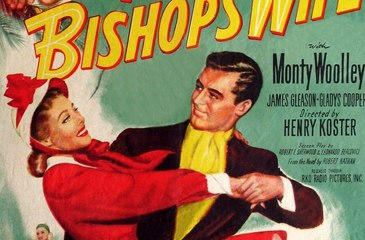
The Bishop’s Wife

The slate of long-treasured Christmas classics is rife with sentimental favorites. I haven’t missed screening White Christmas since 1958. Almost entirely overlooked, however, is 1947’s The Bishop’s Wife, remade somewhat clumsily in 1996 as The Preacher’s Wife with virtually the same plot but less charm.

The set-up is simple: Carey Grant is a dashing and urbane angel whose mission has something to do with assisting a frustrated cleric, a bishop played by David Niven, an actor whose career was primarily in playing dashing and urbane, somewhat under-energized, British toffs. From the start, however, it’s clear that the angel has a far more powerful effect on Loretta Young, the bishop’s neglected spouse, a sad beauty brought to vivacious animation by the attention given her by the dapper angel. Annually overlooked in the schlockfest that begins with My Little Pony:Winter Wishday, The Bishop’s Wife is a reminder of the nuanced emotional charge the studios’ in-house screenwriting teams could bring to any sort of material. Grant’s performance as Dudley, an angel with a cleft chin and great suits, is complicated, combining heavenly serenity with a hint of self-satisfied seduction. The only critical piece I’ve seen on the film goes right to the real question: Is this angel a player?   

“ … the script touches on all the wholesome tropes of the Christmas movie without dipping too deeply into schmaltz. Dudley helps locals ice skate. He magically redecorates a Christmas tree. But, as was often the case with films made during the era of the production code, there are hints of something more dangerous beneath the surface. What exactly are Dudley’s intentions towards the Bishop’s Wife? The polished Cary Grant persona never entirely concealed the promise of nocturnal transportation.”

“Nocturnal transportation” is a phrase rarely used in scriptwriting these days, but I suppose one’s imagination may occasionally wander into unseemly thoughts as Loretta is in semi-swoon, but no matrimonial harm is done, and the angel’s work with the bishop is clear by the end. No “nocturnal transportation” in this elegant Christmas tale.

Surviving Christmas

Routinely included in the pantheon of worst Christmas movies, Surviving Christmas is frequently cited as the nadir of Ben Affleck’s acting career. Panned in the New York Times, the reviewer noted that the film, “found a clever way to use Ben Affleck’s disagreeable qualities. The actor’s shark-like grin, cocky petulance and bullying frat-boy swagger befit his character.”

No argument from me on that score; despite the rancor with which the film was reviewed, however, Affleck and a tone perfect supporting cast prove that in some instances, when it comes to disagreeability, more is more. Relentlessly annoying, Affleck sells his self-obsessed hedonism with true commitment. He’s alone and petulant, cocky and wealthy enough to rent the family living in his childhood home. Yes, he bullies James Gandolfini, essentially a grumpy Tony Soprano with a pitch perfect deadpan sense of humor. Less dangerous than Tony, certainly, somewhat sweeter, in this role, Gandolfini practices the same simple expedience when threatened, first meeting Affleck when knocking him to the ground with a snow shovel. Affleck’s rented mother, Catherine O’Hara, delivers biting commentary on her wretched with weary understatement, and no critic could have held Affleck in greater contempt than the sister who refuses to be rented, played with acerbic charm by Christina Applegate. 

The film’s gentle resolution includes a generally happy ending, transformation of character, and a series of jokes about incest. Jolly holiday fare? In its own way, sure. Knuckle gnawing awkwardness? A Christmas bonus!

Kiss Kiss Bang Bang

Had enough holiday treacle? Looking for a little grit in the Christmas punch? We’ve seen  Die Hard creep into the Christmas pantheon when we weren’t looking, popping up as a widely celebrated “holiday” fable despite its tangential attachment to Christmas. There are other eminently watchable films that have at least a scene or two set at Christmastime but are not truly in the holiday film category: Little Women, Trading Places, Bridget Jones’ Diary, Meet Me in St. Louis, Gremlins, While You Were Sleeping, Carol, The Holiday, The Family Stone, and Love Actually, the most Christmas-centric of the bunch. If you’ve heard that Bruce Willis Yipee-Ki-Yay once too often, you might enjoy an infrequently screened oddity with a quasi-holiday setting which makes Die Hard look positively cozy. I cannot begin to describe the plot of Kiss Kiss Bang Bang, featuring Robert Downey, Jr. and Val Kilmer, adapted from the novel Bodies Are Where You Find Them. I think this is the first time I have been forced to post a trailer in the hope of introducing an under-appreciated classic: Enjoy!

Last Chance For Christmas

On the other end of the spectrum, Last Chance for Christmas is a lovely, family friendly, goofy, sappy, feel-good romance set at the North Pole and at a reindeer ranch in Alaska. Unassuming and fun, this one is several cuts above the usual saccharine holiday romantic comedies, a pretty genial polar romp with actual development of character. It’s hard to get past the 750 Days of Christmas popping up in mid-November; Hallmark and Lifetime alone are responsible for several hundred Christmas themed movies.They’re made inexpensively, quickly, and always involve wrapping presents, finding the right tree, and baking cookies. We can almost smell the gingerbread. Every once in a while, however, something unexpectedly affecting escapes the treacle-fest, something deft, clever, even quirky. So, Last Chance – family friendly and smart.

You’ll be able to follow the plot. Prancer’s got a stress fracture in a hind foot. No Prancer, no Christmas; the North Pole is in a tizzy. Behind every successful man there’s a woman, Lifetime suggests, and feckless, befuddled Santa is lucky enough to have a tough and competent better half to whip the slaves elves into shape. She sends the reindeer trainer, a square jawed hunk better with animals than with people, to a beleaguered reindeer ranch in Alaska. Tough time for reindeer ranches too and for the gritty single mom staving off foreclosure. Formulaic, sure, but the kid and the reindeer are winning, and the goof from the North Pole has an awkward “Aw Shucks’ ‘ decency reminiscent of Gary Cooper as Professor Bertram Potts in Ball of Fire. 

Time’s running out; Christmas is almost here. I’ll have to wait until next time to wallow into the quagmire of holiday specials. For the moment, I’ll just suggest that Emmet Otter’s Jug Band Christmas is a Jim Henson gift to treasure.

Ask Your Doctor If This Article Is Right For You

Ask Your Doctor If This Article Is Right For You

Whew! We Got Through It! 

Oh, not the midterms. Not the survival of Democracy, although good news there too.

 No, I’m welcoming the end of the political “advertising” that filled the airwaves from August until Election Day. The ads themselves deserve the calm scrutiny I bring to every cultural phenomenon, but the celebration of their departure is inspired by the return of the extremely important and helpful ads describing the side effects of medications I might be inclined to try, on a whim perhaps.

Serious television viewers who still watch broadcasts sponsored by a peddlers of goods and services, are aware of “The Crawl”, words that race across the bottom of the screen in tiny letters as the ad itself plays at full volume on most of the screen. I assume that legal teams somewhere have determined that while full disclosure of the side effects of medication is required by law, nobody said it has to be on the main stage. 

But who can we trust, really, in this age of competing realities? Airline pilots, the guy holding the harness when we bungee jump, game show hosts? What about doctors, you ask?  Uh, I’m not a doctor, and I don’t play one on television, but I do remember the solemnity with which actual physicians pimped spoke for the tobacco industry. I’m also pretty sure doctors stood with the Sacklers as oxycontin made the country dopesick. 

So, let’s put doctors on hold for the moment and get solid with science. Scientists may be goofy at times and dress badly, but there’s no questioning their dedication to science. For them it’s a sacred trust. And … it’s medicine, right? Scientific stuff. Fully researched and tested on rabbits. Scientific Research – What could possibly go wrong?

Well, leaving aside NASA’s failure to convert from the metric system in building spacecraft, let’s get right into the lab.

Imagine a phalanx of scientists sweating over their test tubes, dashing their failures to the ground as the sound of splintering glass fills the air. Finally one leaps to their feet and shouts, “Eureka! I’ve Got It! A Synthetic Fat Molecule, Zero Grams of Fat and Half the Calories of real fat. Synthetic FAT!!! The lab belonged to Proctor and Gamble, and the discovery shouted from the rooftops was Olestra, a substance arriving just as the company hoped to trot out (poor word choice) Fat-Free snacks. The products which arrived – “Fritos Wow!” “Doritos Wow!” and “Ruffles Wow!” – were eagerly gobbled up until experience and experimentation discovered that Olestra, fat free molecule that it was, turned out to be too large to be absorbed by the intestine; it traveled unencumbered directly to the digestion tract. 

Quickly. I mean, really quickly.

As a result, two phrases entered the advertising world for the first time: “Fecal Urgency” and “Anal Leakage”

Urgency of some sorts is not universally to be feared; leakage isn’t good. 

I can hear the question humming:

“Sure, but can I still buy yummy fat free snacks made with Olestra?” 

You can, and if you hunt rigorously enough, you’ll find it under the brand name Olean. 

“Sold only on the dark web and in Turkish prisons though, right?”

Well, Olean has been banned in Europe, but here in the good old US of A, you can pick up Pringles Light Potato Chips, Doritos Light Snack Chips, Tostitos Light Tortilla Chips, and BakeLean cookies which use Olean instead of margarine.

I’m not sure why televised ads for Light Potato Chips don’t have a crawl advising consumers that over-consumption may bring … well, you know … urgency. Those ads belong to the variety of advertisements directed at the consumer. So are the Pharma ads, the ones replaced by an unnamed political party’s pretty much accusing our local probate judge of vampirism. Televised Pharma ads are specifically directed to the consumer rather than to medical professionals. I’m sure you’d like to know more about the drug reps who market directly to physicians, but, you know, time marches on.

Most of the ads are pretty buoyant; those are my favorites. But even the scary ads have moderately reassuring Hallmark moments. We all remember the understated warning presented by Amgen in touting its drug, Repatha, an injectable medicine used in adults with cardiovascular disease. We’re at a wedding party. The father of the bride, still wearing his bow tie but without the formal jacket, walks by a half eaten carcass, sorry, standing rib roast, resists temptation, is in the act of loading his plate with a leafy salad (as if that would help) when his daughter’s arm gently takes his elbow. He begins to dance, all smiles, but Woah! The screen goes red. The arm on his shoulder is an EMT dragging him from the wedding to emergency surgery … or worse. Shots of the daughter are frozen and in black and white, her arm now empty in a maudlin salute to a father … lost to heart attack. Pretty grim, but in an instant sunlight returns as a smiling dad smart enough to use Repatha joins his daughter in what appears to be a combination of the macarena and chicken dance. Embarrassingly awful, but, you know, Dads? What can you do?

Large white print above the dancers claims a 63% reduction in bad cholesterol and reduction of heart attack risk by 27%. The crawl announces, “In a study, patients not treated with Repatha had more heart attacks (4.3%) compared to those treated with Repatha (3.4%).*

I’ll leave it to the statisticians in my reading audience to explain exactly what that means and whether “a study” is a wide enough range of observation to assure validity of Repatha’s claims. Without suggesting that the drug has notable side-effects, a later tiny caution appears. “Get medical help right away if you experience any of these signs- trouble breathing or swallowing, swelling of the face, lips, tongue, throat, or arms.” I’m always concerned with trouble breathing, but swelling of the ARMS?

Enough real world snark. 

Without further ado, here’s my Mega-Olestra ad filled with soft music and shots of jolly grandparents playing with children, husbands surprising wives with flowers, independent women cheerfully striding through the workplace, and so on. Without naming names and incurring the wrath and legal salvos of Big Pharma, a few of the terms appear in the crawl beneath their inviting world of prescriptive medicine.

A well modulated voice intones,“Ask your doctor if Mega-Olestra is right for you”.

Side effects may cause dizziness, nausea, mild discomfort, pain at the injection site, redness or rash, anal leakage, fecal urgency, death, paralysis, testicular explosion, clammy hands, lycanthropy, intestinal ballooning, death, fear of yellow things, dental necrosis, sensitivity to water, blindness, fungal heart infarction, loss of memory, inability to breathe, and loss of skin.

“Mega-Olestra is not for everyone, but may be just what the doctor orders.”

Fade to soft blue as laughing grandfather pets a fluffy dog chewing on his sleeping wife’s knitting bag.

“We can get through anything together, but … Honey, my arm is swelling.”

Just How Much Can a High School Athlete Make These Days?

Just How Much Can a High School Athlete Make These Days?

Bronny James now has a net worth of 4.6 million dollars. It’ll come in handy, I’m sure, as he is a senior in high school with the expenses any high school student might expect. I haven’t mucked around to see what his younger brother has pulled in, but I have joined the millions of people who have viewed both of LeBron’s children stuffing a basketball into a hoop at the Sierra Canyon’s Midnight Madness Dunk-A-Thon. 

Impressive, but Bronny’s cash comes from the recent (July, 2021) decision on the part of the NCAA (sued into submission) to grant college athletes the right to be compensated for the use of their Name, Image, or Likeness (NIL). There is not world enough and time to reconstruct the myriad idiocies perpetrated  by the NCAA; you may not know, for example, that the NCAA limits the amount of food a university can provide an athlete, or that a college football media guide cannot exceed 208 pages. Do I want to read more than 208 pages about Kentucky basketball? Not much, but, Jeez, who’s counting? The NCAA apparently.

OK, back to basics. College athletes may now be paid for the use of their names and likenesses, and by the commutative property of college sports, recruits are also now free to sign endorsement deals. Just how meaty are these deals? The Detroit Lions’ Josh Paschal’s  has a deal with Steckler Pediatric Dentistry that probably doesn’t bring him financial security, but the 42 million Steph Curry earns for wearing shoes and togs designed by Under Armour is roughly ten million dollars more than he earns playing for Golden State 

Seven states now allow high school athletes to be compensated as is Johnuel (Boogie) Fland, a 6’2” point guard currently attending Archbishop Stepinac High School in White Plans, New York. Fland is currently ranked the 19th most highly sought recruit in the nation. 15 years old, Fland has been signed by Spreadshop, earning a percentage of the income from sale of merchandise and a monthly stipend for posting about  Spreadshop on social media.

 The dunk-a-thon may have helped move Bronny James from the 45th hottest recruit to the 34th, a more than satisfactory  assessment of a high school player’s projected value to a college program, but here’s where NIL and college recruitment bump into some murky territory when the 34th most recruited kid is LeBron James’ son.

Let’s start with that.

You are a college coach. You’ve built a program guided by your style of play. You are Mark Few, we’ll say, at Gonzaga since 1989, head coach since 1999. You’ve moved Gonzaga from relative obscurity to the highest level of college competition. You live and coach in Spokane, Washington. You love your family, fly fishing, and the great outdoors. You’ve cut practice before a big game to make sure you were able to see your son’s church league game. The word your colleagues use to describe you is “balanced”. You aren’t among the top 20 highest paid coaches, but life is good. You’ve recruited players from around the world, talented young players who have developed over three or four years playing for you. You’ve got a strong starting five, returning players, and freshmen and sophomores ready to move up in the next season.

Every coach deals with parents who want their kid to be on the floor. Bronny’s parent is the among the most celebrated and powerful athletes in the world, and not a guy to be taken lightly. To be clear: Wherever he ends up, Bronny James does NOT expect to be on the bench. The moment he signs a National Letter of Intent, the spotlight begins to bake the campus he has chosen. You want hoopla and endless conjecture? You want to be the coach that doesn’t play Bronny James?

There’s another complication absolutely affected by the NIL.

Bronny’s got a deal with Nike and with Beats. The Beats deal doesn’t affect where he plays, but some of the colleges he might consider are not affiliated with Nike. He can’t really go to a college affiliated with another brand. The shoe companies have divvied up college basketball, as a quick trip to two conferences will attest:

The PAC12

Arizona-Nike, Arizona State – Adidas, California – Under Armour, Colorado Under Armour, Oregon – Nike (no surprise), Oregon State – Nike, Stanford – Nike, UCLA Under Armour, USC – Nike, Utah – Under Armour, Washington – Nike, Washington State – Nike

The BIG10

Illinois – Nike, Indiana – Adidas, Iowa – Nike, Maryland – Under Armour, Michigan – Nike, Michigan State – Nike, Minnesota – Nike, Nebraska – Adidas, Northwestern – Under Armour, Ohio State – Nike, Penn State – Nike, Purdue – Nike, Rutgers – Adidas, Wisconsin – Under Armour

Gonzaga is a Nike school, one of three to adopt a protocol recognizing the Workers’ Rights Consortium; that’s the result of hard work by the United Students Against Sweatshops. Still, Bronny and Mark Few? Unlikely.

The Early Division I basketball Letter of Intent Signing Day has already passed. It looks as if Kentucky has scooped up a powerhouse group committed to the Wildcats. Some guess that recruits may admire coach John Caliapari’s  willingness to send players on to the NBA after just one year in Lexington; or, maybe they have an endorsement contract with Nike. In any case, the next deadline is May 17th. Claiming a modicum of perspective, Bronny’s decision is hardly the most important issue facing a world in climate crisis. We may see college basketball players’ uniforms festooned with logos like race cars and Phil Mickelson’s golf shirt, but we’ve survived more odious spectacles than that. 

On the other hand, I really don’t want to see the starting five sporting uniforms touting Steckler Pediatric Dentistry.

Bogota

Bogota

“What ARE you?” 

I was young, maybe 20, hanging out at The Treasure Chest, a vile bar on South Beach in Miami. I was taking a break from ignoring assignments handed out in the course in English Literature at the University of Miami. I’m not sure how it happened that I was in Miami making up the credits I had vaporized in my junior year at Kenyon, but I think I was also “house sitting” and “caring” for the garden while my father and step-mother were in Finland. 

I’ll get back to the “what are you” in a bit, but I pause in reflecting on yet another shabby chapter in a portion of my life that is swampy and indistinct. Some of the artifacts from those years remain, and I can fill in some of the blanks, but sometime after leaving 4th grade in the tiny public school in New Preston, I wonder where I went.

So, some claque squatting at this wretched bar began guessing. Greek? Italian? Filipino? Turkish? Asian? Persian? 

My genetic soup is actually characterized as Anglo-Iberian, pretty much 50/50, although the Anglo features must be recessive as I have what my mother called an “olive” complexion. The olive, I have discovered, is a “drupe” or stone fruit, information that is of no use in characterizing my hue. I’ve researched the pigmentation, however, and find this description –

”Olive skin is a human skin color spectrum. It is often associated with pigmentation in the Type III to Type IV and Type V ranges of the Fitzpatrick scale.It generally refers to light or moderate tan skin, and it is often described as having yellow, green, or golden undertones … Type III pigmentation is frequent among populations from the Mediterranean (i.e. Southern Europe, Western Asia, and Northern Africa) as well as some parts of Latin America and Asia. It ranges from cream to darker olive skin tones. This skin type sometimes burns and tans gradually, but always tans.”

I was concerned at the outset, wondering if this Fitzpatrick had been one of the quasi-scientists the Nazis so admired, but it turn out he was a well meaning dermatologist trying to determine the ratio of burn-to-tan for people of various skin colors in his research on melanoma and UV exposure. Type I and II tan minimally and burn like crazy. I burn  but brown up quite nicely in the course of a sunny summer, so I’m squarely in the Type III cohort.

In an unlikely turn of events, I was born in Bogota, Colombia, a city racked with gunfire and explosion in the two years I spent there as an infant. Violent conflict in Colombia is apparently not uncommon as I have to specify which unrest raged around my crib. Mine was known as “La Violencia”, a battle between liberals and conservatives which resulted in the death of 300,000 Colombians and led to the military dictatorship of General Gustavo Rojas Pinilla, a dictatorship still in place when I was sent back to Colombia as a boy of 10. I remember nothing, of course, of the first years in Colombia, but the unaccompanied trip to Bogota and various Colombian attractions looms large in the series of “Who thought this was a good idea? ” events that shaped what passed as a childhood.

There are so many questions I did not think to ask my mother as I was put on a plane to Miami and from there to Jamaica and Barranquilla before landing in Bogota. In fact, this month-long excursion to a country in which I knew no one was just one in a series of off loadings appearing without warning or room for discussion. We took off, landed, took off, landed, took off, and landed in Baranquilla. I was to transfer then to a flight to Bogota, but unaccompanied as I was, and not speaking Spanish, I had some difficulty in negotiating the connection. I must have worked it out somehow as I did eventually end up in Bogota where I was greeted by someone. I spent some weeks in the home of an uncle and aunt, neither of whom spoke English, and with cousins (I think) who came and went wherever. The details of the home stay are blurred; I read anything I could find in English, a collection of Open Road for Boys magazines published during WWII and Mickey Mouse comic books. After dark, guard dogs were turned loose on the grounds of the very large house, virtually an entire city block in a section of the city known as Chapinero, today the hipster quadrant, but in the 1950’s very sleepy. This family had obligations of their own, of course, so during the week I walked some distance  from the mansion to a movie theater where I watched a western, Chief Crazy Horse, in Spanish. After the fourth of fifth visit to the theater I pretty much had the plot down and learned the word for traitor -“triador”.

Since my father had a profusion of brothers and sisters, the burden of entertaining me could be spread among the various unidentified branches of the family. I was taken to swim at the Country Club my father had designed, Los Lagartos, the alligators. Bogota is a cloud city, over 8000 feet over sea level, and July is a winter month. I was alone and chilled in the pool until my hosts moved me on to the next adventure. Those outings are muddled in my memory, but I know I walked in a salt mine 600 feet below the city and visited a country retreat, a finca, in the department known as Antiochia, the region from which grandparents I never knew had traveled before settling in Bogota. It was an unremarkable visit until they put me on a horse that bolted. I remember two elements of that disaster. The horse’s name was Caramello, and I was terrified. 

Two outings remain vivid in memory. 

One of the clan owned a tannery, where the hides of cows and horses were dehaired, degreased, desalted, then soaked in tannin. I will never get the smell of that tannery out of my nose. I tried to escape by running to the barns where living animals were kept. Barns also have a strong odor but I quite liked a genuine farm smell. I was safe until a child of about my age appeared with a bag of kittens. He spun them, one-by-one, and threw them at the barn’s roof. Before I ran away, I’d seen one slide down only to be spun and tossed again. 

No trip to Colombia was complete, I found, without at least one visit to the Santamaria Bullring. I had seen bullfighting before, of course, in cartoons, but had no idea how terrible the death of the bulls would be in reality. Terrible and often slow. I do not read Hemmingway’s celebration of bullfighting and bull fighters without revisiting the long afternoon hiding from the action taking place in the sand below the cheering crowd. 

Ok, we’ve settled the “What are you?” question; Anglo-Iberian is as close as I can come. The same query is often more delicately delivered as “Where are you from?”, presented with nothing like the same intention as “Where did you grow up?” I can count on one hand the number of people who have asked where I grew up, a question I often ask people I meet. I don’t grill new acquaintances, but I ask about their lives and remember their stories. I don’t remember ever delivering the “what are you?” conversation stopper, and I suspect fewer people do; in these combative times skins are thin and sensitivity to political affiliation is always the subtext of any early encounter.

As to the legitimate “where” question, I spent my school days in Connecticut and have returned to Connecticut in this later chapter, but my attachment to Kenyon is deep, I remain devoted to Michigan football, I long to return to Tuolumne Meadows and the trails in the Upper Yosemite, I treasure the years we spent in Carpinteria and at Cate, and I miss the pear trees and green mountains of Oregon.

Oh, if the question becomes, “What season are you?”, I’m a Winter; wrap me in anything pink, yellow, or orange and I look near death. Anything pastel is off limits. Black, blue, green, that’s me.

A grateful climate migrant’s confession

A grateful climate migrant’s confession

The frost is on the pumpkin, leaves are on the ground, and our flower beds remind me that beauty is ephemeral; the loveliest blooms droop in brown defeat. I’ve never been a lovely bloom, but gravity continues to have its way with me, and drooping seems to be the watchword this month. I could wallow in morbid reflection … or, I could look up to see the festival of colors romping through the woods that surround us. It’s almost too much; a less sensitive author suggested that the array of leaves in a New England autumn is garish. Well, you can never get enough of too much, this glutton suggests. After years in the sere landscape of southern Oregon, we’re gratefully soaking up these paintbrush days.

Feelings are mixed, however, when we remember the friends we left behind, and more jarringly when we recall climate devastation already changing the landscape in the Rogue Valley. We bought our small farm in 2005 and retired there in 2015. Anticipating our retirement, I kept pictures of the house and the pastures on my desktop from the start, looking forward to settling among orchards thick with pears and amid green hillsides of pine. Our part of the valley produced then the fat pears arriving in gift baskets during the holidays. The local Pear Blossom Festival in April celebrated the blanket of flowering trees at our doorstep. Roses decorated our yard throughout the year. In late July, an acre of blackberries ripened; our dogs learned to snag the ripest without injury. By the middle of August in our first years in Oregon, I had to collect fallen pears and plums on a daily basis before the dogs ate much, much more over-ripe fruit than they could successfully process. 

We knew there would be a scalding few weeks in mid-summer, but weeks turned into months in our final years. The pasture stayed green for a while. We pumped in water and sprayed twice a week, but as Oregon’s drought continued, there was little water for irrigation, and we let the field turn to cracked earth. The commercial pear trees survived as the orchards brought lumbering trucks of water in week after week. The local lakes slowly became bare dirt. Wells went dry. 

To live in the West is to live with fire. We had been aware of terrible devastation in California, largely confined to wild areas adjacent to forests when we first arrived  but increasingly impinging on populated areas by the time we left. The Thomas fire destroyed almost 300,000 acres of the county we had lived in, killing twenty-three people in the blaze and ensuing mudslide. What had seemed regular but isolated incidents of fire became increasingly dangerous. All but one of the ten most destructive fires took place after the year 2000; six of those ten took place in a single year, 2020. Two years earlier California’s deadliest fire, the Camp Fire, killed eighty-six people, fifty-eight of whom were unable to escape the town of Paradise in Butte County. Pictures of the skeletal remnants of the 18,000 buildings lost in the fire were horrifying. The President visited the ruins, wishing the people of “Pleasure” a speedy recovery. 

We had moved to Phoenix, Oregon, half-way between Ashland and Medford by that time, roughly two hundred and fifty miles north of Paradise. As yet in no danger from fire in 2018, the air we breathed brought its own hazards. There had been smoky summers in the past, annoying but generally swept away after a few weeks of negotiating air quality at the hazardous level. My guess is that people living outside the West do not check air quality daily, probably don’t even have a sense of how air quality is measured. The index runs from 0 to 500, divided into bands, each given a separate color. Green indicates ambient air from 0 to 50, – satisfactory, no risk. Yellow from 51 to a 100 is moderate, not great for folks unusually sensitive to air pollution. Orange runs up to 150 and is dangerous for people whose breathing might be compromised. The scale intensifies a bit with red, AQ from 151 to 200, is unhealthy, purple from 201 to 300 very unhealthy, and Maroon at 301 and higher is hazardous.

In the summer of 2018, our air quality was routinely above 150; in the summer of 2020 we lived in the purple zone, recording an AQ high above 350. That summer the Almeida Fire reached us. The town of Phoenix and neighboring town of Talent were destroyed, more than 3,000 buildings lost in a matter of hours. Only those who have seen the distinctive color of smoke from a fire tornado can understand how quickly the fire ate its way north. We saw the smoke, and when we heard propane gas tanks exploding to the south, we grabbed our “To Go Bag”, pushed the dogs into the car and drove to what we thought was safety some miles to the north. As is the case throughout the mountainous West, major roads run from south to north. There are two major roads heading north from Phoenix, one of which was closed as the fire roared. We’d planned for evacuation but hadn’t thought about the number of cars all heading in the same direction. We also had not yet learned that cars caught in a fire tornado are stalled death traps as the oxygen necessary to combustion is sucked from the air. We were able to find an open road, but when we landed at the home in which we would spend the evacuation, word reached us that another fire was heading our way from the north. 

We escaped. Our house was untouched. Ravaged properties within ¼ mile lay smoking. 

The Alameda fire was terrifying, but in addition to pandemic arriving at the same time, two continuing problems remained: Pears and tourists aren’t keen on heat and drought.

Even when not in fire’s path, smoke from fires throughout the region continue to make ordinary enterprises untenable. The highly regarded Oregon Shakespeare Festival had to move from the lovely open-aired Elizabethan Theater to the local high school’s auditorium; the hordes of tourists visiting southern Oregon stayed home. Pears were affected by the smoke; the holiday baskets that season contained a note apologizing for smaller pears of an unfamiliar color. A region depending on agriculture and tourism began to wither. Pear orchards were razed, replaced by fields of hemp.

Medford cooked at 115 degrees in June, and the region’s water source, Emigrant Lake, held roughly 2% of its full capacity. Our neighbors’ wells ran dry; Jackson County has wells exceeding 800 feet that do not yield water. Lakes in the west have so emptied that land is visible that has not been seen for 2000 years. Salmon are in danger of extinction in the Klamath basin; they are now on the Endangered Species List. 

We are climate migrants, abashed at having left behind people about whom we care, but surprised on a daily basis by the confused response we now get when we explain our flight to the Northeast. The New York Times had reporters and photographers on the ground when our small town burned; images of melted buildings were sent around the world. How had fire and drought not communcated crisis? We can’t forget walking in the southern end of our pasture seeing what remained of the Umpqua Bank, the steel vault standing alone in a landscape of ashes. 

I’m sitting in our dining room, facing more trees than I can count or identify. It rained this morning, and a mist lingers, softening the tangle of color we walked through yesterday. We are grateful; our views are lovely. Our days are sweet, and yet I no longer believe my grandchild will see the forest that stands before us today. The future was right before our eyes.

Be Bold, Be Bold …

Be Bold, Be Bold …

All Hallows’ Eve? Allhallowtide, beginning with All Saints’ Day and culminating in All Souls’ Day?  Inflatable Tigger Vampire? Animatronic skeleton at Home Depot? 

If you think the spirit of Christmas got lost somewhere after the world premiere of Grumpy Cat’s Worst Christmas Ever, the celebration of the evening before All Hallows/All Saints Day, the recognition of all saints known and unknown who have made it to heaven, is as muddled as the conflation of the observation of the Roman sun God (Sol Invictus) and the Nativity.  All Hallows’ Eve had a significant history before the church folded it into its calendar. I suspect that had I not been teaching in California, my annual salute to the pagan holiday, Samhain, might have been cause for alarm. Guilty of conflation myself, I reminded my 9th grade class in Humanities that on the evening of October 31st, the fragile boundary between this world and the Otherworld was flimsy enough that all sorts of hijinx were likely to ensue. Did we dance? Yes we did, to Lord Intruder’s version of “Zombie Jamboree ”. Stories? Only the most chilling, usually an enactment of the folk story, “Mr. Fox”, itself a variant of “The Robber Bridegroom” and “Bluebeard”. Its refrain, “Be bold. Be bold. But not too bold. Lest your heart’s blood run cold” travels with every iteration as does the clarification of the murderous suitor’s lies. Shakespeare quoted them directly in Much Ado About Nothing when the confirmed bachelor, Benedict, suggests that, “…like the old tale, “It is not so, and t’was not so.”

My zombies and threatened brides are now people of substance in the adult world, probably not planning to celebrate Samhain, but likely outfitting their own children in the classic witch/ghost/skeleton/ outfit or the costume du jour this season. Those dishing out the treats have to stay au courant to appreciate the spectacles brought to their doors. In the first year of the pandemic, when Tiger King:Murder, Mayhem and Madness ruled Netflix, we saw Joe Exotic costumes, to be sure, but the overwhelming favorite referenced Carol Baskin, proprietor of Big Cat Rescue, featuring blonde wig, flower headdress, and flowing cat print patterned tunic. “Trick or Treat, all you cats and kittens!”. This year, the hot costumes include the bride and groom from a Valyrian wedding, the red off-the-shoulder dress and huge sunglasses worn by scamming Anna Delvey as portrayed in Inventing Anna, t-shirt and blue apron worn by Carmy Berzatto in The Bear, a Doctor Strange Multitudes of Madness cosplay costume and the orange faux fur worn by Mabel in Only Murders In The Building. Want to trick and treat as a couple? Almost too easy. Go to any Party Store and pluck the Soap and Loofah costumes right off the rack. Or, go as M & Ms, or Trolls, or Minions, or guys with 80’s hair ala Stranger Things

My inflatable Tigger Vampire finally expired just before we moved across the country; its replacement is too pricey, even on eBay, so I’m downsizing this year, adjusting to life at the end of an untraveled road, without juice for inflatables of any sort. I’ve put out some pumpkins, but expect our neighborhood bears will haul them away as autumnal snacks. I just bought a pathetic Halloween garden flag which I can stick in the piles of leaves near the mailbox. A dachshund wearing a witch’s pointed hat cavorts across the flag shouting, “Happy Halloweenie!” 

At least the bears won’t eat it.

Candy-fueled hoopla and goofy costumes aside, Halloween stands alone in the calendar of communally celebrated events, mostly fun, but just a shriek away from unsettling. The uncostumed, everyday world has monsters by the truckload, and life sucking demons, and creatures who are not what they appear to be. Halloween is like bowling with bumper lanes; yes, honey that is a ghoul, but it’s all make believe. We get a slight thrill of terror, unwrap another Snickers bar, and troop up to the next door, facing the unknown with a pillowcase full of Kit Kats, peanutbutter cups, and the occasional indigestible and unlabeled bargain Tootsie Roll knockoff. 

Our house will offer top-of-the-line chocolate confections, hand selected and taste-tested. Bags sit on a stool by the door awaiting the first ringing of the doorbell. I’m willing to bet we get fewer than two trick and treaters, but we’ll honor them with our largesse, admire their getups, wish them a Happy Halloweenie, and retreat to the TV cave to watch Muppets Haunted Mansion or SCTV’s Count Floyd’s House of Stewardesses – very scary!

Fat Bear Week in Alaska

Fat Bear Week in Alaska

OK, voters! 

It’s Katmai National Park’s Fat Bear Week again, and their gallery of fat bears is teeming with … fat bears. There’s also a junior bear competition, but, come on, let cubs be cubs! I’m still recovering from Toddlers and Tiaras and Dance Moms. You too?

Now, to be completely transparent, I’ve followed “professional” wrestling and personally measured Arnold Schwarzenegger’s neck. I spent a week as the replacement advisor to a cheerleading team attending Spirit Camp at Auburn University. If you have never seen teen-aged girls compete for the “Spirit Stick”, you have never seen the bare face of human desperation. I’ve been in the belly of the beast, people. 

Loyal readers already know that my wife and I encounter bears on a regular basis. We live among black bears in a manicured suburban town just north of Hartford, Connecticut. Our local facebook pages include one dedicated to bear antics in swimming pools, at birthday parties, and in garbage bins. The most recent estimate of bears in town numbered almost 100, including the cubs we first saw last spring. Close encounters of the bear kind? I’ve had two, mano a pata, close enough to understand that there is something more than I can understand behind those deep brown eyes. 

Is this just another beauty pageant for bears? There’s nothing remotely regrettable about this contest.

There may be pageant winners out there, aching to correct my superficial dismissal of beauty contests. I know. It’s all about the scholarships. And yet, I still recall the solemnity with which Miss Arizona 2009 responded to a question about universal health care:

“I hear your question and refuse to answer it or express an opinion because everyone has a right to an opinion…”

I’d rather interview a black bear rooting through a garbage bin.

Back to Fat Bear Week. 

The opportunity to endorse the bear of your choice is sponsored by the Katmai National Park, Brooks River, Alaska. There is a wonderland of bear related information and photographs on their competition website: https://explore.org/fat-bear-week#about, including several bear cams and a lot of information about the habits of bears in that park. For those of us not able to visit Katmai, the park offers this description of its treasures:

“Katmai’s brown bears are at their fattest in late summer and early fall. It is the end-product of their summer-long effort to satisfy their profound hunger and prepare for winter hibernation. During hibernation, bears do not eat or drink and can lose one-third of their body weight. Their winter survival depends on accumulating ample fat reserves before entering the den. 

To get fat, bears gorge on the richest and most easily obtainable foods they can find. In Katmai National Park, that most often means salmon. Dozens of bears gather at Brooks River to feast on salmon from late June until mid October. Perhaps no other river on Earth offers bears the chance to feed on salmon for so long.

Fat bears exemplify the richness of Katmai National Park and Bristol Bay, Alaska, a wild region that is home to more brown bears than people and the largest, healthiest runs of sockeye salmon left on the planet.”

Fat bears are not mocked; winter is coming. As the park puts it –

In the bear world, fat exemplifies success. It is the fuel that powers their ability to endure winter hibernation as well as the key to their reproductive success … Their road to greatness began months ago. After a summer-long effort, brown bears at Brooks River in Katmai National Park have reached peak fat. How did they do it and what challenges did they face along the way? Those are a couple of the questions we’ll answer as we reveal the contenders and the bracket for the 2022 Fat Bear Week tournament. Watch Fat Bear Week Contestants and Bracket Reveal: October 3 at 7 p.m. Eastern / 4 p.m. Pacific.”

I did check back to see what the brackets look like and found that only four hours ago, an avid voter added this poetic tribute to the bear of her choice:

I like the light brown Bear Holly

Although she doesn’t look jolly.

She’s feeling the stress

of being chosen the best.

She is looking somewhat melancholy.

A visit to Holly’s profile explains the poet’s ardor. Holly is described as resembling a lightly toasted marshmallow; she has blonde ears and tan-colored claws. I exhort you to make your own determination of bear girth, pick a favorite, and write an ode in appreciation of the massive ursine beauty you favor. Mine is a bear known only as 856. You’ll find his resume at the web address provided below:

https://explore.org/meet-the-bears#bear-856

It’s immeasurably easier to wax rhapsodic about a bear with an actual name, Holly, let’s say, than it is to promote my pal, 856, but here goes-

856, dark vision of plumpitude

Is a marvel of belly and rumpitude

His prowess in pre-winter feeding

Assures him of snoozing and breeding

While others must wander in chumpitude

Your bear is waiting to meet you. Feel the love, and as Al Capone is reputed to have said, “Vote early and vote often.”