Melodrama In Pinstripes

Melodrama In Pinstripes

I have never had occasion to stick up for Alex Rodriguez.  He’s been the highest paid player in the game,  suspended for the use of PEDs, set records that can’t count, engaged in constant cat fights with Yankee brass, took awful advice from mega-agent and shark, Scott Borus, shanked in post-season play after gigantic contracts were inked, and loudly removed himself from the Derek Jeter fan club.

On the other hand, he had been in the major leagues for 22 years, 12 of those with the Yankees.  He’s not only 4th on the all-time career home run list  (696) behind Bonds(762*), Aaron (755), and Ruth(714), he was the youngest to reach 500.  He holds the record for the most grand slams in a career (25), had 2086 runs batted in, and piled up 3115 hits.

When word came down from the front office over the past weekend that A-Rod was done as a Yankee as of Friday night, Coach Joe Girardi said he would find a way to give a slumping Rodriguez a few at bats and maybe a turn in the field.

Then didn’t.

Slumping Mark Teixeira kept the clean-up spot (he’s hitting .196 this season),  and Aaron Hicks (.192) trotted out to right field.  “My job description does not entail a farewell tour,” Girardi tweeted, defending his decision to sit Rodriguez as the Yankees battle to hang on to their spot, eighteen games ahead of Tampa Bay, six games behind the Orioles, seventh on the list of AL Wild Card prospects behind Houston, Seattle, Boston, Detroit, and Toronto.

Hey, every game counts.  No room for sentiment in a dog eat dog pennant race.

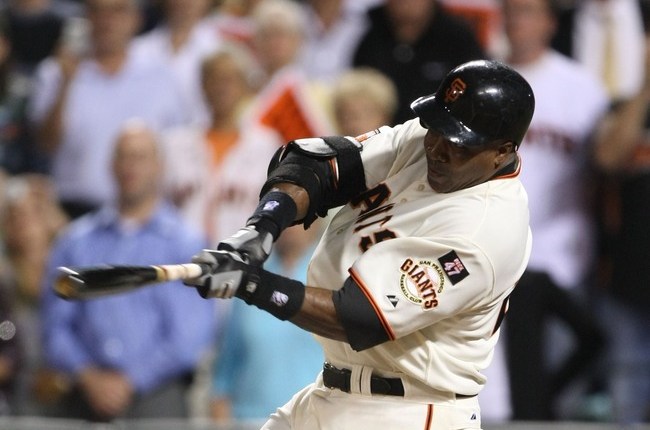
Rodriguez asked to play in his last tilt against the Red Sox at Fenway Park.  Not much of a farewell tour, but enough to give him a sense of closure.  As he sat on the bench, Sox fans chanted, “We Want A-Rod, We Want A-Rod” until he came to the plate as a pinch hitter in the seventh inning on Wednesday night.  As he walked to the plate, the booing began; the fans had been aching to roast Rodriguez one last time.  I remember the sounds of displeasure when Barry Bonds came to the plate at the end of his career, when he had altered his physiology with pharmaceutical, head-expanding voodoo; he was still the most feared hitter in the game, walked more often than pitched to.  Rodriguez hasn’t been fearsome for a while, and the reception he got at Fenway was contemptuous with barely a whiff of respect.

But … Last night, Number 13 suited up as a Yankee for the last time, came to the plate after a hard rain softened, not knowing what he would hear as his name was announced, shoulders slightly lowered, claiming the batter’s box as he has from the start, ready for whatever came his way. Like the event itself, the skies over Yankee Stadium had been clouded, charged.  Rodriguez himself joked, “It’s perfect.  I’m a lightening rod!”

The pre-game “celebration” had all the earmarks of a grudging Yankee farewell coupled with ominous cracks of lightning, thunder, and torrential rain.  Mariano Rivera and Reggie Jackson were on hand, representing the Yankee pantheon; Derek Jeter was not.  Hal and Jennifer Steinbrenner offered lackluster congratulations.  Ducking for cover with his daughters in tow, carrying the base signed by teammates, A-Rod scurried off the field with little fanfare; his career ending in darkness.

I don’t believe in fairy tales, heavy-handed sentiment or saccharine Hallmark moments, but I have been moved to tears again and again by acts of grace and courage in sports.  When it comes to hockey, I do believe in miracles; when it comes to baseball, I believe in fans.

For all the ugly and confusing episodes in the Alex Rodriguez story, despite his very human flaws, A-Rod has been the best player in baseball at times, the best player on the Yankees for much of that time.  When he came to the plate in his last game as a Yankee, we saw him as he has been all along, a gifted ballplayer who loved the game.

He expected jeering cat calls at the very least, deafening booing at worst.  Almost as one, however, the crowd stood for Alex Rodriguez.

Fans cheered him with true affection.  They went wild when he stroked a sharp double in his first at-bat, driving in a run.  One more hit, one more double, one more run batted in.  The fans showered him with all the love they had withheld for years.  Against all odds, in that moment, Alex Rodriguez was what he had hoped to be – a beloved Yankee.

Sports are funny.

Joe Girardi had grouched his way through the week, resisting pressure to give Rodriguez something like recognition as his career ended.  Then, on Friday, the game allowed him to toss Rodriguez a glove and send him out to play third base, A-Rod’s first game in the field this season.  After the game, a sports commentator watching Rodriguez ground out in his last at-bat said something like, “Now you see what a forty-one year old ballplayer looks like.”

That’s not what I saw.

I saw A-Rod grab his glove and run from the dugout to third base like a kid getting a break in late innings in a Double A game for the Trenton Thunder.  His grin ran from ear to ear.  That’s the Alex Rodriguez I want to remember.


Draft King

Draft King

I don’t gamble.  Not at all.  Never.  On anything.  The house always wins, my judgment is awful, I let emotion rule, I love a good story more than good odds, on any given day … and so on.

So, here I am about to put another twenty-five bucks in my Draft King account.

This comes up, of course, because the NFL football season is coming soon to a brain near me, and while hockey and baseball were my first true loves, I can’t not watch football.  Since I’m going to watch anyway, doesn’t it make sense that I ought to invest a little extra prep time so that I can see the game on a whole new level?  There’s research to be done and rosters to explore.  No more just grabbing a sandwich and a diet soda, plumping up the pillows on the couch and leaving family and the petty exigencies of life behind for a few (eight) hours.

No, my viewing now demands daily review of players moving to and from the trainer’s table and whirlpool, scanning scouting reports, keeping track of vets and rookies, new coaches, new schemes, suspensions, rivalries, contract extensions, and that’s just the start.

Let’s say I’m looking at a rookie.  Is he a high motor guy, a natural waist bender, does he have a bubble butt, is he quicker than fast, does he have oily hips, is he a dancing bear, is he a space player, can he click and close, can he throw an effective jam?

Full disclosure.  I have never asked any of those questions, but I do scan the opinions of those in the know, each contradicting the other, the result of which is that I’m lucky if I can make my twenty-five bucks last through the entire season.  Last year?  Ended up with one dollar in my account.

So I start this season with twenty-six dollars to plunk down, three bucks at a time.

I do understand that there is some dislocation of fan attachment when I’m less interested in the outcome of the game than the number of yards my tight end has put together or the number of sacks my defense has recorded.  Some would call it rationalization, but I consider myself now a fan of football rather than hanging on to a provincial attachment to one team over all others.

I might also be a Detroit Lions fan, so there’s that.

Look, I have principles.  I don’t goof around with college football, the last bastion of amateur sport; however, with no money on the table, this might be a good time to predict a top five finish for the University of Michigan.  My allegiances in hockey and baseball are so misguided and absolute that I’d be through my small stake after three games.

I like to think of myself as a student of the game of football, an earnest aficionado, but there are moments when I think of Romans roaring encouragement to that week’s favorite gladiator, urging a final act of mutilation so profound that no opponent could crawl from the arena.  Surely, hoping for a blitz so effective that the quarterback has to be scraped from the field with a spatula is nothing like that?

Well, as Julius Caesar is reputed to have said, “Alia iacra est” (The die is cast!).  My twenty five bucks are in; might as well cross the Rubicon and check out the stats on Jimmy Garoppolo.


Trump Camp Warns of Bloodbath, Trump Hints At Assassination

Trump Camp Warns of Bloodbath, Trump Hints At Assassination

“Hillary wants to abolish, essentially abolish the 2nd Amendment,” Trump told the crowd in Wilmington, N.C. “By the way, and if she gets to pick if she gets to pick her judges, nothing you can do folks. Although the 2nd Amendment people, maybe there is. I don’t know.”  LA Times/ August 10/ 2016

As his poll numbers drop (and Trump feeds on polls), the candidate is speaking recklessly and provocatively.  And the more dangerous Trump becomes, the more dangerous his more unhinged supporters become.

Trump and his spokespeople have bristled at the injustice the media has shown in suggesting that Trump’s remarks were anything more than a call to gun advocates to get out the vote.  Jason Miller, a senior advisor in the Trump campaign, called the media “dishonest”, and Trump himself happily told Sean Hannity that the flap is actually good for him, as it further identifies him as a champion of the Second Amendment.

Too easily lost in the (terrifying) reality of a presidential candidate playing fast and loose in prodding gun advocates to “action” is the further threat accompanying Trump’s familiar charge that the election is rigged.  The primaries, we recall were rigged, the convention was rigged and now, should the Trump candidacy not prevail, the entire electoral process is rigged.

In the face of devastating polling predicting the election of Hillary Rodham Clinton by a huge margin, after a week of grotesque blunders, and after the defection of many notable Republicans from Trump’s candidacy, Donald Trump has begun telling his audiences that he “hears” more and more that the election will be rigged and the Presidency stolen from the people and the Republican Party.  It will come as no surprise to any who have watched Donald Trump that he might seek to play the martyr and agent provocateur.  Equally unsurprising that he his team is even more willing to jettison the Constitution (except the Second Amendment).

What’s left to say as the poll numbers continue to slide, and the reality of imminent defeat become increasingly likely?  How about asserting that the only proper response to an election Trump factions consider illegitimate is civil disobedience and the recognition that the government no longer has the ability to maintain the rule of law?

 “The election of the winner will be illegitimate, we will have a constitutional crisis, widespread civil disobedience, and the government will no longer be the government.”

That remark and some of the nastiest suggestions are coming from Roger Stone, a professional disrupter of political civility and increasingly a voice Trump hears clearly.

Roger Stone is one scary guy.  Even before he attached himself to the Trump campaign, Stone was known in political circles as a “seasoned practitioner of hard-edged politics.”  Stone has used a less restrained moniker in describing himself as a hit man for the G.O.P.  Faced with the overwhelmingly critical reaction to Trump’s petulant rant following the televised speech of Khirz Kahn, it was Stone who tweeted the outrageous assertion that Kahn was an agent of the Muslim Brotherhood working in league with Hillary Clinton, and directed attention to a website purporting to prove that his son, decorated captain, Humayan Kahn, may have been a terrorist.

Roger Stone @RogerJStoneJr

Mr. Khan more than an aggrieved father of a Muslim son- he’s Muslim Brotherhood agent helping Hillaryhttp://linkis.com/shoebat.com/2016/07/amTCP 

7:40 PM – 31 Jul 2016


Stone’s involvement with Trump goes back well before the campaign began; he had been behind a series of ads smearing a competitor in the casino business, ads and has been a Trump advisor for years.  Stone’s first political hatchet jobs were in aid of the committee to reelect Richard Nixon; he’s been playing political hardball since.  How far is Stone willing to go?

“If you can’t have an honest election, nothing else counts,” Stone said. “I think he’s gotta put them on notice that their inauguration will be a rhetorical, and when I mean civil disobedience, not violence, but it will be a bloodbath… We will not stand for it.”

Stone’s rhetoric is more than enough to worry the casual observer; his personal attacks on opponents have been so vile that he has been banned from CNN and MSNBC.  Stone admits that his tweet identifying journalist Roland Martin as “a fat negro” was a two martini tweet; he has been less apologetic to others he has defamed.  Recent reports have surfaced that Stone is in contact with Julian Assange, hoping to coordinate the next leak damaging to the Clinton campaign.  Whatever Assange leaks, it is believed, will be delivered by hackers operating in Russia, perhaps with the knowledge of Vladimir Putin.

Stone is also a partner in a powerful lobbying and consulting firm, Black, Manafort, Stone, and Kelly.  Paul Manafort, the founding partner of that firm, is the chairman of Donald Trump’s campaign committee.  The group has advised Republican presidential candidates; Manafort has personally advised Jonas Savimbi, Ferdinand Marcos, Mobutu Sese Seko, and Victor Yanukovych.

Yanukovych, former President of Ukraine, was ousted after rejecting  an agreement with regard to membership in the European Union in favor of a bailout loan from Russia and closer ties with Russia.  Popular protests against Yanukovych were met with force which quickly escalated to a virtual civil war.  Accused of murdering civilians, Yanukovych fled to Russia where it is believed he was granted  emergency citizenship by Vladimir Putin.

Keeping track of Donald Trump is tough enough; add the powers behind the throne and the campaign’s early abandonment of political probity, and the stakes just keep getting higher.


Mr. Darcy’s Wet Shirt, Colin Firth, and the Revival of British Literature

Mr. Darcy’s Wet Shirt, Colin Firth, and the Revival of British Literature

I happened on a broadcast of Kingsman: The Secret Service last week, watched it to the end, and enjoyed some of it quite a bit. As one might expect, the French have a word for this sort of amiable bloodbath, a Grand Guignol, a sort of celebratory horror tale with a twist of humor, and, as I had seen the film some months ago, the choreographed exploding of heads, languid eviscerations, and widespread arterial spraying was only mildly distracting from Colin Firth’s turn as an aristocratic spy with a penchant for mayhem.

Really?  Mayhem?  Colin Firth?

It’s not likely that Firth will follow Liam Neeson into making a string of hyper-violent vigilante/revenge/action thrillers (Taken, Taken 2, The Next Three Days, The Unknown, The Grey, Nonstop, A Walk Among the Tombstones, Run All Night, Taken 3, and the upcoming The Commuter).  The fun of Kingsman was in the contrast between the polished club man and the highly effective assassin, but, even in this incarnation, Colin Firth’s stony stoicism belied goodhearted generosity.  That peculiar ability, to project icy distance while suggesting hidden capacity for friendship, loyalty, and love, made Firth an ideal Fitzwilliam Darcy in the BBC’s adaptation of Pride and Prejudice.

Moving from cool, almost caddish disdain to absolute devotion, Firth’s Darcy reached the pinnacle of fan frenzy in episode IV, in a scene not in the novel.  Darcy has literally jumped into a lake on his estate in order to cool his turbulent emotions with regard to Elizabeth Bennet, climbing out of the water only to find Elizabeth walking the estate’s grounds and approaching the lake.  Darcy is shaken and embarrassed, in a state of undress, charmingly awkward.  Many viewers, however, were impressed with Firth’s manly form in what a survey of British critics called, “the most memorable moment in British television history.” I will venture to say that there was considerably more buzz about “the shirt” than about Austen’s use of irony in Pride and Prejudice.

The final episode of the BBC series claimed 40% of the viewing public, and the first run of the double-video set sold out within the first two hours of its release.  The shirt was later placed on display in the Folger Shakespeare Library in Washington, D.C. as part of an exhibition entitled, “Shakespeare, Austen, and the Cult of Celebrity”.

I’m going to go out on a limb here; I credit Colin Firth with reanimating interest in Pride and Prejudice, the Austen novels, and English literature as a whole.

Too much?

I think not.  My colleagues at several  ambitious independent schools had given up on teaching Austen, finding that their students simply could not connect with a novel of manners set in the early 18th Century.  Teach Austen?  Not possible.  No Way.  Better off hacking away at Hawthorne, or connecting Thoreau with contemporary mindfulness and environmental awareness.  Teachers devoted to Austen longed to wallow in the pleasure of reading Pride and Prejudice aloud, but feared a cold response from students steeped in flashier, more contemporary, novels.

There are a host of reasons that an Austen novel succeeds where others of her generation have sunk into obscurity. She writes with wit, clarity, and an unerring ability to lampoon the entirely lampoonable.  She creates character with dimension, some to be reviled and some admired, and she writes dialogue that continues to ring true, as in this understated comic exchange between the narcissistic and tedious Mrs. Bennet and her husband.

“Mr. Bennet, how can you abuse your own children in such a way? You take delight in vexing me. You have no compassion for my poor nerves.”

“You mistake me, my dear. I have a high respect for your nerves. They are my old friends. I have heard you mention them with consideration these last twenty years at least.”

All of those qualities were present in her work all along, but it took what some besotted partisans called Firth’s” smoldering passion” to pull viewers into fascination with all things Austen.   Readers rediscovered Sense and Sensibility, Emma, Persuasion, Mansfield Park, and Northanger Abbey.   Book clubs devoted to Jane Austen began to spring up across the globe.  In 1996, the best selling new novel. The Runaway Jury by John Grisham sold 73,337 copies; in that year, Pride and Prejudice sold 110,000 copies in the U.S. alone.  To date, the book has sold more than 20 million copies worldwide. Just as the (continuing) Harry Potter fever brought readers back to books, the 1995 Pride and Prejudice pulled readers further into Austen, and then to the Brontes.  Sales of Jane Eyre and Wuthering Heights also experienced rediscovery as readers exhausted their store of Austen novels.

Versions of P and P soon appeared in theaters and on television.  The Diary of Bridget Jones took the structure of the novel, pulled Firth back into the role of clumsy suitor (Mark Darcy), brought the story into the 21st Century and added Hugh Grant as designated rotter, Daniel Cleaver, the George Wickham analog.The first Bridget Jones featured a lovely self-referential moment in which Bridget watches the Colin Firth Darcy emerge from the lake.  In 2005 a well designed theatrical release brought Keira Knightley to the role of Lizzie Bennett, . The Bollywood version, Bride and Prejudice, still has a loyal following, and scores of far flung fantasies attached to the novel continue to appear.  Hank Green, brother of John Green and co-developer of the Vlogbrothers, created the Lizzie Bennet Diaries with Bernie Su, a video blog which became the first digital series to win an Emmy.

Not convinced that all of this is related to the most memorable moment in British television?

A twelve foot statue of Darcy (clearly resembling Firth) emerging with wet shirt (more prominent nipplage this time) was commissioned to be placed in Serpentine lake in Hyde Park, then to be transported to its home in the lake at Lyme Place, the estate used as Pemberely .  In a surprise acquisition, however, Australia’s National Trust bought the statue to be placed in a watery site in Melbourne.  Divers dismantled the mooring, the statue was packaged with great care, and viewers in Melbourne assert that fiberglass Darcy still looks “pretty good”.


Ichiro

Ichiro

I’m writing before Ichiro Suzuki, now largely a pinch hitter, reaches the 3000 hit mark.  If the stars are aligned and the baseball gods awake, his 3000th will be a ground ball up the middle, a ball an acrobatic shortstop could spear and peg to first.  The play should be close, but, as he has on most of the 3000, Ichiro beats the throw, hitting the bag just before the ball slaps the first baseman’s mitt.

I hear a lot about baseball having slipped out of the public’s attention, about the NFL and the NBA, maybe even MLS Soccer winning the hearts and minds of sports fans today, about baseball joining boxing, horse racing, and yachting as sports few people care to see.  I’m not going to rhapsodize about the clean geometry of the game, or of the legacy of fathers playing catch with sons, although I start to tear up when I remember my own pilgrimage to the Field of Dreams in Dyersville, Iowa (midway between Luxemburg and Worthington), standing on the first base line when my son said, “Want to play catch, Dad?”  No, I’ll put the drama in baseball up against any other sport, especially in this era, when we see pitchers routinely throwing strikes at a 100 miles an hour and offering up curve balls that seem to drop off the edge of the table, facing batters whose reflexes are incalculably quick.  Mike Trout, Bryce Harper, Giancarlo Stanton, and a dozen others combine power and grace at the plate, and the current batch of daredevil fielders put on a display of acrobatic gymnastics in grabbing sure hits out of the air, catches that the barrel-chested shortstops of the Golden Age would have watched screaming past their outstretched gloves.

This is a golden age, and Ichiro will play his final games , stretch out his final hits, as the next generation of athletes come to plate.  Others hit the ball farther (Stanton owns 20 of the 21 longest home runs in the history of the Home Run Derby), but none combine the craft with which Ichiro approaches hitting and the reverence with which he approaches the sport.

I’ve never been a Marlins fan, or a Mariners fan, or a fan of the contemporary celebrity warehouse known as the New York Yankees, but I consider myself fortunate to have seen Ichiro play in person and on tv.

I’m not a bandwagon fan (sorry Cubs/ Nats/ Sox).  I was lucky in growing up in a small town in Connecticut that happened to get WPIX, Channel 11, from New York City, the station that broadcast the Yankees’ and Giants’ home games, and so got to see Mickey Mantle and Willie Mays in their prime.  Hard not to be a Yankee fan during those glory years.  The Yankee-Red Sox duels were not as heated back in the 1950’s, so it was possible for a Yankee fan to appreciate Ted Williams and to enjoy the spectacle that was Jimmy Piersall.  Piersall and Yankee second baseman, Billy Martin, were a matched set, both combustible with a very short fuse. They saved their best battles for after the game, fighting to a bloody draw in the tunnel under the stands. Good times.

I do admit to falling away from the Yankees as an adult, not in reaction to their lean years, but in response to what I saw as lapses in character.  Look, Mantle, Ford, Martin and Bauer were bad boys; I know that now, but I did not then.  The Bronx Zoo was too much to take, Steinbrenner was too much to take, and I’d spent years in Michigan by that point and had become grotesquely fond of Michigan football.  Moving back to Michigan in 1980, I decided to get behind the Detroit Tigers.

Again, I got lucky.  Sparky Anderson had just left the Reds to join the Tigers, and a roster that would take the team to a championship in 1984 began to coalesce, and the Tigers picked up  Willie Hernandez, one of three pitchers to win the Cy Young Award, MVP, and a World Series Title in the same year, joining Sandy Koufax and Denny McLain in that select company.  Great days for Tiger baseball.  Then in 2003, the Detroit Tigers lost the most games in a single season in the history of the American League, but even in that year, the seeds of a contending team were starting to emerge, waiting for Rookie of the Year, Justin Verlander, and centerfielder, Curtis Granderson, to pull Los Tigres back to the top of the league in 2006.  Hard times as they lost to the Royals at the end of the season to give up what looked like a certain Divisional title (don’t talk to me about the Royals), good times as they played their way as they beat the Yankees as the wild card team, and familiar times as they lost in the World Series to a Cardinal team they should have slaughtered.

So where does Ichiro Suziki fit into this narrative?  My son and I got our first look at Ichiro in person during Spring Training in 2002, Ichiro’s second season with the Mariners. The Padres and Mariners shared a ballpark close to our home base, and as we tried to get in two games a day, we’d get seats for the first game and sit on the lawn behind center field for the evening game.  Ordinarily, the best thing about seeing the game from the lawn was in being able to watch pitchers warm up in the bullpens, but on our first night in Arizona, we sat directly behind Ichiro, who played deep, almost to the center field wall.

I explained to my son that Ichiro was out of position, that he’d have no chance for balls hit just beyond the infield and would have a tough time trying to get off a satisfactory throw to any base but second.  As I spoke,  the leadoff batter for the Angels cracked a line drive over second base.  Ichiro somehow got to the ball on the first hop and rifled a throw to first in time to nail the runner.  I had seen Roberto Clemente’s arm on television, but I had never seen a throw such as that in person.  A frozen rope.

Ichiro played a stunningly effective defensive game from center field that night.  We had come to see the AL Rookie of the Year hit, and he was a spectacular hitter, but it was the completeness of his game that most impressed me.

A few words about Ichiro as a hitter.  Everything about his stance and batting ritual is distinctive.  Most fans are aware of his stretching and squatting before he steps into the box; he takes sweeping practice swings as he steps in and then out of the batter’s box.  As he assumes his stance in the box, he twirls the bat in a giant arc, stopping the bat at the top of its second circle, tugging at his sleeve as his bat is effectively pointing at the pitcher.  When he first came into the American League, after having been a superstar in Japan, that batting ritual seemed an affront to the pitchers he faced, and they tried to brush him back with what old timers call, “chin music”.

But this is where the Ichiro story takes on a different dimension.

The frenzy with which Japanese  photographers flooded the sidelines as Ichiro became the first position player from Japan to hit the big leagues was compared to the pandemonium meeting the Beatles at Shea Stadium.  The temptation was to write the guy off as a publicity hound, but Ichiro’s gravity and seriousness of purpose quickly convinced real baseball fans that they were watching something special.  He went on to earn a place as an All Star seventeen times, also winning seventeen Golden Gloves.  He was Rookie of the Year and American League MVP in his first year, added four batting titles and three more selections as MVP, and holds the single season record for most hits (262 hits in 2004 while a Mariner).

Stunning.  And yet, what sets Ichiro apart in my mind is the ethos with which he approaches the game.  It’s hard to remember just how spectacular Ichiro was in that first season; 242 hits, 56 stolen bases, batting average of .350, Gold Glove, and the best arm in the game.  He was given the number 51 by the Mariners, and on learning that the number had belonged to Randy Johnson, a player Ichiro respected greatly, the rookie wrote a note to Johnson promising not to “bring shame” to the uniform.  Ichiro’s fielding was so effective that his corner of Safeco Field was called “Area 51”.  No shame in that.

Before facing the Red Sox’ s Daisuke Matsuzaka, Ichiro famously announced, “I hope he arouses the fire that’s dormant in the innermost recesses of my soul.  I plan to face him with the zeal of a challenger.”  I think I knew he was an uncommon ballplayer when he refused to give the press the name of his pet dog, explaining that he didn’t have the dog’s permission to make the name public.

I’ve watched a lot of baseball over the years, but aside from the moment on the Field of Dreams with my son, the memory that lingers is of Ichiro, moving fluidly and with deceptive speed, snaking a ball from the turf and releasing a strike to first base without seeming to have moved at all.


Nightmare on Sesame Street

Nightmare on Sesame Street

OK, by the time I started this piece HBO, or Sesame Workshop, or whoever has the Sesame franchise in the post-Jim Henson universe had backed down, swallowed twice, mumbled something like an apology and invited three long-time residents of the fabled street back to the neighborhood after having sacked them without explanation.

My kids grew up with Sesame Street, the oldest almost from the start of the program and the younger son and daughter entirely in a pre-Elmo (pristine) universe.  Over the years many significant adults came to Sesame Street; visitors in the early years included James Earl Jones reading the alphabet, Margaret Hamilton reprising her role as the Wicked Witch of the west, Lily Tomlin eating a sandwich at the switchboard as operator Edith Ann, Madeline Kahn affectionately teaching Grover to sing, “Be My Echo”, convincing my children that Grover was entirely and undoubtedly her very real friend, perhaps convincing me as well.

The best of guests fell into a convincing  relationship with muppets; the humans living on Sesame Street left no doubt that the complicated characters were part of the fabric of their lives.  The humans had dimension as well; they were  confused, occasionally surprised, and in some instances a bit crusty.  The owner of Sesame Street’s grocery, Mr. Hooper, was curmudgeonly, affecting testiness but frequently revealing his heart of gold. It was Mr. Hooper who gently righted what might have been a painfully ironic ending of  the classic Gift of the Magi Christmas episode.  Bert had sold his paperclip collection in order to buy a soap dish for Ernie’s Rubber Duckie; Ernie had sold the Duckie in order to buy a cigar box for Bert’s paperclips.   At the end of the episode, Mr. Hooper gave the friends the gifts they had sold, and all was well on Christmas Eve.

Not long after that broadcast, Will Lee, the actor who played Mr. Hooper died. With grace few people posses, the producers decided to acknowledge the loss on air. It was Bob, Susan, Maria, and Gordon who broke the news of Mr. Hooper’s death to Big Bird in  an episode that did not duck the hard issues. Bird and my children grieved but learned that the seasons change, the world spins, and that, as it must to all men, death came to Mr. Hooper  What comfort remained?  Muppets, of course, and the remaining grown-ups.  We were left with Bob, calm, patient, insightful, slightly odd, but buoyant.  He sang in a lilting tenor, often reminding us of the great truths and remaining a constant model of quiet resilience.  We had Gordon too, and Luis.

In an attempt to make the neighborhood accessible to a wider audience, Joan Ganz Cooney (journalist and documentary producer) and Lloyd Morrisset (Ph.D. in Psychology from Yale and Vice President of the Carnegie Foundation), the originators of the Children’s Television Network, had decided to add a Black neighbor with a family. Gordon actually had a last name (Robinson), a wife (Susan), and an adopted child, but was most appreciated as the only adult capable of contending with the perpetually disgruntled Oscar the Grouch.  It was Gordon who became the hero (Trash Gordon) of the tales Oscar told to his pal, Slimey the worm.  The first human joining the original cast was Luis, handy and philosophical, proprietor of the Fix-It shop.  In the course of the first seasons, he married Maria, had a child, and brought a joyful Hispanic family to Sesame Street.

These were the men my children saw daily, as parents of their own children and adult friends of the furry characters who were children as well, characters who lacked discretion (Big Bird), who lost control of impulse (Cookie Monster), who lived largely in their own imagination (Grover), and who maintained unlikely friendships (Bert and Ernie, the muppet odd couple).  These adults managed to meet the challenges unruly muppets presented on a daily basis with far more composure than I could muster, providing me with perspective I lacked and my children with expectations of adults that I hope have served them well.

I know that times change.  Sesame Street now airs on HBO, passing episodes on to PBS five months after they have aired on the cable channel.  The 26 new episode will be half hour shows; for forty four seasons, CTW aired more than a hundred episodes per year, each of which was a full hour in length.  Kids have changed, cuts had to be made; snappy techno-whiz graphics had to have their place.  Not much room for aging actors.

It’s easy for me to summon outrage.  If Bob, Gordon, and Luis are expendable, how about the rest of the cast?  Do we really want to see Bert at a stop light, roughly lettered cardboard sign in hand – “Will Work For Paperclips”?  Does Mr. Snuffleupagus who had a hard enough time convincing the people on Sesame Street that he actually exists continue to mutter as he finds a dumpster to sleep in?

OK, that may be over the top.

I guess I write this piece now to thank Bob, Gordon, and Luis and all those who invited my children and countless others around the world to visit Sesame Street each afternoon for more than forty years.  In ways the originators could not have anticipated, they gave us a second family, a family in which children matter, in which adults listen with patience.  Sesame Street did all that it promised in terms of reading readiness and the development of math skills (How many aging adults were fired?  One, Two, Three aging adults).  It also gave children a place that was uniquely theirs and entirely safe, a place  where characters delight in their differences.  I’m grateful for the years Bob, Gordon, and Luis have shared with us and delighted that we may visit with them as they move into the next chapter of their lives.

We still have lessons to learn.

Note: The human-muppet relationship has never bee more lovely than in this short duet sung by Grover and the late Madeline Kahn.


Thank You

Thank You

Last night, Barack Obama, President of the United States, spoke to an audience that had heard him speak countless times.  His ostensible task was to make clear that support of Hillary Rodham Clinton’s bid for the presidency would be an endorsement of the work begun and completed during his administration.  In effect he spoke to those who wished we might have four more years of Barack Obama’s intelligence, courage, leadership, and grace, promising that the election of Hillary Rodham Clinton would secure the legacy of Obama’s years in office.  With characteristic modesty and wit, he spoke as few leaders in our time have spoken.  FDR spoke with assurance and comforting sincerity; Winston Churchill’s oratorical skills were magnificent, and his mastery of rhetoric impressive.  Barack Obama, however, is clearly a very bright guy who speaks with the plain language of personal investment in the causes he champions and personal conviction in addressing the outrages he deplores.

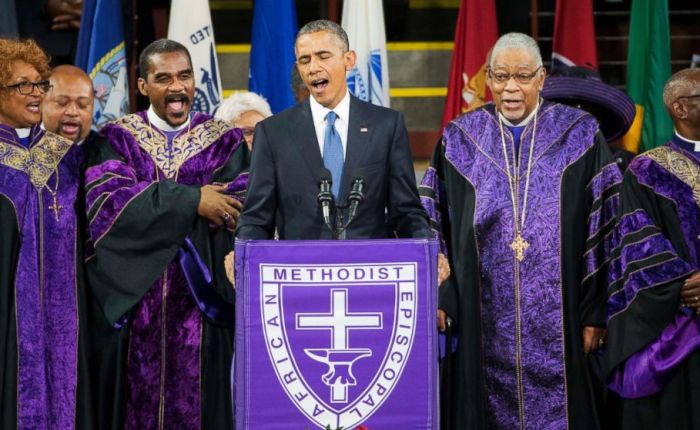
The short video introducing Obama’s appearance emphasised the President’s calm, steady equilibrium, even when pushed to the limits of his patience.  A nation has seen his tears in describing children killed in Connecticut and on the streets of Chicago, yet, even in those moments of personal pain and frustration, Obama returned to statements of hope and shared responsibility for a better future.  His skill as a speaker is remarkable, yet for many, the most compelling moment of his presidency may have been in his singing of Amazing Grace in the service for the Rev. Clementa Pickney,  pastor at the Mother Emanuel African Methodist Episcopal Church, killed with eight others at a Bible study meeting in Charleston, South Carolina.  He took the unthinkable risk of appearing ridiculous or disrespectful, not to ease his own pain, but to do what he could in that moment to help that congregation, and the nation, begin to heal.

It took rare inspiration and rare courage to begin the hymn.  Within seconds every person present was raised in singing with him.

In eulogizing Pickney, Obama said, “We are here today to remember a man of God who lived by faith, a man who believed in things not seen, a man who believed there were better days ahead off in the distance.”

Those words describe Barack Obama, and after years of facing contention, contempt, partisan vilification, and hatred, he stood before an audience that had already begun to grieve the loss of this good man, an audience showering him with affection, an audience hoping in some fashion to say, “thank you”.


Cooperstown

Cooperstown

On Sunday, Ken Griffey, Jr. and Mike Piazza will be inducted into the baseball Hall of Fame in Cooperstown, New York.  It took Piazza four tries to garner 75% of the votes of the electors, baseball writers; Griffey was an obvious first ballot inductee, missing a unanimous vote by three, earning 99.3% of votes.  It’s a measure of Griffey’s humility as a player that when asked about the three who did not vote for him, Griffey smiled and said that they probably knew he was likely to get in and wanted to save votes for players closer to the edge.  Griffey is in pretty good company; Ty Cobb, first player inducted in the Hall of Fame, got 98% of votes, and Babe Ruth, arguably the greatest ballplayer of all time, squeaked in with 90%.

Piazza is historically the best hitting catcher to be inducted, and Griffey was among  the most highly regarded players of his era, an era that included some of the most remarkable performances and some of the most remarkable careers ever seen in baseball.  Griffey’s been compared to Ted Williams, Willie Mays, and Stan Musial, other superstars considered certain of membership in the Hall.  He was not alone, however, at the top during the 1990’s, playing in the company of Tony Gwynn, Barry Bonds, Rich Gossage, Jeff Bagwell, Craig Biggio, Roger Clemens, Greg Maddux, Randy Johnson, Paul Molitor, Rickey Henderson, Tom Glavine, Wade Boggs, Edgar Martinez, John Smoltz, Frank Thomas, Rafael Palmeiro, Pedro Martinez, Mariano Rivera, Dennis Eckersley, Pudge Rodriguez, Cal Ripken, Barry Larkin, and Alex Rodriguez, among others (Mark McGwire, Sammy Sosa, John Olerud).

Of that extraordinary constellation of talent, Larkin, Henderson, Molitor, Boggs, Ripken, Gossage, Glavine, Maddux, Thomas, Gwynn, Biggio, Eckersley, Smoltz, Johnson, and Pedro Martinez have been enshrined.  A change of rules limits the number of years that a player can remain under consideration to ten, reduced from fifteen only two years ago.  Had the ten year limit been in place earlier, players absent from the Hall could have included Duke Snyder, Bert Blyleven, and Bruce Sutter, each of whom needed more than ten years to reach the 75% level.  The same rule applies to consideration by the Veterans Committee , still considering Gil Hodges, Mickey Lolich, Thurmon Munson, Roger Maris, and Jack Morris (come on!).

The change of rules particularly affects the players who played in the 1990’s and likely reflects concern that players suspected of using PEDs might get past the 75% barrier and tait the sanctity of the Hall of Fame, particularly Barry Bonds, Jeff Bagwell, Mark McGwire, and Roger Clemens.  Edgar Martinez would be the first designated hitter to enter the hall, should writers recognize the importance of that skill as they did in honoring the contributions of relief pitchers.  It will interesting to see if Trevor Hoffman gets in while Martinez is left out.

Arguments about the annual selections are to be expected; we are fans, after all, so our judgments are often clouded by our own experience of the sport.  Of the four to be considered by the Veterans Committee, for example, two are Yankees and two are Tigers; I am not without bias in considering their careers.

It is in the furrier realm of establishing the worthiness of a player’s character that the arguments get truly heated.  One camp holds prospective inductees to a high standard of behavior on and off the field; the other considers performance the only significant factor.  For the first group, the inclusion of Barry Bonds would desecrate the sanctity of the Hall of Fame; for the second, the exclusion of Barry Bonds, clearly the most formidable player of his time, is absurd.

I’ve been reading about baseball for sixty years, which is significant only in that I read accounts of the early years of baseball, the unsanitized histories which included unapologetic womanizing, alcoholic binges before, during, and after games, fistfights, assaults, purposeful injury of other payers, gambling, unsavory associations with lowlife thugs, and rampant racism.

Shirley Povich, who was certainly among the most revered of sports journalists, described a Ty Cobb who would probably not find unanimous acclamation today. “Yes, the greatest player of all time was baseball’s preeminent unconscionable scoundrel; as miserable a cretin as ever pulled on a uniform, and an outspoken racial bigot to boot.”  Rumors persist that Cobb and Tris Speaker were members of the Ku Klux Klan and that both had fixed games during their career.  Grover Cleveland Alexander was notoriously a better pitcher drunk than sober.  In modern times, Gaylord Perry probably ignored the rules of the game every time he took the mound, doctoring the ball with spit, vaseline, and other substances I chose not to imagine.  Orlando Cepeda served ten months for smuggling marijuana.

I may have tipped my hand.  Barry Bonds belongs in the Hall of Fame.  Vile though I find him to be, Roger Clemens belongs in the Hall of Fame.  Pete Rose is Major League Baseball’s all-time leader in hits and games played; he won three World Series rings, was Rookie of the Year, an MVP, and appeared in seventeen All Star Games.  Rose should be in the Hall of Fame; “Charlie Hustle” was a dominant player of his era, and that criterion is the one that matters to me.  Long banished Joe Jackson should be in the Hall.  Babe Ruth, Ty Cobb, Rogers Hornsby, and Nap Lajoie considered Shoeless Joe Jackson the best hitter in the game.  Bob Feller and Ted Williams petitioned the Veterans Committee to reconsider his candidacy; Williams considered him the hitter he most admired.

I’ll watch Piazza and Griffey as they are brought into the company of some of the game’s greatest players, cheer their achievements  and continue to believe that the other greats they played with and against have a place in that exalted company.


Every Tom, Dick, and Harry – Naming Kids Today

Every Tom, Dick, and Harry – Naming Kids Today

I’ll get to Tom, Dick, and Harry  shortly, but I do need to establish the context in which those names came to mind, arriving with great compassion for parents-to-be who labor so lovingly to find just the right name for a baby whose personality is not yet known.  For reasons that may become clear, I begin by looking at the music of Cole Porter, Indiana aristocrat, Whiffenpoof, and composer.

I’m generally impressed with Cole Porter’s inventive lyrics, especially as they slyly approach naughtiness then veer at the last moment to an unexpected end-rhyme.  The most lighthearted is performed elegantly by Ella Fitzgerald:   “Let’s Do it – Let’s Fall in Love”.  Below a few of the more marginally inappropriate exhortations.

Birds do it, bees do it
Even educated fleas do it
Let’s do it, let’s fall in love

In Spain, the best upper sets do it
Lithuanians and Letts do it
Let’s do it, let’s fall in love

Some Argentines without means do it
People say in Boston even beans do it
Let’s do it, let’s fall in love

In shallow shoals, English soles do it
Goldfish in the privacy of bowls do it
Let’s do it, let’s fall in love

The chimpanzees in the zoos do it
Some courageous kangaroos do it
Let’s do it, let’s fall in love

I’m sure giraffes on the sly do it
Even eagles as they fly do it
Let’s do it, let’s fall in love

There’s something wryly puzzling about the courage needed for kangaroos to enter into whatever union Porter has in mind; at his best, he composed show tunes that were both suggestive and sophisticated, and slightly odd.

Now, to get to the subject at hand.  Porter used the then familiar phrase “Every Tom, Dick, and Harry” as the title of a song in Kiss Me Kate, implying that the female lead spread her affection widely.  Tom, Dick, and Harry indicated a  whole bunch of guys, and theater goers absolutely knew what he meant.  These were the names of regular guys, not hoity-toity (chi-chi/ pronounced “she-she”) or precious, just ordinary, unaffected, nice guys.  The names were without distinction of class, and served the purpose of identifying an unexceptional but inclusive cohort of men.  The song doesn’t travel well these days, perhaps because the linking refrain between stanzas, is, “Uh Dick Dick, Dick, Uh Dick, Dick, Dick.”

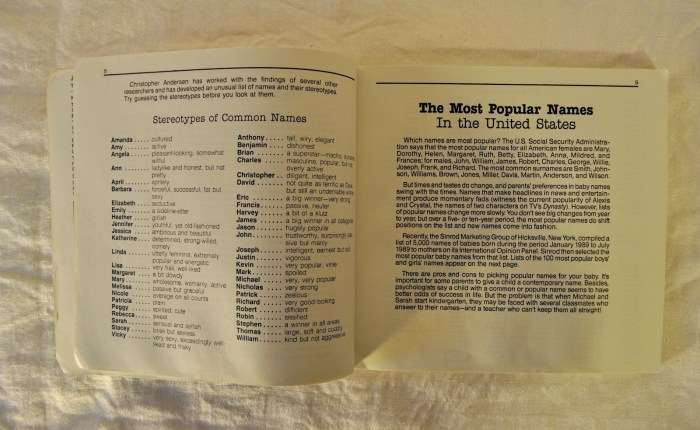
I haven’t heard the phrase recently, and I wondered what combination of names would signify a similar constellation of men with whom Bianca, say, in Kiss Me Kate might have dallied. ( I don’t hear the word “dalliance” often either, so perhaps that stage, somewhere between flirtation and consummation, may have vanished).  I did a quick search of the most common names given boys born in 1976, now forty year old men.  Porter’s lyric would have become, “Every Michael, Jason, and Christopher” or “Every Mike, Jay, and Chris”.  According to the sites I’ve visited, the greatest number of forty year old women would be named, Jennifer, Melissa, Heather, Michelle, or Kimberly, with Angela a strong favorite in some regions.  That generation (the under-appreciated Generation X) turned around and named their sons Jacob, Michael, Ethan, Joshua, Matthew, Daniel, Christopher, Andrew, Anthony, and William.  The top ten names for their daughters?  Emily, Emma, Madison, Isabella, Ava, Abigail, Olivia, Hannah, Sophia, and Samantha.  The boys’ names are downright Biblical, the girls’ simultaneously more fanciful and somewhat archaic (except for Madison which may have sprung from too many viewing of Splash).

This naming thing is fascinating, not only because it provides a kind of cultural snapshot, but because it reflects the aspirations of parents by generation.  Game of Thrones has spawned a number of contemporary name choices; it’s easy to see how Arya and Daenerys, Bran and Tyrion might signify character and purpose.  I can’t imagine what sorts of aspirations families have in naming their newborns, Cersei or Khaleesei.  My grandfather was named Orlando after a character in Shakespeare’s As You Like It (as he didn’t), and names continue to come from the Bible, from ethnic heritage, occasionally from places and brands (Brooklyn, Montana, Dakota, Lexus, Nike, Armani, Prada).

Some names have currency for a while, then disappear; Brandys and Brittanys seem to have lost some allure, perhaps due to the unfortunate habit of ending such names in “i” dotted with a small heart.

Demographic research has been done from an exhaustive study of names given to babies in California over a period of forty years.  The single conclusion drawn is that the cycle appears to start with what might be called “high born” names (classy ), fairly quickly adopted by less affluent parents.  If the theory is correct, “high born” names are adopted five times faster than “common” names, thereby becoming more common in a relatively short time.

Thus the task of picking a name becomes problematic if the hope is to avoid sending a daughter (Jennifer) to a kindergarten class filled with Jennifers, Jennys, Jens, J-dogs, and Jiffers.  Had I a practice as a naming consultant, of course, I’d suggest the name Guinevere or the original Welsh, Gwenhwyfar, perhaps moving into Lord of the Rings territory.  Welsh names are delicious, but risky.  The chances of Gwenhwyfar placing an order at Starbucks in her own name are slim; she’ll become “Gwen”, and there it goes.  Ffion, Lowri, Carys – these might be reasonably safe for a while, but any name is at risk when used in the real world.

I’ve put off the identification of the names I believe are the most likely to move from “high born” to more commonly found because I know so many lovely children with these names.  With apologies to all my dearest friends and comrades who worked tirelessly to find names that were both lovely and distinctive, here’s the list:

Girls                                                                                         Boys

Ainsley                                                                                    Alexander

Alexandra                                                                                Alistaire

Bianca                                                                                       Ashcroft

Frederica                                                                                  Gage

Gabrielle                                                                                   Garrison

Geneva                                                                                      Graham

Grace                                                                                          Hamilton

Gwyneth                                                                                    Jameson

Isabel (Isabella)                                                                       Julian

Katherine                                                                                 Landon

Lily                                                                                             Mackinley

Mackinley                                                                                Neville

Margaret                                                                                  Quinn

Margot                                                                                       Radford

Olivia                                                                                        Radcliff(e)

Ophelia                                                                                    Raleigh

Rachel                                                                                      Sutherland

Rebecca                                                                                    Talbot

Savannah                                                                                 Valerian

Victoria                                                                                     Walker

There they are, a shining galaxy of uncommon and eminently distinctive names, doomed, if the research is correct, to become just another batch of Toms, Dicks, and Harrys.


Oliver Sacks

Oliver Sacks

I read Oliver Sacks’ obituary almost a year ago.  He was what he called an “existential neurologist”, a scientist whose clinical work took him to considerations of human consciousness and the mystery of psycho neurological anomalies.  In the intervening year, I’ve intended to write about him, particularly after having seen several documentaries about music and cognitive function, but other bright, shiny conversations pulled me off course.

Sacks began radiation treatment of uveal melanoma in2005, quickly  losing sight in his right eye.  He wrote about his own compromised vision in The Mind’s Eye, adding case studies of others who had been forced to adapt in order to move through the world with significant challenges to vision or communication.  As he had in his previous work, the presentation of the cases, including his own, was precise, compassionate, and fascinating. Eight years later, the cancer metastasised to his liver and brain.  He wrote about that as well, essentially taking his leave in an article published in The New York Times.  Anticipating his death, Sacks wrote, “Above all I have been a sentient being, a thinking animal on this beautiful planet, and that in itself has been an enormous privilege and adventure.”

Sacks wrote well, expressing complex neurological observation in language an untrained reader could understand and appreciate, detailed and metaphoric; The New York Times would call him, “…the poet laureate of contemporary medicine”.** Although they travelled very different intellectual pathways, Sacks and Sigmund Freud shared keen powers of observation, the ability to ask questions that delivered useful information, and authentic interest in the patients who appear in their case studies.  Freud approached cases with a set of convictions about the psyche; Sacks was content to let the cases speak, for themselves.  The neuropsychiatric information assembled by Sacks was based on his close observations of the methods his patients used to describe their condition; generalized judgments came after observation of specific behaviors.  .

A quick summary of Sacks’ publications indicates the process by which he worked and with which he developed his theoretical (metaphorical) framework:  Migraine, Awakenings, A Leg to Stand On, The Man Who Mistook His Wife for a Hat, An Anthropologist on Mars, Seeing Voices, The Island of the Colorblind, Hallucinations, Musicophilia: Tales of Music and the Brain, and The Mind’s Eye.  His own experience of disability allowed him to organize information about the disabilities of others, and his clinical experience drove him to suggest therapeutic strategies for treatment.  The documentary, Alive Inside: A Story of Music and Memory, and the establishment of the Institute for Music and Neurologic Function bear witness to Sacks’ conviction that music opens pathways to expression for patients otherwise considered unresponsive, particularly those at late-stage Alzheimer’s or Parkinson’s Disease.  Sacks wrote about phantom limbs, Body Dysmorphic Disorder, postencephalitic catatonia, Autism Spectrum Disorder, deafness, Tourette’s Syndrome, visual agnosia (the inability to recognize objects, i.e. wife and hat), color blindness, aphasia, and Charles Bonnet Syndrome (vivid hallucinations) with curiosity leavened with an appreciation of the adaptive processes of the brain.

I won’t try to assess the place that Sacks played or will play as a neuroscientist; some critics find his work anecdotal and hyper-sensationalized, an odd choice of word as most of the work does have to do with sensation and perception.  I’m interested in three strands of thought that come to me as I read Sacks.

The first is the obvious understanding that the brain is one mysterious, uncharted universe, accessibility to which is limited by the singular experience of every brain owner.

The second is that the only access we have outside of our own paltry sensation is in the accounts of those who have developed a serious, often disabling, brain anomaly; in other words, something in a brain has to be disturbed before we can even begin to conceptualize how it works when no anomaly is present.  If pressed, Sacks might have said that neural puzzles, such as phantom limb disorder or hallucinations offer virtually the only opportunity to find out how perception and expression actually work.

The third has less to do with neurobiology and more to do with conceptualization itself, and it is to that strand that I will return after setting the mind stage with a few autobiographical properties.

I fell into my first job, teaching in a boarding school, largely as result of having waited too long to begin applying for graduate school in history, or English, or film, or journalism, or theater, or foreign affairs.  I’d rushed through a postponed senior year, grabbing credits where I could and hoping that the GI Bill wouldn’t run out before I managed to get a degree in something.  So, newly minted graduate (English and history), I took a breather on Cape Cod for a few weeks and began the laborious process of writing to every school I knew of, with the knowledge that all reasonable posts had been filled, hoping, however, that some debilitating illness had carried off a sizable slice of the faculty, leaving a panicked administrator no choice but to pencil me in as a late hire.  I threw in an application to one of the outfits accustomed to placing candidates but prepared myself for the prospect of returning to my former job as a floor slave in a steel slitting factory.  Against all odds, I was asked to interview for a teaching job and was offered a position, teaching psychology.

Teaching psychology, an assignment that made me wish I’d taken more than one course in the subject at some point in my many years in college.

OK, it was 1970, and things had become slightly goofy in schools everywhere, including the old New England academies, and the search for “relevance” allowed this  bumbling neophyte to trade on his recent experience as late-adolescent college guy.  Coats and ties had given way to tie-dyed t shirts; I could only hope things had become loose enough that my vague recollection of  Freud and Jung could see me through the first weeks.  I grabbed the last six edition of Psychology Today, got at least one chapter ahead in the textbook, and counted on the Socratic Method to see me through the first semester; by Socratic Method,  I mean answering every question with a question.

I’d read Walden Two, Brave New World,  and seen A Clockwork Orange so I knew all about classical conditioning, operant conditioning, eye-blink conditioning, covert conditioning, and social conditioning.  Between Psychology Today,  Pavlov and the Skinner box, I was pretty well set for the first term.  In the second, we read I Never Promised You a Rose Garden by Joanne Greenberg.  My plan was to spend the third generally chatting about personality theory; after all, a theory is just a theory and I figured we all had a personality. I dug out my old copies of The Psychopathology of Everyday Life, Beyond the Pleasure Principle, and The Ego and the Id.  Freud’s fingerprints were all over “modern” thought as I understood it in my college days; the celebration of unconscious motivation and compulsion was the stuff of every well informed conversation.

So, I taught personality theory from the Freudian point of view, with a tip of the hat to the behaviorists.  I drew diagrams on the board, drew lines from one stage of development to the next, rattled on about Libido, the Death Wish, Id, Ego, and Superego, as if they were all demonstrable facts.

My first encounter with Sacks came only a few years later, with the publishing of Awakenings, documenting his work with patients suffering from encephalitis lethargica at Beth Israel Hospital; these patients were virtually frozen until Sacks administered doses of a newly discovered psychoactive drug, L-Dopa.  The story of their liberation is exhilarating, and this early introduction to the complexity of brain chemistry fascinating, but it was the dedication of the book to poet, W.H.Auden and the inclusion of his poem, “The Art of Healing” that attracted me to Sacks as a doctor of rare compassion.

‘Healing’

Papa would tell me,

is not a science

but the intuitive art

of wooing Nature.

I’ve come to admire Freud as a conceptualist, and the identification of unconscious propulsion of our behavior was certainly significant, but my admiration for Oliver Sacks has led me to see Freud’s elaborate psychic architecture as a sort of mythology.

Did I BELIEVE in Freud?  Was I a true believer?

I think I was, and that recognition has allowed me to see other examples of mythological expression in a new light.  I’ve never dismissed mythology; I’ve long believed that it expressed truths that could not otherwise be expressed.

For the most part.

Greek and Roman gods?  I loved the stories, but always felt the Greeks and Romans (pretty clever people) were amusing themselves with fanciful, gossamer tales of riot and romance.  Hmmm.  As I think about my wholesale adoption of Freudian terminology to explain the working of the human mind, however, I see it as, well, fanciful.  There was enough to it to allow me to begin to express the inexplicable, and I have to assume that’s what the accounts of Athena and Minerva accomplished with comparable strength of conviction.

Oliver Sacks chronicled the ways in which the mind works without words, and as a prisoner of words, I’m endlessly fascinated by how language affects self-awareness.  I’m grateful for the work he left behind and for his willingness to woo Nature rather than force his will upon it.


**Whereas American protocol places ALL final punctuation within the quotation marks, the British (sensibly) identify the end of the quotation with the quotation mark and the end of the sentence with a period.  I cannot escape the influence of the literature I read first in spelling or punctuation.