Escaping Norway

Escaping Norway

A bright blue Volvo FH750 stands on the side of the road only miles from Sor Vanger, last town on the Norwegian side of the border with Russia.  The temperature has fallen quickly, and the road, already thickly covered with snow, is increasingly dangerous.  Two heavily muffled men reluctantly leave the relative warmth of the truck’s cab in order to meet twelve men, women, and children, blindfolded so they might never identify Steinar and Oddvar, “praerieulvs” or “coyotes”, who hide fleeing Norwegians in the large sand boxes located under the truck’s chassis, above the wheels.  On nights such as this, only sand dropped from the truck’s entrails will keep the wheels on the icy road into Russia.  Steinar and Oddvar know the roads and know just how much space they have, putting the heavier border busters over the rear wheels where weight is as important as sand.

Steinar, the praerieulv in charge, is a wiry man of about fifty, dressed in conventional Norwegian casual clothing under his winter gear, slacks, blue shirt with open collar, brightly patterned sweater presenting reindeer bowling.  This is not his first rodeo, but the current flood of Norwegians fleeing Trondheim has crested in the past few weeks, leaving him exhausted and his resources worn thin.  He is resigned in describing the work ahead.

“Ever since President Trump opened the floodgates, I have more business than I can handle.  I see twenty or thirty families a day, all trying to bust out of Norway.  I’m not sure I can keep up.”

Oddvar, the younger and more excitable guide chimes in.  “Me too.  I’ll go when I can.  People don’t know what it’s like here.  Medical care for everyone, high salaries.  We got almost no crime here in Trondheim.  A guy got trapped under his van last week.  Big news.”  Steiner nods.  “You think you know dull, but you don’t even begin to know dull.”  Oddvar spits with contempt.  “I get excited, you know, when I hear the president wants us to come.  He didn’t even mention Sweden.  Maybe too many Swedes already.”

Einar Pen, an engineer with Norsk Hydro has waited for weeks for this opportunity and has arrived with his wife and three sons in tow.  Steinar explains the ground rules as Pen shrugs into the jumpsuit he will wear hiding in the truck, as his family will as well. He  grumbles a bit as he is to be  wedged into the few square feet of space above the truck’s right rear wheel.  He is six foot and seven inches of university trained metallurgist with a head the size of a watermelon.  Groaning, his labored breath turning to frozen mist as he labors, Pedersen assures his wife that all will be well once they get to Russia where an easy train ride gets them to Pulkovo airport in Saint Petersburg.

“Yes, sure.  Hardship now, but in only a few months, it will be beautiful.  Just like the Wild West.”  Pedersen coughs broadly, scattering chunks of frozen phlegm onto the dark night.  “Right now, we have it so good, you know?  Good for everyone.  No excitement.  Everybody has a good life.  Money.  You know.”

“Now, Eidar…”  Pedersen’s wife interrupts.  “We do this for the kids.”

The three Pedersen boys stand quietly.

“Sure.”  Pedersen grins widely.  “But we live in Alaska in a few months, hunt bears, have guns.”

Berit Pederson shuffles uneasily; the Pedersen boys fist bump.

Nerves are on edge as the praerieulv hands out parkas and backpacks.. With practiced certainty he separates the Vikings from the victims, the younger from the elders.

Do not fall behind, I will have to leave you, we MUST leave you, there are going to be casualties, but we have to keep going.

Berit slumps anxiously as she is seated in the cab of the truck.  The boys have been placed inside sacks of turnips which will be delivered to grocers in the small towns on the Russian border.    “We thought about El Salvador or Mexico, exciting too, and warm, but Eidar, he wants to be a cowboy, like John Wayne, and he says US is just as dangerous but clean.”

In the wake of the president’s encouragement of Norwegian immigration and the flood of emigrants deserting the Norwegian economy, the Storting resorted to draconian measures, placing guards at the airports and monitoring the highways.  Only commercial vehicles have been allowed to travel into Russia.  In December, Erna Solberg, Norway’s Prime Minister, spoke with grave concern before the Parliament.

“Americans have taken so much from Norway, stolen some of our greatest human treasures.  Yes, certainly, it was hard to see Sonja Henie skate off to Hollywood, but since then, look at who could have been honoring Norway:  Marilyn Monroe, the Olsen twins, Eliot Ness, Knute Rockne, Paris Hilton, Rene Zellweger, Adam Lambert, Kristen Wiig, Roald Dahl.  The American entertainment industry has been built in the broad shoulders of Norse immigrants.

No more.  We keep our people now.  Did I mention Mary Kate and Ashley?”

Then, we are insulted.  This Prairie Companion mocks the Norwegian bachelor farmers in Minnesota.  “Ya, sure” and so forth.  From Garrison Keillor who is not even Danish much less Norwegian.  Canadian and Scottish.  Maybe never even has been to Norway.  Maybe some jokes about Canadian bachelor farmers would be a good thing.  Maybe he jokes not so much this day.

A brittle snowfall continues to cover the highway as the truck rumbles from the dark bypass.  The Pedersens, like countless thousands, will soon land in Anchorage, secure in the knowledge that there, at least, they are wanted.


Saint Thomas of Foxboro

Saint Thomas of Foxboro

His Holiness will see you now, but, please, only for a few moments.

Yes, of course.Thank you.  Uh, I brought Francis a …

His Holiness Pope Francis, Most Holy Father …

Ok, yeah.  So I brought a Pats sweatshirt, “You Hate Us ‘Cause You Ain’t Us.”  I figure he’s a large?

I’m sorry, your business with His Holiness?

Well, we figured he’s the guy to see about getting Brady his sainthood early, you know, before he checks out.

Before he dies?

Before he retires.  Like in eight or nine years.

I’m not sure …

It should be a snap.  We’ve been reading up on it, and the miracle thing is pretty clear.

I’m sorry.  The miracle thing?

From what my wife found out, Brady moves from Venerable to Saint when we present the miracles and the Pope drops the hammer.

Are you suggesting that this Father Brady be canonized?  If so, the process begins …

Not Father Brady.  Tom Brady.  Tom Terrific, California Cool, GOAT.

You want to propose the canonization of a goat?

G-O-A-T.  Greatest Of All Time.  Brady.

And he performs miracles?

Does he perform miracles?  Is the Pope … never mind.  Sure, miracles.

Water to wine, I suppose, loaves and fishes.

Fishes?  What?  No,  and not just miracles; he’s been martyred.

So, deceased?

Nah, Remember 2016?  The four games?  Deflategate?

I’m sure I should know what that means.

It means Goodell and the whole league had it in for him … and the Pats.

So, alive then?

Certainly.  According to Giselle… heheheh.

I fear you have misunderstood the process by which a Servant of God is beatified then venerated …

OK, let’s start with the 92.9 completion percentage in the 2007 playoff with the Jaguars.

This Brady was more than 90 percent eaten by jaguars?

No way.  24-20 Pats.  And, how about this?  Brady can’t run, you know?  His 40 at the combine was ridiculous, but 2006, against the Bears …

Bears?

Urlacher’s ready to rip him a new one on the 20, and Brady, Brady jukes him.  Jukes Urlacher!

These are miracles?

Ok, maybe not miracles, exactly, but 2001, Drew Bledsoe is the franchise quarterback, Belichick’s second season, Pats 0-2, Mo Lewis out of nowhere, not only hits Bledsoe, he puts him in the hospital his chest filled with blood …

Oh, we have always considered stigmata indicative …

So, Brady goes in, the Pats go from 0-2 to the Super Bowl.  Against the Rams.  Greatest Show on Turf.  Miracle, right?

Uh….

Yeah, but, listen.  even Madden shut up when Brady takes the ball with 1:21 on the clock, starting at their own 17, no time outs, tied at 17, smart money said go to overtime, but no, Brady takes ’em down to the Ram’s 30 in 5 plays, Vinatieri nails it and second-string quarterback carries the Pats on his back to win Super Bowl XXXVI.

You don’t actually speak in Roman numerals?

I gotta.  But wait, there’s more.  Ok, fourth quarter Super Bowl comeback against the Legion of Boom?

You mean a Legion of Doom, apocalyptic visitation, the horsemen?

No, Boom.  Boom.  The Seahawks hadn’t give up more than 7 points in the fourth quarter all season, then Brady drops 14 leaving room for Butler.

I’m not …

No, ok, no question about this one.  Pats down to the Falcons 28-3.  third quarter, Super Bowl trophy definitely not going back to Foxboro …

Seahawks?  Falcons?

Down by 25 points and Brady has to pick up a long third down running the ball, himself,  start of the fourth quarter, and don’t forget, he’s been suspended for four games, his mom is fighting cancer, he’s the guy who barely got the start at Michigan, picked up by the Pats as the 199th pick in the draft, this guy picks up 19 in the fourth quarter and 6 in overtime.  Game over.  Good night, Falcons, enjoy the trip home from Houston.

This Brady is still alive?

Yeah, sure.  He’s got to play the Eagles in a couple of weeks.

We can’t … well, we don’t actually do anything.  Once deceased, the Servant’s life is brought to the Congregation for the Causes of Saints, and then…

New Orleans?

What?  No, Rome.  Rome.  I’m afraid the Pontiff will not able to hear your petition.

So, what?  We have to wait until he’s gone?

At the very least …

Yeah, the way things are going, that might not happen.

Everyone deals with the inevitable process of aging.

Have you been listening to me?  That’s another miracle.

I’m sorry, but I do have one question.

Ok, shoot.

Can we keep the sweatshirt?

It’s Alright to Cry

It’s Alright to Cry

My granddaughter is getting the best of the best  from the Golden Age of children’s educational entertainment :  Mr. Rogers’ Neighborhood, early Sesame Street, Harry Nilsson’s The Point, and Free To Be You and Me, the project attempting to move the culture beyond stereotypical thinking about the roles of men and women. Conceived by Marlo Thomas and the Ms. Foundation for Women, the all-star cast included Alan Alda, Harry Belafonte, Mel Brooks, Michael Jackson, Carol Channing, Cicely Tyson, Robert Morse, Diana Ross, Tom Smothers, Voices of Harlem, and The New Seekers among other luminaries.  We had the album, of course, and a VHS copy of the televised version of the album, and listened to the cassette tape in the car.

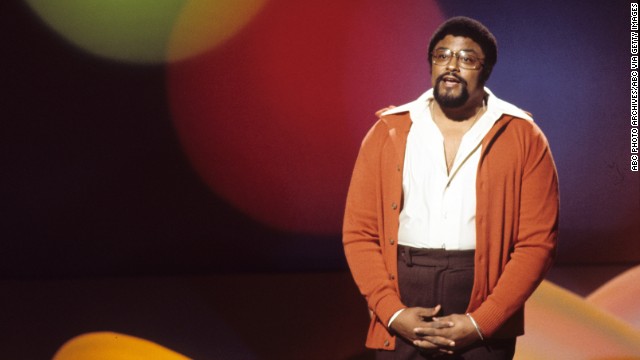
Rosie Grier, defensive tackle for the New York Football Giants and the Los Angeles Rams, appeared in a short skit singing, “It’s Alright to Cry,” a segment that received more attention than many of the other arguably more artful numbers as a pensive Grier endorsed the open expression of feelings, even by a large, physically dominating, man.  Shocking at the time?  Apparently, and the more challenging in that Rosie Grier was a large Black man, the sort of man presented in Shaft or Superfly as a pretty dangerous character.

Cultures change slowly, and Marlo Thomas and friends probably hoped for the more immediate disruption of stereotypical thinking about race, ethnicity, and gender; we’re still encouraging young women to believe that they can do or be anything, but delivering a cautionary note to them in that we find it necessary to bring up the topic.

In the year that Free To Be You and Me was released, Senator Edmund Muskie, the candidate expected to unseat sitting president Richard Nixon, removed himself from contention when he appeared to cry during a press conference.  Real men do cry, but discussion of the subject still makes men uncomfortable, and the public display of emotion (other than anger) is rare.

I cry a lot.  I’m frequently moved to tears by witnessing acts of kindness or generosity.  I cry when ordinary people are treated more gracefully than they expected.  Most of my ordinary crying happens in a movie theater or in front of the television, although the occasional novel can hit home as well.  My behavior would be described as choking up; my voice thickens, my nose starts to run.  I wipe my eyes, snorkle for a few moments, and try to keep that storm of emotion to myself.  I’m not embarrassed exactly, more aware even in the moment that my tears usually spring from unresolved issues of abandonment and powerlessness, issues I feel I ought to have put behind me decades ago.

I cried this week as we brought our good old dog to the vet’s office, knowing we would be driving home without her.  My wife and I and one of my kids held her as she left, loving her entirely. I sobbed uncontrollably.  For a long time.

It strikes me as more than alright to show sadness, and regret, and loss, and love.  We fall in love, have children, adopt pets with the knowledge that we will be inevitably face real pain.  We do it anyway.  We spend much of our alloted time in looking ahead and looking back and relatively little in the moment.  We try to seize the day, but it moves so quickly and I, for one, am easily distracted.

But in that moment, as I felt the enormity of losing a dog I loved, there were no more plans to make; there was no past or future, only immediate nd overwhelming emotion.  I was useless, of course, and did not offer comfort to my wife and son, ordinarily my first instinct, but I expect they understand.

I often catch myself being myself and find my foibles relatively amusing unless they ramble out of control; I endorse mindfulness as a way of life, recognizing that I probably take myself way too seriously.  What I’m after is authenticity and integrity, qualities that can remain more hypothetical and abstract than I would like for much of the time.  Every once in a while, as was true last Thursday, I am simply and visibly what I am.  That comes close to my definition of integrity, and I don’t intend to apologize for being painfully in the present.

I’m not sure where we are in this upside down chapter in the life of a polarized society, pretty sure there’s not as much equality and justice as Marlo Thomas had hoped we’d find in the four decades since Free To Be, but also aware that the culture has changed.  It seems changes of this order take longer to seep into the fabric of a nation than we had expected; “Old ways is best ways,” remains a recurring theme, and we do take a few steps back after leaping forward.  On the other hand, emotions once freed tend to stick around.

It’s alright, I think, to cry.


My year as a sports fan ends … not with a bang but a whimper

My year as a sports fan ends … not with a bang but a whimper

You give and you give and you give, and then Michigan blows a 16 point lead in 94 seconds and what the heck was I thinking?

“Hang in there”, I told myself throughout the weeks leading up to the Outback Bowl,   “Surely the second most extravagantly paid football coach in the universe ( seven million dollars a year)  will come up with an exciting game plan after a month off and the return of starting players.”

Well, no.   A plodding, clumsy, pedestrian Michigan team managed to become the ONLY team from the Big Ten to lose a bowl game.  Stupidly.  With penalties and turnovers.

Fa la la la la and so much for the collegiate football season.  The issue today is not whether Michigan’s coaching staff should be:

a.  given a raise

b. fired

c.  tarred and feathered

d.  fired, then tarred and feathered, then fired some more

The issue is that a season such as this, one that began with such promise and ended with such shame, so damages the heart, mind, and soul that some sort of rite or ritual is necessary to preserve the connection between the fan and the team that has abused him (me).  If so, and I believe that the tissue holding me to Michigan football has worn thin, then a formal process of reconstitution is in order.

This is not the first time I have been shaken as a fan.  The Steinbrenner years were brutal for this Yankee fan; he changed managers twenty times in twenty-three years and went through eleven general managers in the same span.  Comparisons with contemporary political characters may be inevitable; these were the years in which the Yankees were under the thumb of a tyrannical and mercurial self-promoting owner, known as The Boss.  It took Derek Jeter and Mariano Rivera to entice me into watching the Yankees again, and incredibly gifted rookies to nudge me even closer to something like the first stages of fandom.

Winning is not everything, as my long-standing allegiance to the Detroit Red Wings makes clear.  Yes, there have been glory days for the Wings, but not many in recent years.  And yet, my fondness for them remains unshaken.  They missed the Stanley Cup playoffs last year for the first time in twenty-five seasons; it hurt, but the they had snuck in under the wire for so many seasons that the end of the streak seemed inevitable.  Had they begun the season with fanfare and expectation, the pain might have been unbearable, but they did not and it was not.

Ah, but Michigan.

I’ve been so chippy with fans of other teams and so strident in my Michigan fandom that I cannot in good conscience hop off the Michigan bandwagon (tires flattened, windshield busted out, rusted fuel tanks) in order to flag down one of the currently superior programs.  Tempted.  Tempted.

In addition to principle, decency, all that stuff, what other conference could I endorse?  SEC? Uh, I’m not a Bubba.  Big 12?  Or a cowboy.  Pac 12/15 whatever?  Colorado, Arizona, and Utah are less Pacific than I might think proper, and, although Stanford and Berkeley are in the mix, I can’t get past USC.  ACC?  Have I mentioned Notre Dame?

No, the only conference I admire almost completely is the BIG, formerly the Big 10 , now made up of 14, including Maryland and Rutgers, whose inclusion bothers me during the football season but who are pretty interesting during the rest of the year.  I can root for Michigan State when Michigan is not in the picture, but sliding over to Penn State or Ohio State would be like giving my children to the Manson family, the Galactic Empire, or the Medellin Cartel.

I know, I know.  Cubs fans took it in the shorts for a century.  Red Sox fans brought suffering to a national pastime.  Indians fans, Bills fans, Lions fans – they’ve all shown thankless dedication.  But, all those teams have been good enough to come close, really close, and I know there is heartbreak in almost, as the Lions have found in the last three seasons, but fans of these teams need feel no shame.  Browns fans?  Another story for another day.

As I watched Alabama play Georgia for the National Championship this year I realized that the football these guys play is of a different species than that which my Wolverines have brought to the field.  There were some similarities on defense, but the talent and imagination presented on offense was remarkable.

So, what’s a fan to do?

OK, I’m sticking with Michigan.  Given what I see at the top of the BIG and SEC, I lower my expectations.  Can Michigan beat Michigan State?  Sure, and they will from time to time, not every year.  Should Michigan beat Ohio State?  Yes, and it could happen in the years remaining to me, although I see a gap in recruiting growing larger year after year.  Will Penn State continue to improve?  No doubt, and that side of the conference just gets tougher and tougher.

How’s this for high hopes?  We’ve went 10-3 in Coach Harbaugh’s first two years, 8-5 last season, won one of three Bowl games in that period, and beat Michigan State once.  How about we beat two of the behemoths on the schedule?  Notre Dame (230 days until we play), Penn State, Michigan State, Wisconsin, or Ohio State?  How about we beat Western Michigan, SMU, Maryland, Rutgers, and Indiana?  That puts us at 7-3.  Nebraska and Northwestern have both improved; toss ups next season.  Best case, 9-3 with wins over Penn State and Ohio State; worst case, 5-7 with losses to Penn State, Michigan State, Wisconsin, Ohio State, Nebraska, and Northwestern.

There, I said it.  Michigan could easily go 5-7 next season, and I’m going to have to consider that possibility from the start instead of fantasizing about a playoff bid.  Indiana looked better last season as well.  4-8?  Please, Santa, please.  I’ve been a fan for too long.  No coal in this fan’s stocking.  No need for upsets next season to tame the prideful.

I’m already tamed.


Resolutions I Won’t Keep

Resolutions I Won’t Keep

Feeling jolly?  Anyone?

The ghost of Christmas just past is visiting me at this very moment as I consider the various excesses the season has already delivered.  Once again I have eaten more than I intended, spent more than I intended, watched more lousy Christmas specials than I intended, and feel even more inadequate as partner, parent, friend, citizen of the world, and physical specimen.  Hence, thus, I grab an unopened piece of junk mail and pencil in the quick survey of acts and attitudes in need of immediate correction on the back of the envelope, starting, of course, with the resolution to find any of the small pads of note paper left by the plumber, the electrician, and the construction company. Which reminds me of the various projects they have taken on here in the course of the past year, which prompts my first resolution.

I resolve not to mess up the plumbing, the circuit board, the deck, the air filters, the garage door, the locks, or the garden again.  

But I will.  I see things that need repair or upkeep everywhere, and I can’t leave them alone.  I could call for help, seek the advice of a professional, say, one who has both knowledge and appropriate tools.  I could, yes, but at what cost?  In abdicating my role as handy problem solver I am diminished and weakened.  I admit that I am a pathetic victim of technology, incapable of taking care of my own lair.

No, best to roll up the sleeves, buy apparati I will never need again, and begin the process of dismantling some portion of our home.  For a professional, any of these projects would be the work of a half-hour at most; I will spend three weeks and many extra dollars fixing the mistakes I make.  Chaos will reign and my emotional intelligence will atrophy as the blinking sander coughs and dies and the newly applied stain on the deck bubbles and peels.

It’s Home Depot, I think, who promises, “You can do it, and we can help.”

Uh, no I can’t and no, you can’t.

Time to organize the photos and documents stuffed into boxes, cupboards, and shelves.

No, it isn’t

I will not eat after seven o’clock at night.

This one came from Oprah as I recall, in a late afternoon conversation about diets that work and diets that don’t.  Not that Oprah and I were conversing; I’m pretty sure she had one of her resident experts explaining that it’s not great to eat junk food while binging on Game of Thrones.  He (Dr. Oz, perhaps?) is surely right, and yet, what’s the alternative?

Do I have greater need of comfort and solace at four in the afternoon or at eleven as the last local news show begins?  And, even if I were serene enough to pass on late evening snackage, we often don’t get home in time for a 6:00 meal.  Since we’re tucking in at about 7:20, and since it’s been a long hard day in retirement, it’s dark outside, and the world is in the shape it’s in, it seems cruel to withhold a few lime infused corn chips from Trader Joe’s.

I’m going to give up lime infused corn chips from Trader Joe’s

See above

This year I’ll send out New Year’s greetings without a xeroxed update on every member of the family.  And the dogs.

Look, it’s not  that I assume my small circle of friends is hovering by the mailbox, yearning for yet another description of my kids’ attainments; that seems improbable.  On the other hand, I miss those friends and want to have a sense of the texture of their lives.  I’m likely to hear about the really big events, but kids learn to swim, and a beloved pet dies, and the knitting project is finally finished, and I want to hear a friend’s voice filling me in on a year full of change and challenge.

So, I’m mailing out the xeroxed sheet tomorrow.

I won’t buy the used red Alfa Romeo convertible available at an unbelieveably low price at a gas station near the edge of town.

Yeah, that one I actually will keep.  Again.


Remembering last Christmas

Remembering last Christmas

From the archives:

I’m reprinting a story I wrote a year ago, hoping that our good dog, Jinx, would make it until Christmas after having been trapped, frozen, in icy water all night.  She is still with us; she celebrated her fifteenth birthday this week.  Our daughter is on her way home for the holidays again, planning to celebrate Jinx’s quinceanera when she arrives.  Every day is a bonus day.  Always was; always is.

My Christmas wish was simple:  I wanted Jinx, our fourteen year-old dog, to hang on long enough to greet my daughter as she arrived from Massachusetts. My daughter was eleven when Jinx was born in December, on Friday the 13th.  She named Jinx and loved her wholly from the start and for the next fourteen years.  We’ve seen Jinx start to fail over the last few months.  She has been startled easily, by her food dish, by shadows, by her own paws.  She’s wandered off, increasingly deaf and now losing much of her vision.

She has been trying to play with the other dogs, but forgets where she is, bumps into them, is nettled when they upset her unsteady balance. She yips and corrects their behavior, and, as the senior dog in the pack, still has their respect, but they no longer invite her to join in their canine games.  She’s been alone outdoors more often recently; the faster, more athletic dogs have bounded away, leaving her to wonder where they have gone.

So, closing in on her final days but still gentle, sweet, and affectionate.  Over the course of the last few weeks, Jinx seemed to regain some of her former energy; she asked to have the ball thrown, ran purposefully to chase it down, then stood with one paw covering the ball, not actually retrieving but claiming victory.  We were heartened and felt certain that Jinx would hang on until our daughter flew in from Boston.

Better and better.  The temperature was dropping fast, and we had hopes of a white Christmas.  With a week to go before the holiday, our days were packed.  I did a shift as a volunteer at the Hospice Thrift Shop, finished most of my shopping, began planning the Christmas Eve dinner, and accepted invitations to concerts on Friday and Saturday night.  That was to be the end of holiday scramble; I wanted to clear the calendar so that I could give full attention to my daughter arriving on Sunday evening.

I walked from the concert hall at Southern Oregon University into the coldest night I can remember since moving here.  Compared to the frozen north, it will seem laughable, but for us, a stretch of cold weather in the low teens is plenty daunting.  I had turned off my phone, so powered back up as I began the drive home and saw that my wife had called repeatedly.

By the time I reached her, Jinx had been missing for two hours.  She has been easily disoriented and oddly off course for about a week, and last night slipped away  in a short moment as one of the other dogs had to be tended to.  My first thought was that this fragile old lady would not survive much more time in the bitter cold; I raced home to help in the search, driving slowly with high beams as I approached our home.  I watched the road, of course, but also slowed in passing every deep culvert or dangerous ground above a creek running high this winter.

We searched through one of the coldest nights we’ve experienced here; the ground was hard with frost.  In full sunlight, I had to use a shovel to break the ice on the water trough in the meadow; the broken pieces were more than two inches thick. I drove down every nearby road, jumping out of the car to call her name and whistle.  Nothing.

My son and daughter-in-law hurried over, as did two good local friends.  They stayed out for as long as they could, combing every inch of our property and those adjacent to ours.

I went out on foot, again calling and whistling, clapping.  For several hours, I walked down every path I thought she might have taken.  I climbed down the banks of the creek, fearing she might have stumbled into coursing water.  I walked into meadows, fearing she might have been taken by a coyote or the cougar we’ve seen at the far end of the pasture.

By the time I finally gave up and came home, she had been out in the cold for five hours.  My wife and I had to face the probability that our frail dog could not have survived unless a kind stranger found her wandering on the side of the road and picked her up.  My wife posted alerts on every social media site she could find, but we began to fear a terrible and lonely end for a dog we treasured.  We were also heartbroken that our daughter would arrive only to know that we did not know how Jinx had died or what tortures she had endured.

Exhausted, we had to stop the hunt until morning.  I stepped into the room she’s claimed as her own, looked at the down comforter she’s been sleeping on for weeks, and wept.We left the kitchen door slightly open, in case she found her way home, and I slept fitfully on the couch near the door so that I could not fail to hear her should she make it home.

At first light this morning, we began again, walking up and down the same roads and across the same fields whistling and calling her name.  Still bitter cold, by mid-morning, as hope flagged,  we started to truly believe she hadn’t made it.  Our thoughts turned to the most dreadful fears of what she might have faced.

But it must have been our turn for a Christmas miracle.

The phone rang at eleven o’clock.  A caller with an area code far from our home, a volunteer working with a dog rescue agency,  insisted that someone had found Jinx.  She had fallen into a swimming pool almost a mile away, had been trapped in the pool all night.  The family had assumed that the dog barking through the night was a neighbor’s poorly behaved pet and did not go outside to check until mid-morning.  They found Jinx halfway out of the water, her front paws frozen to the cement at the edge of the pool.  The person responding had to use a hammer to chisel her paws free.

We grabbed every blanket and down jacket in the house, drove too quickly, and found our dog near-death, trembling almost unrecognizable, wide-eyed, in shock.  I don’t know if she knew us at the start; we simply bundled her and carried her to the heated car where I lay with cradled her in my arms.  As we pulled into the driveway, I told my wife that I would stay with her in the very warm car, wrapped in the very warm blankets, while she prepared a virtual sauna in one of the bathrooms.

We spent the whole day holding her..  She was able to eat and drink, wobble a bit to take care of her business outside, and sit up to greet the next admirer entering her warm tent.

I picked my daughter up that evening; she held Jinx that night.

The miracles that matter aren’t really accidents:  A stranger summons extraordinary kindness, long-overlooked gifts are finally recognized, generosity or forgiveness appears unsolicited.  Our Christmas miracle arrived because Jinx loves life too much to leave it easily.  She’s a gentle dog with a backbone of steel.

Do we deserve the loyalty and love our pets give so freely?  I’m not at all sure we do, but I know we are our best selves when we recognize their heart and make room for them in ours.

Merry Christmas!


How are you today?

How are you today?

My wife is pretty sharp and knows how to get to the heart of things without much preamble as she did one morning as I creaked into the kitchen, head down, every joint and sinew mewling.    I opened the conversation with a question – “How did I get so old?” Not missing a beat, she replied, “One day at a time.”

Anyone with friends or family in any sort of program of recovery will appreciate the pithy encapsulation of wisdom shared across all sorts and conditions of people, and I assume everyone is familiar with the equally incisive, “Carpe Diem”.  Apparently this one day observation has some traction.  I’m also  pretty sure none of us need the reminder that we live a day at a time, no more, no less, although some of us are better about not wallowing in the past or projecting the future.

I’m so-so in the wallowing and projection arenas, working on it, but just when I thought I had a handle on this human interaction and compassion stuff, however, I heard an interview that let me see how far I have to go.  The subject under discussion was grief and grieving, and while both are significant subjects, what struck me was a simple observation made by a woman whose husband had died unexpectedly.  She identified the complexity in negotiating her life while grieving, simultaneously appreciating the concern and support with which friends approached, sympathetically asking, “How ARE you?”, and becoming increasingly maddened by the question, wanting to shriek, “How do you THINK I am doing?”

I have been a “how are you doing?” flavor of friend for years, supposing that asking the question was an invitation for a friend to talk about whatever complex of emotions were at play.  This widow, on the other hand, was probably more correct in guessing that most of the people who asked really didn’t want to settle into a hour’s description of laundry undone and meals not made.  She assumed that the question was well-intended, but essentially way too abstract to encourage anything but an upturned chin and a brave response; she often felt she had to take care of the person asking.

So, she suggests that a friend might say, “How are you doing today?”

Today.

It seems a minor shift in scale but is actually also a shift in tone.  Today has focus.  Today is real; today is right here and the “how” is in the present and specific.  Today, she might answer:

“How am I today?

My husband died, and that is devastating, but you and I are here in this moment able to do whatever it is that we are able to do, and yesterday was different, and tomorrow may be different, but for now, in this instant, I am feeling sorry for myself because there’s no toilet paper in the house, I have to watch the series finale of our favorite show by myself, and I can’t seem to remember what it was that I went to the store to buy.  That’s how I am today.

Oh, and I lost my car keys.

Oh, and it was probably toilet paper.”

I’m grateful for the suggestion that I ask about the present day as I don’t do well when addressing loss and hard times; I appreciate being told what is helpful.  I’m also grateful for the understanding that almost any interaction takes on greater depth of sincerity if it is grounded in the present.

I’m often embarrassed, for example, when well-meaning folks ask about what I am doing with my life now that I am no longer keeping regular hours as a teacher.  The hours were never really regular anyway, but I had a set schedule and lots of lists of things to do.  You could have caught me anytime in the last forty-five years and asked what I was up to, and, for the most part, I would have been able to answer easily and with conviction.

“I’m grading papers. I’m teaching Hamlet.”  Whatever.  Today, however, not so easily and with considerably less conviction I answer, “oh, volunteering at the Festival, trying to get up to Portland to see my granddaughter more often, working on that play, and the article on the Giants, maybe cutting back the big bush near the pasture gate, but if it rains, I might not.”

I’m bored and distressed with my response before I’m halfway done and aware that none of my blather represents the actual reality of living in the place I do with the people I love.  Were someone to ask, “What’s on your mind right now?”, they would get an ear full.  Some of it would be fluffy, but if the question remained on the table, it could go to any one of the hundred places my brain takes me in the course of the day.  I’m often in the middle of things, considering ideas I want to pursue in some way, but I’m equally likely to be worried about money, or intrigued by an author I’m reading, or stunned by things political, or moved by the heroism of ordinary people around the world.

So, sure, I’m fine.  Doing fine.  And I am.  But each of us is travelling with burdens and joys, ideas and emotions, all of which shift and slide like the patterns in a kaleidoscope.  When I sit with a friend looking through a collection of photographs, for example, each snapshot is a universe; every picture tells a story and a story behind the story, and another behind that.  I appreciate having the chance to tell my stories and hope I can give others the chance to tell theirs.  I like the snapshot; today is sort of a snapshot.

The interview overheard gave me practical information about offering support when possible, and compels me to consider any conversation an opportunity to ask for a snapshot, a picture of what is going on with someone in the moment.  Today is plenty.  As a lad I was told, “sufficient unto the day is the evil thereof,” a convoluted reminder that there’s trouble enough without inventing problems.  Sound enough advice, I guess, but I’m going to suggest there might be some advantage in remembering that, “sufficient unto today is today.”  Today is enough.


The Rules

The Rules

I write today in response to an article published by Eleanor Stanford in the March 26, 2016 edition of The New York Times.  The title is self-explanatory – “13 Questions to Ask Before Marriage”. I’ll include her thirteen questions at the end of this piece, but each of the thirteen inspired many, many more questions, which lead in time to the mother of all questions:

What are the rules?

In the course of a lifetime we internalize rules about every area of human behavior, rules that are so profoundly part of our understanding of the universe that we have no idea how firmly they drive our choices and attitudes.  The questions Stanford asks identify some of the significant issues of disagreement in a marriage or partnership, but there are many, many which may never be articulated because they are invisible to us.

Here’s the start of an imagined ordinary day’s rules:

7:00 am

Be quiet.  Don’t wake Mom.  Make the bed.  Really, make the bed.  Don’t leave the bathroom door open when using the bathroom.  Don’t leave towels on the floor.  Don’t squeeze the toothpaste from the middle of the tube.  Don’t leave toothpaste and other sedimentary substances in the sink.  Don’t come to breakfast without having dressed. Don’t wear the same shirt twice. Don’t wash jeans.  Ever.  Don’t leave nothing but cereal dust and raisins in the box.  Don’t use the smaller pan to make oatmeal.  Don’t use the new pan to make French Toast.  Don’t use the real Vermont Maple Syrup with French Toast unless it is a holiday.  Don’t use Mom’s special mug for tea or coffee; it’s ok with milk and water.  Don’t put banana peels in the compost bin.  Don’t leave a plate in the sink unless it has been rinsed.  Don’t put bananas in the fridge.  Don’t forget to put pears in the fridge.  Never use brown sugar on anything but oatmeal.  Don’t eat Dad’s yoghurt.

… and so on …  and that’s just the first ten minutes of the day.  This rule thing now appears far more unmanageable than we had thought.  It turns out that the only way we can see the rules is to work backward from the effect the rules have on us.  One of the gifts of my declining years is that I more frequently catch myself being myself.

This first revelatory catch took place almost twenty years ago:

We had arrived home from the airport after a trip, collected the mail that had piled up in our absence, and walked into our house.  My wife, being normal, opened a letter from a friend.  I bristled.

What was I bristling about?  I was bristling because the rule is you don’t get to look at mail, much less open it, until all bags have been unpacked, clothes put away or stuffed in the washing machine, coats hung up, suitcases returned to suitcase storage, any spoiled food taken from the fridge and chucked, and all food preparation surfaces cleaned and dried.

Apparently I was alone in understanding the rules imposed by an unyielding universe.  Or, it might have been possible that I was operating with a trillion undocumented rules in my head all the time.  In the moment, I realized that the rule book was out and in play, and that it was my own absurd set of rules, and that there was no reason to believe that anyone else should operate in obedience to my goofy rules, and that it was even more absurd for me to be bristly about a condition I had created entirely in my own mind.

La and Voila!

Opening the door after a vacation is ordinarily an insignificant moment in the life of a couple, but, had I not tumbled to the effect the unarticulated and entirely imagined rules was having on my emotions, it is likely that I might have moved from bristly to cranky, and then to aggrieved.  And that’s not a pretty picture.  More dangerous than the ugliness of my petulance however, would be that I might take it to be a “fact” that my wife was thwarting me and ignoring the rules with full knowledge that her actions would injure me.

That’s not just absurd; that’s crazy.

I’ll gladly admit that I must have gone down the petulant tube dozens, ok, thousands, of times in the years prior to this sudden burst of self-awareness.  I will more reluctantly admit that it still happens.  But, I have a tool now that I did not possess before the skies parted and reason returned.  Not always, but frequently, I can look at myself sliding into the first stages of grievance or resentment and ask myself what rule I think is being broken.  Basically, I sharpen the focus on my own thinking now aware that I can’t be trusted with ill-considered feelings.

So, what does this working backwards focus look like?

Let’s say I’m working in the kitchen.  I’m up to my elbows in dinner prep, hands covered with tomato sauce.  I’m standing to the right of the sink using a cutting board.  I’m standing in front of the drawer that holds the silverware we use on a daily basis.  I’ll drop into rules for a moment, just to illustrate how a tortured mind operates – these are the RIGHT knives and forks to use; any other knives and forks are just wrong.  Let’s say an innocent strays into the kitchen looking for a fork with which to eat a snack taken from the fridge.  Let’s also say that my same absolutely invisible set of rules insist that nobody eats snacks before the dinner I’m preparing, so there’s that, and then … this perfectly decent human being takes a fork from the drawer to the left of the sink, the drawer that holds the “B” list forks, the jv forks, the supplementary forks, might I suggest, the WRONG forks.

What’s a guy to do?  Two rules broken simultaneously.  Feel the bristle.  Feed the bristle. Then, I pause.  I say to myself, “I’m bristling.  This is not good.  What am I bristling about?”

That’s all it takes.  As soon as I identify my response to rules that I cannot defend, I cannot defend them.  I’m just a stooge trying to control the universe to no good purpose.  Time to let it go.  I finish up in the kitchen.  Nobody’s taken to task.  No apologies to make or fences to mend.

That said, it probably would be a good idea for prospective partners to take a quick romp through the questions Stanford provides, remembering that there are always those pesky invisible rules hiding right behind the discussions to follow.  Are these a sacrosanct thirteen, equally significant in the married lives of couples from every quarter and of every disposition?  Probably not, but they may kick up enough pre-nuptial dust to lower the chances of a marriage imploding within hours of the celebratory hooplah.

Did your family throw plates, calmly discuss issues, or silently shut down when  disagreements arose?

Will we have children, and if we do, will you change diapers?

Will our experience with our exes help or hinder us?

How important is religion.  How will we celebrate religious holidays, if we celebrate them at all?

Is my debt your debt?   Would you be willing to bail me out?

What’s the most you would be willing to spend on a car, a couch, shoes?

Can you deal with my doing things without you?

Do we like each other’s parents?

How important is sex to you?

How far should we take flirting with other people?

Do you know all the ways I say, “I love you”?

What do you admire about me and what are your pet peeves?

How do you see us ten years from now?

The comedy of coping – writing our story together

The comedy of coping – writing our story together

Kim Stanley Robinson’s latest, New York 2140, presents life in the city after the deluge, icebergs have melted, oceans have risen, the city is under fifty feet of water, and New Yorkers have survived as New Yorkers always survive, with cheerful irritation and down-to-sea ingenuity.  This novel is not dystopian; it rather belongs to the genre of climate fiction and is surprisingly optimistic, as much of Robinson’s fiction has been.

“I thought of the book eventually as a comedy of coping, and to do that I picked a time, perhaps 40 years after the disaster itself. If it was set in the midst of the catastrophic flood in 2100, the disaster would have dominated that work. It would not have been the comedy of coping — it would have been the disaster of refugee creation.  But I think, at some point, science fiction has to imagine the people who come after, when the situation will be natural, whatever it is. If that natural situation that they’re coping with is that new part of Manhattan that resembles Venice, there will be good parts to that as well as bad parts. There will be beautiful parts as well as moldy, horrible parts.”

I heard Robinson interviewed and was struck by his contention that we live in what is essentially science fiction, a reality changed and changing with such rapidity that we are in a constant state of reaction.  His grace note, however, is that we are writing this science fiction together.

I’ve decided to take up that challenge, live in a comedy of coping, writing the present on a day-by-day basis, not taking myself too seriously, but taking other people seriously and treating them with the decency that co-authors deserve.  Some, I know, are going to write perfectly awful chapters, and I hope to God that someone at some point does some editing, but apparently my notion of how the world should spin is just one of millions of possible spins.

Two other books spring to mind as I consider this reality we are writing.   Both have a great deal to do with family and, although both are truly bizarre, each has left me with insights that may prove useful as I attempt this comedy.

The Swiss Family Robinson (Der Schweizerische Robinson) is a familiar tale of shipwreck, adventure, and ingenuity.  The Disney version offered pirates and a race in which the contestants ride animals that are found we are told on islands near New Guinea, elephants, zebras, ostriches, and monkeys.  The original novel, by Johann David Wyss, a Swiss take on the genre after Defoe’s popular Robinson Crusoe, is survival fiction mixed with a series of object lessons (It is Swiss, after all).  The narrator, William, is a father who truly does know it all which turns out to be particularly important as the island upon which they wash up is rife with wildlife (wombats, capybaras, platypuses, wolves, walruses, and porcupines, to name but a few) and plant life, allowing the family to feed, clothe, and protect themselves.

So, imagine the worst day possible.  The seas roar, rise, and tear a ship to bits, everything you own is washed into the ocean; gasping, choking, you claw your way to an unknown island, your carefully planned life now nothing but a memory.  And yet.

Day by day the family makes a world.  In the end, when a British ships finds them on the island, some decide to return to the Europe and some stay.  It’s probably more fun to read about than to experience, and not every castaway mom knows how to make a hearty porcupine stew, but the novel presents a model of resilience and invention in the face of disaster, and it is that assurance that is necessary to our current comedic coping.

The second novel, The Mosquito Coast by Paul Theroux, is a dark philippic, somewhere between Apocalypse Now and The Great Santini.  Theirs is a family ripped from comfort by a brilliant, charismatic, egomaniacal father who is fed up with an America rotted from within by greed and rapacious consumerism.  So far, ok, we’ve seen that before, but this father pulls his family to the Mosquito Coast of Honduras where his grandiosity and paranoia lead to murderous conflict.

Doesn’t sound like much there for us who attempt this comedy of coping, but the lesson I took away back in 1982 when I read the book as a relatively young father, was not that there is no safe place but that wherever we go, as the saying instructs, there we are, and since we are inescapable, the real terrain to work on, I guess, is ourselves, another one of those “We have met the enemy and he is us” reminders.

I turn back to Kim Stanley Robinson at this point because he has imagined a world in which much of what I fear has taken place, and yet, the human spirit prevails.  I admire the power of Robinson’s speculative imagination but find even greater comfort in his portrait of a world teeming with character and humor, despite change that to us would seem unendurable.  In the interview, Robinson spoke of the work that he does in terms of comfort, quoting Roger Scruton, “The consolation of imaginary things is not imaginary consolation.”  There is much about Roger Scrutton that was far from consoling, but he identified something important about what novelists such as Robinson and Emily St. John Mandel can do and something equally significant about what we can do in this curious business of writing the present together.

Consolation, empathy, decency – these are not imaginary comforts.

What I wished for … and how that worked out

What I wished for … and how that worked out

Those who scan this blog with any regularity have noticed that the tenor of the site has rambled from whimsy to outrage even as the number of postings has dropped off precipitously.  Some of the inconsistency is to be blamed on the post-election brain fur that has fogged my every thought since last November, but some has also been due to my continuing efforts to find the right medium in which to indulge my ambition as a writer.

Here’s the update:  The two plays I’ve written recently have apparently not rocked the theatrical world.  Languishing.  Languishing.  The last two novels stalled out completely as I continue to read really original and imaginative work written by my betters.  The last unexplored frontier remaining?  Sports writing.

I’d long thought I’d like to write about sports.  I certainly like to read about sports, and, whereas I rarely have anything to say about the condition of the wider world, soul-crushed as I am this year, I find myself holding passionate opinions about the relative strength of SEC football and Big Ten football, the chances of the Dodgers next season as compared to those of the Indians, and the demotion of Eli Manning from franchise quarterback to benched backup, opinions nobody in this household wants to hear.

So, I began writing for Fansided, a network of sports and entertainment related sites ranging from those following the NFL (Dear god, the Browns actually made a good decision) to endless discussion of Game of Thrones (Emilia Clark dyes her hair blonde).

After submitting several examples of my sports blathering, I was welcomed to several of the Fansided channels, beginning my sportswriting experiment with GBMWolverine, a site dedicated to University of Michigan athletics and to Michigan football.  In my short tenure there, I wrote something like twenty-four articles, some fulminating as a fan and some analyzing with precision exactly where the fifteen million dollar a year coaching staff had missed the mark.  My last opinion piece is exactly the sort of subject that kills conversations in all but three living rooms in the universe – “Has John O’Korn crushed Jim Harbaugh’s legacy at Michigan?”

You don’t want or need to know.

Eager to spread my sportswriting wings, I have moved on to the Fansided newsdesk, from which assignments reflecting breaking stories are dished out to reporters hovering like harriers over a field filled with scampering rodents.  I’m the lowest of the low, a bottom feeder, dished stories such as “Scott Frost and his staff will coach UCF in the Peach Bowl”, and “Giancarlo Stanton will not be a Giant next season”.

My last piece was “Herm Edwards stunned by size of ASU game jerseys”, an assignment I mangled as I am unfamiliar with the bells and whistles necessary to the publication of a media friendly posting, Search Engine Optimization, and so on.  It was that piece that has convinced me to let other, more savvy digital experts take on stories of that sort.  When assigned, I begged to explore the many and improbable aspects of Herm Edwards’ appointment as head football coach at Arizona State University, but my editor wanted 300 words on jerseys – no less, no more.  Should you wish to know why my fascination with Herm Edwards remains unslaked, please watch this, his first press conference as head coach.

I’ve been swatted when submitting articles with attitude or, as the editors describe my relentless fits of whimsy, “editorial content”, but that’s what I intended to offer in writing about sports.  Real reporters are breaking stories, hoorah, and I’m sitting in my living room in southern Oregon fulminating.

All of which is to explain why an occasional goofy sports piece might wash up in these pages, unwanted as they are in other settings.

Fair Warning!

Army plays Navy this weekend, Tiger’s playing golf again, NHL players won’t appear in the Winter Olympics, Marvin Lewis has to go, Russia is barred from the Winter Olympics,  How can LeBron not be MVP  this year, the US may not participate in the Winter Olympics, Dennis Rodman reports on Kim Jong Un’s true intentions, if Baker Mayfield wins the Heisman Trophy (he will), Oklahoma fans want to erect a statue representing Mayfield’s planting a flag on the Ohio State logo – more than 4000 petitions have already been collected.

And that’s just today’s sports news.

Stay tuned, sports fans, it’s time to explore the wonderful world of sports clichés.  If you got ’em, send ’em my way.  After all, it’s not over until a good defense beats the best offense.