The Animals’ Christmas Tree

The Animals’ Christmas Tree

Some people believe that animals can speak at midnight on Christmas Eve.

I had to wonder.  Perhaps it was just a story told by folks who want to know what sorts of things are on an animal’s mind; perhaps it was true in part.  Perhaps some animals could speak, but I hadn’t heard them.

Not once.

And I’d spent a number of Christmas Eves watching the animals I knew pretty closely.  I don’t want to call this a battle of wits, because I’m not sure of either of us qualifies for that sort of battle, but my second dog, Cookie, can scrunch up her forehead when I talk, leaning in to hear the parts where my voice goes soft.  She’ll raise her chin, like she’s about to answer or offer a comment, you know, perhaps agree, or maybe ask for more details.

There’ve been times when I forget that she hasn’t actually asked, and I’ll find myself answering what are my own questions.  “No,” I’ll say.  “I haven’t seen one of those Jays all fall.  I don’t know where they’ve gone.”

As if that’s something she wanted to know about, and maybe it is.  Just as good as any other question, I guess.  As much as I was genuinely interested in what went on between Cookie’s ears, I had to admit I was doing the talking for the both of us.

So, I was pretty sure the story was only a story, at least when it came to the animals I had spent any time with.

Then there’s another story, about the animals’ Christmas tree.

That one struck me as not very likely as well.  I wasn’t all that concerned about the details of it, what paws and beaks and claws and talons might be able to do when it came to decoration; it just didn’t seem likely that animals would care about having a Christmas tree.  I’m not going to get all scriptural here, but not many animals had a chance to get in on the first Christmas, sheep and lambs, I suppose, perhaps a goat, too, since they all would have been driven by the same shepherd, a donkey, maybe.  Anyway, even though some animals were around, why would an otter, say, or a lynx come around on Christmas Eve?

You might wonder why I bring any of this up at all, since I seemed to be so convinced that there wasn’t anything to these stories, that they were stories kids might like, nothing more.

Well, I was mostly convinced and pretty much kept to Christmas the way most families do.  Sure, over the years, I’d stay up to check on the dogs, but I’d be up anyway, putting out the things I wanted the kids to find on Christmas morning.  Just about midnight, I’d stop wrapping and sit as quietly as I could, staying still for as long as I could, but after fifteen or twenty minutes, I’d give up again and head to bed.

Last year, though, both the kids had moved all the way to North Dakota, and the weather was just terrible all across the northern plains.  Winds were bad there, and the roads were slick ice.  I couldn’t ask them to pack in; I knew I probably wouldn’t get very far if I tried to drive.  So we talked on the phone a bit on Christmas Eve, even sang a few songs, then I said Merry Christmas and sat right there in front of the fire.

I must have dropped off for a while because both Bosco and Cookie really needed to go outside, and I didn’t remember putting them out the way I usually do, right about ten.  Now, Cookie may be a dog that seems ready to start a conversation, but Bosco’s not a dog with much on his mind; he’s pretty much a creature of instinct; I hadn’t even got the door fully open when he bolted.  Cookie took off too, and since there’s been so much talk about coyotes around here, I pulled on my boots and coat and tried to catch up.

I’m at the end of an unpaved road that runs between three of the last big farms around.  If they’d stayed on the road, I could have gained some ground, but they lit out over the neighbor’s field, Bosco churning up snow as he lumped along and only Cookie’s flopping ears visible as she followed.  My boots filled with snow almost from the start; it was like trying to run with a sack of rocks on each foot.  Clouds opened up a bit, letting some moonlight filter through; The craters Bosco left behind were easy to pick out, but I lost sight of the dogs early on and just kept on, hoping they’d get tired and circle back.

I was tiring myself, slowing to a walk.  Clouds that had been scutting overhead, slowed and settled just about the same time I did.  What little moonlight I’d had was gone.  I trudged up a bank not able to see a thing, hoping I wasn’t about to drop into one of the creeks that runs through the farms, my arms straight out in front of me, in case I took a fall.

Getting to the top of the rise, I caught flickering light up ahead.  “Dang!” I thought.  I could see then that the dogs’ tracks ran straight out ahead.  I was about done, and the wind had picked up, but I did love those creatures, and they were all the company I had, so I hunkered down a little more, pulled up my collar and followed the tracks.

I had my head down against the wind, but I hadn’t gone very far before I could tell that the flicker of light had become more steady.  By now you’ve probably figured out that it was that tree I was telling you about, a single pine tree way out in the middle of mostly open land.  I can’t tell you even now where the lights came from; maybe moon and clouds happened to get together just right.  I can’t say.

What I do know is that my dogs were sitting there as calm as could be, right alongside the border collies from the Harris place and the three-legged pig from across the road.  I knew better than to get too close, but I could make out horses, cows, sheep, for sure.  Other creatures were smaller and sat lower.  I could have sworn I saw a cougar and three foxes, but that doesn’t seem likely, given the company they were in after all.  What I took for a rough stand of brush though, turned out to be two bears, swaying, half standing, close together.

I can’t swear to it, and I guess I am in danger of spinning a story I had been longing to hear for a long time, but it looked to me, by the way my dogs bobbed their heads and turned from time to time, like they were listening, like they were in a kind of conversation.  The wind had picked up considerably back where I stood, blowing right in my face.  My eyes watered, almost froze solid in the cold, and my ears had got to that stage where they felt as if they would snap off if I moved too quickly.  The way that wind moved across the snow, the way sounds seemed to rise and fall,  I could almost believe the strangest, sweetest song I ever heard was coming from across that meadow.

I turned then and picked my way back home through the snow.  Didn’t look back for some reason.  I think somehow I knew better.  I’d hardly shaken off my coat and boots when I heard Bosco and Cookie at the door.  I let them in, toweled off most of the snow they carried inside, plumped up the pillows each one liked, made sure they had water, poked the coals down in the fireplace, and went to bed.

I’ve thought about it a lot since then, even tried to retrace my steps, but I’ve never found my way back.  The dogs haven’t taken off that way again, and I’ve never seen a moon like the one that night.

I like to think I was invited too, just that one time, just as far as I got to go.  Some stories only open once, I guess, and this one came to find me just about when I needed it most.

Maybe your story is waiting for you.

Merry Christmas!

Serenity Now!

Serenity Now!

“Grant me the serenity to accept the things I cannot change, courage to change the things I can, and the wisdom to know the difference.”

This prayer is a short course in acceptance, found in homes and churches around the globe and recited at the start or close of meetings of Alcoholics Anonymous and many other twelve-step programs; it is also a source of comfort to many who do not consider themselves in need of recovery or religion.

Jerry Stiller, a comedian known for delivering his lines with angry urgency, played Frank Costanza, George’s father on Seinfeld, a character whose impulsive anger had become so pronounced that a therapist ordered him to meet any slight disturbance by yelling, “Serenity Now!” at top volume.

That’s an even shorter expression, but acceptance appears to have been lost in translation.

The prayer is often attributed to Reinhold Niebuhr, a celebrated theologian who taught at Union Theological Seminary for much of his career.  Niebuhr used the prayer in a slightly lengthier form in the early 1940’s while preaching at a church in Massachusetts, perhaps with particular concern for the spiritual well-being of parishioners during the first years of World War II.  His version is clearly from a pulpit:

“God, give us grace to accept with serenity the things that cannot be changed, courage to change the things that should be changed, and wisdom to distinguish the one from the other.”

Earlier variants have been found in almost every era in recorded history; apparently humans have long been aware of the difficulty in recognizing the difference between those things which are our business and need our engagement and those which lie beyond or outside of our control.

The Niebuhr prayer seemingly asks for grace, whereas the more commonly recited version apparently asks for serenity, but both direct attention to the need to accept things that cannot be changed before seeking courage to attend to those things that can and should be changed.

Like Frank Costanza, most of us have difficulty in finding grace or serenity on demand, which raises the essential question.  If we need grace or serenity to find acceptance, don’t we have to begin by accepting that we need grace or serenity?

Chicken?  Egg?  Is there a theologian in the house?

What’s the difference between acceptance and serenity?  Perhaps an example will help:

“You’re in the Express Check Out line at the grocery store.  A huge illuminated sign reads: ’12 Items Or Less”.  The person in front of you unloads a huge cart, placing item after item on the counter.

If you count up the 26 items and don’t say anything – that’s acceptance.

If you don’t count – that’s serenity.”

The prayer may suggest that in pausing, in asking, whoever or whatever we ask, there is the first small step toward acceptance of our own inability to sort through difficult moments with anything like serenity, and the acceptance that without some serenity we’re going to spend a lot of time, energy, and willpower trying  to change things we cannot affect, spinning us even further into graceless floundering with the possibility of considerable collateral damage to ourselves and others around us.

For those who are generally competent and responsible, a short spin is distracting and unfortunate; one might feel some embarrassment and hope to do better next time around.  For those in need of recovery or significant alteration of personality and behavior, each new spin-out postpones or threatens significant change.

Let’s get back to the check out line.  We step up to the counter with whatever  abilities or baggage the day, or a lifetime, has provided and …

Here’s where language becomes interesting.  One could say, we walk up to the situation and react.  Others might say, we walk up to the situation and respond.  Some might even simply say, we walk up.  Without getting all figure/ground, uncertainty principled about it, there is no “situation” until we react or respond; we are not separate from the situation if we experience it as a situation.

Assuming that most of the human race isn’t floating from counter to counter on a cloud of serenity, the challenge in the moment is in quickly reminding ourselves that short of grabbing the thoughtless or clueless shopper and tossing his/her/their purchases on the floor, beating the shopper senseless, and kicking the battered remains into the display of seasonal baked goods, our place in line remains unchanged, no matter what we think or feel.

And that’s why we have to catch ourselves being ourselves.

Against all expectations, if there is a state approaching serenity, it may only come if we can put enough distance between ourselves and our judgments to recognize that we’ve got plenty to deal with in taking care of our own behavior and actions.  Finding distance sounds a lot like acceptance, and it may take some practice.

The wisdom to know the difference between the things that can be changed and those that can’t may be more easily available. There will be occasions when we will need courage to take change things within our power to change, but, not surprisingly, they tend to announce themselves by arriving with palpable trepidation or full-blown fear.

Grocery store correction of one else’s bad behavior?  Lots of emotion, but not much fear.

Admitting a critical error of judgment to a spouse or employer?  Telling a friend you’ve broken a confidence?  Admitting you have a problem you consider shameful?

Fear by the bucket.

As a friend of mine is fond of saying, it all comes down to this:  There is some grace in asking for serenity and in working toward acceptance.  The next step is in finding courage to change, and that process may be the work of the rest of a lifetime..


It’s Good To Be The King

It’s Good To Be The King

The universe curves in on itself in mysterious ways, presenting identical scenarios with grotesquely differing casts of characters.  The only remaining surprise, it seems, is in finding ourselves surprised when the “unthinkable” happens again.

Teddy Roosevelt charged uphill with his Bull Moose Progressives, animating a third-party candidacy, throwing the establishment power hierarchy into disarray and thoroughly shaking up the Republican Party from which he had defected.

F.D.R.’s election and his term of office brought relentless and frequently ugly criticism of the man, his policies, his wife, and his dog.  Labelled a collectivist, a socialist, a fascist, a warmonger, Roosevelt’s name, like Voldemort’s , could not even be uttered aloud; for many Republicans, he was “That man in the White House”.  Eleanor, the First Lady, was reviled for her active political support of progressive reform and chastised for using her position to make money as a writer and lecturer.

The New Deal presidency remains a golden moment for liberal progressives and a stain on American democracy for many conservatives.  Time Magazine’s cover story on Donald Trump is titled, “The President of the Divided States”; FDR’s presidency was no less divisive.

In 1948, the Gallup, Roper, and Crosley polls all predicted a solid victory for Thomas Dewey over Harry Truman, leaving chagrined pollsters to “explain” away their failure to predict the outcome correctly.

In 1960, the Presidential race was excruciatingly close (Kennedy won by 0.17%), bringing disputed election results and demands for recount in Texas, Illinois, and New Jersey.

Finally, a much-anticipated Hollywood project will present an actor (not Will Ferrell, despite earlier reports) playing Ronald Reagan (an actor) as a President suffering from dementia who finishes his term in office by acting (as an actor) his role as President.

This all comes to mind as allegations of nepotism pepper Trump’s transition team(s); critics fear the influence of sons and daughters and various in-laws.   It occurs to me that they may be forgetting JFK’s appointment of his brother as Attorney General of the United States in order to, as the President suggested, “get some legal experience.”

It isn’t easy to remember that those of us who were entranced by the Kennedys made them into celebrities; they charmed an admiring public into gawking, fawning admiration.  We could not get enough of the Kennedys, and we didn’t care if paparazzi stalked Jackie in her bereavement and various Kennedy siblings and hangers-on in moments of personal tragedy or disgrace.

We called the moment, “Camelot”, and we relished our shining, polished, handsome political first family.  For a few fleeting years, it was as if we, too, had royalty, an American version of royalty, attached to the business of government but essentially simply a phalanx of celebrities.

OK, so why not?

Why not recognize the fun to be had with a monarchy?  President come and go, but Kings?

Kings can be flawed and spontaneous.  They can dabble in every aspect of governance, knowing more than generals without serving in the military, discoursing on the economy without knowing the price of a gallon of milk.  They might have opinions we might find offensive or misguided, but we know those Royals live in a world of their own.

Silly Royals!

I know, I know.  It’s expensive to maintain a monarchy, but consider the costs if we don’t.  It may that the only succor available to a nation as deeply divided as our own is in recognizing the necessary presence of a designated national celebrity to absorb our frustration, fear, and unrest.

Apparently our founding fathers did not agree with this supposition, but, it’s important to remember that they didn’t anticipate the constriction a two-party tradition would impose on government.  Let’s give them credit for a pretty impressive first two-hundred and twenty-seven years and begin anew with a coronation rather than an inauguration.

I’m thinking Jay Z and Beyonce, of course, although I guess the Trumps could work as easily.

Or, I guess we could build enough good will across various constituencies to bring a truly viable third party into the mix.  Hmmmmm.  Worth a try.


Santa Claus Is Looking For Love?

Santa Claus Is Looking For Love?

I had a bit of a drive to pick out a Christmas tree, and, feeling seasonally challenged, I figured the best way to jollify myself would be to find some holiday music somewhere on the radio dial.  I stumbled into a Country Christmas Celebration expecting Amy Grant’s “Tennessee Christmas” or at worst, Patsy and Elmo’s “Grandma Got Run Over by a Reindeer”.

No such luck.

What I got was Johnny Lee’s “Santa Claus Is Looking for Love”, recorded, as far as I could tell, in an after hours dive with recording equipment last used to capture Wendell Wilkie’s concession speech.  I am not familiar with the rest of the Johnny Lee songbook, a privilege I intend to protect.  Niggling issues of quality aside, the idea of Santa cruising the streets to find sweet, sweet love in his off-season did little to bounce me into snow-flecked good cheer.

There have been so many  great holiday classics, and I’m a sucker for all of them.  My tastes are broad; Country Christmas is fine by me:  Clint Black’s “‘Til Santa’s Gone”, Willie Nelson’s “Pretty Paper”, and Alan Jackson’s “Let It Be Christmas”.  I’ve been attached to Burl Ives’ “Holly Jolly Christmas” for decades, anybody’s “Let It Snow”, Elvis’ “Blue Christmas” (I’ll have uh huh huh blue Christmas without you) ), Bing’s “Mele Kalikimaka”, K.D. Lang’s “Jingle Bell Rock”,  Mariah’s “All I Want For Christmas is You”,  Don Henley’s “Please Come Home For Christmas”, even the marginally creepy “Santa Baby” as sung by Eartha Kitt and “Baby, It’s Cold Outside”… Wait …OK, maybe not.  “Say, what’s in this drink”, puts me in mind of a Cosby Christmas.

Nevertheless, there are dozens, hundreds, of perfectly hummable holiday pop standards alongside the traditional carols ( A Pentatonix Christmas combines both!), but by some dark turn of circumstance, there are two or three unexceptional songs that crawl uninvited deep into the midbrain, sending intrusive blasts of tedious blather again and again.

Repetitive.  That’s the key, I think.  The droning, repetitive choruses are inescapable.

I want to wish you a Merry Christmas

I want to wish you a Merry Christmas

I want to wish you a Merry Christmas

From the bottom of my heart …

And repeat.

But the most devastating brainworm is the work of a remarkable songwriter, Paul McCartney, whose gift for lyrical composition is evident in almost a hundred pop classics.

Here goes:

The moon is right

The Spirits up

We’re here tonight

And that’s enough    (uh, “up” and “enough”? )

Simply having a wonderful Christmastime

Simply having a wonderful Christmastime

The party’s on

The feelin ‘s here

That only comes  (wait for it!)

This time of year.

Simply having a wonderful Christmastime

Simply having a wonderful Christmas time

I try, I try to block it out.  Blah.  Blah.  Blah.  Ears covered.  But then, this bit takes me all the way to holiday hell.  McCartney leaps down the scale.  One note per word.  ONE note per word.  Why not just punch us as you sing, Paul?

The choir of children sing their song

Ding dong, ding dong

Ding dong, ding ooo

Ooo ooo toot toot toot toot toot toot

We’re simply having a wonderful Christmastime

Simply having a wonderful Christmas time…

Look, I’m impressed that McCartney plays every instrument in the mix; he probably had a great time pulling it together in his studio, but this is the sort of song ninth grade kids make up on a sleepover.  The only difference is that this one is trotted out on an hourly basis from October until Boxing Day.

Dazed, pummelled, I found myself wondering what other highly competent contemporary pop stars might have come up with if moved to write a holiday hit in their own style.

Paul Simon?

Hello Christmas, my old friend

You’ve come to jeer at me again.

Because the holly softly creeping

strangled me when I was sleeping

And the tunes that were planted in my brain

Still remain

Within the sounds of Christmas


James Brown?

Woah!

I been good!   (dah duh dah duh da duh dumm!)

 I knew that I could, now (dah duh dah duh dah duh dum!)

I been good (dah duh dah duh dah duh dum!)

I knew that I could now (dah duh dah duh dah duh dum!)

So good (bop!) 

So good (bop!)

Santa come through!

Whoah!

I started to juggle Britney Spears’ lyrics and discovered that simply replacing “baby” with “Santa” made it all work reasonably well as a statement of continuing belief in the jolliest of elves, who, I am led to believe, is looking for love this season.

Oh, Santa, Santa

How was I supposed to know

That something wasn’t right?

Oh, Santa, Santa

I shouldn’t have let you go

And now you’re out of sight, yeah

Show me how you want it to be

Tell me, Santa

‘Cause I need to know now, oh, because

My loneliness is killing me (and I)

Must confess I still believe (still believe)

When I’m not with you I lose my mind

Hit me Santa, one more time.  (ok, that may be out of bounds.)

None of these have the penetrating power of the McCartney dirge, but I had for a moment erased the cascading ding dong, ding ooo.  My family has long begged me to give holiday music a rest; I’m not even allowed to start listening until the end of the Macy’s Thanksgiving Day Parade.

Sixteen days until Christmas.  Simply having …


Why My Best Stories Will Never Be Told On The Moth Radio Hour

…or at the National Storytelling Festival … or at the local library … or at family reunions.

Traditional storytelling is an art, and the best of the traditional tellers present the oldest and most familiar stories in their own distinctive voice, adding rich texture to tales that survive because they have meaning beyond the particular time  or setting in which they were conceived.  Some tellers translate old stories, dressing them in contemporary language and manners, using the dissonance between old tropes and modern sensibility to highlight enduring values.

Many contemporary tellers also tell “personal” stories, some true memoir and some invented histories.  Generally, these stories are told in the first person, evoking a particular legacy of family or region.  The structure of the personal story often includes the broad strokes establishing the genre, an account of the dramatic elements put in play by the individual or family, ensuing crisis/confusing, and resolution.  The most successful stories have a pleasing symmetry, bringing the audience to the end of the story with an appreciation of the  design with which various strands have been woven together, providing a moving or provocative resolution.

Every family has stories, of course, such as those cherished in our family: the time someone invited the entire third grade to a birthday party without telling his parents, or the time someone fell from the top of a swing set, caught his nose on one of the hooks holding the swing’s chains, and dangled by the nose until the flesh parted.  Those sorts of family favorites arrive with any gathering and are the touchstones of personality; no matter what contributions that unnamed person might make to society, he/she/they will forever be the kid who prepared for a school dance by using Vick’s VapoRub as hair tonic (Hey!  It kept every hair in place and smelled great!).

The stories that won’t get told are distinctively personal and take place in my early adolescence, but they have not come up in family chats since the dark months at the end of eighth grade.  I’m not ducking embarrassment or humiliation, although both would likely arrive with the first few sentences necessary to setting the context in which the stories would have to be told.  A good story needs no explanation, and mine need so much more than mere explanation.  The titles alone reveal more about my odd misapprehension of human behavior than I might like to have widely known:

My First Collection – The Book of Sweat Marks

My First Business – The Dissected Frog Stand

I’ve tried to pull these stories into shape; I even recorded a version of The Book of Sweat Marks as an audition audio for the Moth Radio Hour, only to realize that the account sounded like the raving of a terminally confused fanboy, a proto-papparazzo stalker, a career path I have avoided.  In the same fashion, the entrepreneurial impulse to set up a roadside stand is one thing; without considerable explication, however, the decision to sell dissected frogs rather than lemonade or cookies can leave an indelible and unfortunate impression.

No, the problem is that the stories are odd, slightly off-putting, but not meaningful. There is no symmetry, no journey and return.  Odd is just odd, not even amusing. Just odd. I find no “Ah Hah!” moment, nothing in the stories that carry a character to understanding and reconciliation.

With regard to my uncommon collection, I could make the observation that collecting autographs, ostensibly a  “normal” thing  to do, is actually quite curious as behaviors go.

What exactly is taken and curated?

Isn’t the collector essentially capturing the celebrity’s handwritten name in order to capture the celebrity’s spirit ?  His/Her/Their animus/a?

I feel a little better putting it that way, because my collection was perhaps a bit more primal but the same sort of thing.  Sort of.

I’ve mentioned my childhood interest in professional wrestling and monsters.  From some points of view each separate element, the wrestling or the monster, are almost certainly operating in the same space.  Some wrestlers were not monsters, but they faced monsters.  Virtually every monster wrestles, if not with an adversary, with some existential angst about having been born/raised/created as a monster.

I’m whistling in the wind here, but I need to add what I like to call an appreciation of a misunderstood performance art as practiced in tawdry arenas by stylized beefy actors, in the kabuki of wrestling.

High drama.  Super strength and reckless abandon.  Heroes facing insurmountable odds.  The smell of the crowd , the roar of blue-haired grandmothers shaking fists at egregious violation of the rules (?) of wrestling.  Shock theater.  Grand Guignol.  Blood, tears, and lots of sweat.  Really, quite a lot of sweat.

Autographs, programs, trading cards – these are ephemera; these will fade, be misplaced, become forgotten.  If little remains of the moment, why not celebrate the inevitable, I thought. As an artist without a medium, I chose to accelerate the ephemeral, leaving my folding chair to approach the ring, extending a large pad of newsprint, a gesture the exhausted wrestler surely took as a request for an autograph.

I was in every instance alone; no fan joined me in approaching the panting victor. Have I mentioned the sweat?

Pleased I should think by my overture, the wrestler would extend a hand, expecting to be given a pen or marker.  As the remarkable physical specimen leaned toward me, I would press the newsprint against his arm, capturing a moist impression of a small section of the limb, then trotting back to my seat, I could take out my marker, identify the wrestler, the date, the location, turn the page, and wait for the next match to begin.

By the end of the seventh grade, I had filled two large pads of newsprint.  Nothing remained on each page but my scribbled accounting of the name, date, and location; sweat is the most ephemeral of ephemera.

What then was this collection?  Uncommon as this impulse might have been, and I’m reasonably sure few of my readers will have curated such a collection, I think of it all now as a kind of performance art, reminding me of the fleeting moment we spend in the present.

So, an odd story, and one I’ll keep to these pages, but as I write, I see an awkward and powerless seventh grade boy doing what he could to find a place in a world filled with monsters, much as he had in his imagined battles with dinosaurs or sharks; they could not be tamed, but perhaps tagged and released to do what wild things must do.

No pleasing symmetry here, no message of comfort brought back from the hero’s journey.  Not much of a journey and not much of a hero, but some stories have a kind of open-ended invitation to tellers to see where our stories have gone.


Really? What Were They Thinking?

Really?  What Were They Thinking?

My wife and I are watching The Crown, Netflix’s ambitious and lavishly budgeted original series chronicling the reign of Britain’s Queen Elizabeth II.  It’s visually striking and often provocative, providing a rich backdrop to the history of a family and a nation in transition.  As compared to the violence and scandal we have come to expect in the big-ticket mini-series, not much happens in the first few episodes, which is fine by us in that we have so much to look at, from the pomp and ceremony of monarchical routine to startling reminders of the lingering colonial possessions in Britain’s post-war empire.

All of that said, and with much appreciation for many other excellent performances, the lingering presence of John Lithgow as a declining Winston Churchill provides a nagging distraction; the scenes with Lithgow remind me that I am watching a performance, watching an actor doing Churchill.  Lithgow does replicate the late-stage portly shambling of Churchill in his last years as Prime Minister, and he does resemble a bulldog as Churchill did, but his delivery of Churchillian dialogue is a painful reminder that while Brits do an American accent relatively convincingly (think Hugh Laurie in House), American actors have a tin ear.

Part of the problem is that I have had  a long-standing admiration of Churchill and of his oratory in particular; after all, he won the Nobel Prize for literature in recognition of the body of his work, including his early journalistic accounts of conflict in Cuba, the Sudan, and South Africa, his engaging autobiographical works, My African Journey and My Early Life, his six volume history of Europe from 1911 to 1931, his six volumes on the Second World War, including the much admired first volumes, The Gathering Storm and Their Finest Hours, and, of course, in recognition of some of the most inspirational and widely quoted speeches of the Twentieth Century

Look, compared to some of the terrible casting gaffes I am about to describe, casting Lithgow is a triumph.  He is a magna cum laude graduate of Harvard, he won a Fulbright Scholarship to study at the London Academy of Music and Dramatic Art, and played Malvolio in a Royal Shakespeare Company’s production of Twelfth Night.

He just doesn’t sound like Churchill.

More regrettable casting?  Unfortunately, the mistakes are many and egregious, including a subset of bizarre and racially insulting roles given to Hollywood stars.  Without much reflection, any thinking person would have nixed casting John Wayne as Genghis Kahn in The Conqueror, , Marlon Brando as a wily Japanese interpreter in Teahouse of the August Moon, Mickey Rooney as a bucktoothed short-sighted Japanese neighbor in Breakfast at Tiffany’s, Johnny Depp as the Lone Ranger’s American Indian sidekick, Tonto, or Emma Stone as a bi-racial Asian in Aloha.  Toss in Natalie Wood as Puerto Rican Maria in West Side Story and Charlton Heston’s man-tanned Mexican in Orson Welles’ masterpiece A Touch of Evil, and we’ll be ready for Christian Bale as Moses in upcoming Exodus: Gods and Kings.

During the decades in which the major studios turned out movies at a clip of about one a week, actors under contract were shoved from role to role, based more on availability than on appropriateness of role.  It is in the years following the breakup of the studio’s monopoly that producers made decisions that left their audiences puzzled.

Keanu Reeves has played virtually every variety of character from teen street hustler in My Own Private Idaho to action hero in Point Break and John Wick.  He’s banked some other solid triumphs including Bill and Ted’s Excellent Adventure, Speed, The Matrix, The Replacements,  and Point Break.  On the other hand, he’s been nominated for the Golden Raspberry Award for Worst Actor for six unfortunate efforts.  He’s a serial killer in The Watcher, the surviving husband in a weepie with Charlize Theron, Sweet November, and the romantic lead in The Lake House, a film that defies description but one that almost surmounted an extremely odd script as Reeves and Sandra Bullock met on-screen for the first time since Speed.

Generally dismissed by critics and audiences alike, the film was tangled and confounding, and yet, one respected critic, Roger Ebert, labored to bring an audience to the film.

In “The Lake House,” it works like this. A woman (Sandra Bullock) lives in a glass house built on stilts over a lake north of Chicago. She is moving out and leaves a note for the next tenant (Keanu Reeves). He reads the note and sends a strange response to the address she supplies: He thinks she has the wrong house, because “no one has lived in this house for years.” She writes back to disagree. It develops that he thinks it is 2004 and she thinks it is 2006, and perhaps she moved in after he left, instead of moving out before he arrived, although that wouldn’t fit with — but never mind.

This correspondence continues. They both leave their letters in the mailbox beside the sidewalk that leads to the bridge that leads to the glass house. The mailbox eventually gets into the act by raising and lowering its own little red flag. The two people come to love each other, and this process involves the movie’s second impossibility. We hear them having voice-over conversations that are ostensibly based on the words in their letters, but unless these letters are one sentence long and are exchanged instantaneously (which would mean crossing time travel crossed with chat rooms), they could not possibly be conversational.

Never mind. They also have the same dog. Never mind, I tell you, never mind! I think, actually, that I have the answer to how the same dog could belong to two people separated by two years, but if I told you, I would have to shoot the dog. The key element in “The Lake House” that gives it more than a rueful sense of loss is that although Alex’s letters originate in 2004 and Kate’s in 2006, he is after all still alive in 2006, and what is more, she after all was alive in 2004.

Confused?  In defending the film, Ebert points to the quality that has distinguished these two actors throughout their careers – their likeability, an odd word, but one that communicate a kind of connection that is quite different from charisma or presence.

Reeves has been an actor audiences like to like from the start, which makes one wonder at Bernardo Bertolucci’s decision to cast him as Prince Siddhartha, the son of privilege and wealth who, in a story within the primary narrative, becomes an ascetic, a contemplative pilgrim, and finally, the enlightened Buddha.  Little Buddha is an odd film and eminently forgettable were it not for the Reeves’appearance as a pampered Indian prince, a starving, bearded ascetic, or the enlightened light of the world.  Well, the film would be among the most easily fotgotten were it not for the eye liner Reeves wears as a prince and for his weighty pronouncements, delivered in the most mannered and oddly intoned Indian version of Keanu speech.  I’ve never been able to shake this moment, as the young prince, having  discovered that suffering exists, sets out to meet the world beyond the palace walls.  He bids farewell to his father saying,

Even my love
for Yasodhara…
and my son…
cannot remove
the pain I feel.
For I know that they too
will have to suffer,
grow old…
and die.
Like you, like me,
like us all.
Yes.
We must all die…
and be reborn…
and die again,
and be reborn and die,
and be reborn and die again.
No man can ever
escape that curse.
Then that…
is my task.
I…
will lift that curse.

And so it goes.

Leaving Keanu Reeves alone in the pit of miscast actors is unkind, and, without belaboring the obvious, I ought to at least identify a few other notable puzzling choices.

Let’s leave the miserable adaptations of comic characters aside.  Jesse Eisenberg as Lex Luther?  On the other hand, kudos to Joel Schumacher in the casting of Arnold Schwarzenegger  as Mr. Freeze!

No group of actresses has been more objectified and poorly used than “The Bond Girls”, but the decision to present Denise Richards as Dr. Christmas Jones, a nuclear physicist was a considerable stretch.  In the real world, she did have the presence of mind to not remain married to Charlie Sheen; on the other hand, Kelly Preston had broken off her engagement to Sheen some years earlier after Sheen had shot her in the arm.  It doesn’t take a nuclear scientist…

Love Star Wars?  Hate Hayden Christensen, described as a “sentient fencepost”as the young Jedi who would become Darth Vader?  Join a very large club who feel his presence alone pulled the prequels into a galactic vortex.  Christensen won two Golden Raspberry nominations in almost destroying the franchise.

Finally, somebody thought it would be a grand idea to pair Matt Damon and Heath Ledger as the Brothers Grimm.  Enough said?

Your observations and nominations are, as always, entirely welcome.


Better Not Pout

Better Not Pout

I was thwarted again yesterday.

I don’t remember the details, but I’m pretty sure that a moment arrived in which I did not get what I wanted when I wanted it, delivered in the fashion I expected, and presented with the proper appreciation of the person that I am.

In this season of good cheer and wide-spread tolerance of others, however, I am prepared to take a look at my own failings, if only to rise to the demands of holiday folderol.

It isn’t much fun to ramble through the catalog of my faults.  Where to begin? When does it end?  It’s a necessary corrective, however, because I seem to forget the lessons life has been trying to teach me with considerable insistence day-after day.

For example, despite the evidence that withdrawing in injured silence in order to punish those who have wronged me annoys the heck out of anyone in range, and rarely (never) has the desired effect of changing my tormentor’s behavior or attitude, despite the lonely pain in pulling away when thwarted, I pout.

Pouting is not pretty, and my version is particularly unattractive in that it includes rustling, mumbling, the “accidental” slamming of doors and thumping of objects on counters, and physical contortion necessary to leaving the scene while remaining emphatically visible.

I suspect I am not alone in demanding attention and reparation without having the gumption to actually put my injury into words.  I seem to remember that The Iliad is essentially an epic generated by a sulking hero, Achilles, whose hurt feelings keep him pouting alone while a generation of his compatriots spend a decade waiting for him to get over himself. It takes considerable sacrifice to get Achilles back on the team, and I’d rather not spend a decade sulking in my tent, so it’s worth some effort to try to bring my hurt feelings into focus.

Apparently I occasionally take myself a bit too seriously, never actually saying, “Don’t you know who I am? ” but holding those captive who don’t.  Equally unhelpful is my insistence that the universe follow the unarticulated rules which I consider obvious.  I assume friends and family understand that there is a right way to park the car when shopping and a wrong way, a right way to tell a joke and a wrong way, a right way to order a meal … and so on.

It goes without saying that all of this goes without saying.  “Why should I have to ask you to turn down the volume when the sound annoys me? Don’t you know … ” and so on.

OK.  I get it.  Anyone making up a list of who’s naughty and nice is likely to leave a lump of coal in my stocking, and I have to admit pouting is not the most fun I will have in the course of a day.  There’s snow on the mountains and it’s beginning to look a lot like Christmas.  If Ebenezer Scrooge could  figure things out in one long night, I ought to be able to put myself aside for a bit and spread some seasonally appropriate good cheer while I can.


So Much More Than Meets The Eye

So Much More Than Meets The Eye

Ah!  The life of the mind!

I’d like to present myself as having spent my youth reading important works of literature, pondering deeply the most significant of thoughts, but the truth is that I had the attention span of a moth and lost countless hours wallowing in easily digested fluff and frivol.  From the age of ten or so until I headed off to my second boarding school, I read “The Saturday Evening Post”, “Boy’s Life”, “MAD Magazine”, “Sports Illustrated”, “Sport Magazine”, and a variety of comic books.  During my secondary school years, I dropped “Boy’s Life”, “The Saturday Evening Post” disappeared, I added “Time Magazine”, but stuck with “SI”, comics and “MAD”.

Oh, and during the entire period of time, I maintained my subscription to “Famous Monsters of Filmland”.

I missed the first two volumes published in 1958, but eagerly sank my teeth (heh) into Volume 3., featuring the alluring article, “For The First Time See Frankenstein From Space” and boasting an elegantly presented cover portrait of Lon Chaney as the Phantom of the Opera.  .The fourth described “Christopher Lee – The Handsome Horror”, but the true enticement was a feature on late-night shockmeister, Zacherly, with whom I had an unhealthy fascination as is described in an earlier post of mine on horror films and Halloween.  The fifth begged producers to bring back The Fly; the sixth offered the secrets of The Time Machine, and so on until the late 1960’s.

Contempt before investigation is to be expected, and the garish cover art certainty evoked the least reputable sort of cinematic fandom, but with great good cheer, the magazine celebrated the actors and artists who brought the fantastic to the screen.   I suspect only a few die-hard Famous Monster fans have seen the 2007 documentary Famous Monster:  Forrest J. Ackerman.  The film about Ackerman, the  editor of the magazine from the start, chronicles the history of the publication and places Ackerman within the mainstream of science fiction publication from the early 1950’s, as well as honoring his contribution to the revival of interest in horror films.  Forrest Ackerman was a prolific writer, an avid collector of genre memorabilia, literary agent for Isaac Asimov and L. Ron Hubbard among others, and a relentless advocate of the work of Lon Chaney, Sr. and Ray Harryhausen.  Chaney, known as “The man with a thousand faces” was a master of disguise, willing to go to any length to create physically grotesque characters that revealed the humanity beneath the horror.  Less renowned, Harryhausen was the genius who perfected the use of stop motion animation in fantastic adventures, pioneering the use of stop motion animation in live action fantasy and horror films.

I’m thinking of Harryhausen these days because a series of unexpected events allowed me to watch Harryhausen’s work in Mighty Joe Young for what must have been the fifteenth time again after a hiatus of about fifty years.  The film, made in 1947,  was intended to capture on the popularity of King Kong, made fourteen years earlier and employed the same method of stop motion animation and was Harryhausen’s first major production.  The models of the great ape were sculpted by the Michael Delgado who had fashioned Kong, and, as was the case in King Kong, the size of the ape varied from sequence to sequence.  Nevertheless, Joe was a better looking creature and a far more completely developed character than Kong, in part due to the contribution of the emerging stop motion animator, Ray Harryhausen.

My appreciation for Harryhausen’s skill grows even more profound year-by-year as I encounter the mind-stretching (and frequently mind-numbing) effects now available through computer-generated imagery (CGI) as exhibited in virtually every film made in the last decade, certainly in films of fantasy such as The Lord of the Rings, the various Terminators, the contemporary iterations of The Mummy, The Matrix, Inception, and the recently released Dr. Strange, each of which has earned a place of distinction in the catalog of films featuring impressive effects, but which also may be films in which the effects become the tail that wags the dog.

Endless waves of battling armies, buildings melting with Escher-like inversion, characters trapped as human batteries, shape-shifting predators pretty impressive, but although  I lack the language to adequately describe the curious dissonance for the viewer (ok, for this viewer), visually slick computer generated effects appear completely real even as we are aware that they are not; the sense of wonder is lost as we are bludgeoned by powerful visual gymnastics. I find myself impressed and disappointed in the same moment; I’m both impressed by the wizard and seeing behind the curtain.

Harryhausen’s Mighty Joe Young had personality; he spit at his pursuers from the back of a careening truck and knocked back a bottle of Scotch before busting out of his cage.  Yes, his size relative to live actors was inconsistent, and yes, he was obviously an animated model ape, but he never pretended to be more than he was – a wonderfully crafted pretense.  There are stirring moments in the film, such as Joe’s carrying orphans from a burning building despite his profound fear of fire, but even without knowing how many hours Harryhausen must have spent in moving the model with exquisite precision so that his brow was raised in disbelief, his fangs emerged with outraged anger, we know we are seeing an animated character and asked to join in the fun of the fantasy.

In a later Harryhausen films such as The Seventh Voyage of Sinbad, live actors faced a cyclops, a dragon, and a terrifying snake-lady that still disturbs my dreaming.  He carried Sinbad to other adventures in The Golden Voyage of Sinbad and Sinbad and the Eye of the Tiger bringing giant wasps, a saber-toothed tiger, a minoton, and dueling skeletons to the screen.  An all-star cast (Sir Laurence Olivier, Maggie Smith, Ursula Andress, Burgess Meredith) joined some of Harryhausen’s finest creations in The Clash of the Titans, a free-wheeling adaptation of the adventures of Perseus, including a writhing Medusa and the enormous sea creature known as the Kraken, giving birth to the cherished line, “Release the Kraken!”, now generally applied to any moment in which all bets are off.  The Kraken itself, by the way, was mostly obscured by bubbles, leaving the enormity of its power entirely to the imagination.

Critics panned Clash of the Titans, and Harryhausen left the tedious work of moving objects frame-by-frame to others.

I’m fond of a number of contemporary fantastists, such as Tim Burton and Wes Anderson, but even in their best work, I rarely find myself rocketed back into the willing suspension of disbelief which characterized my entirely uncritical and completely joyful absorption in reading as a child all of the Oz books, Peter Pan, novels by E. Nesbit,  H.G. Wells, Rider Haggard, Edgar Rice Burroughs, Fritz Liber, or in watching a succession of goofy films that were unself-consciously fantastic, such as the Harryhausen epics.

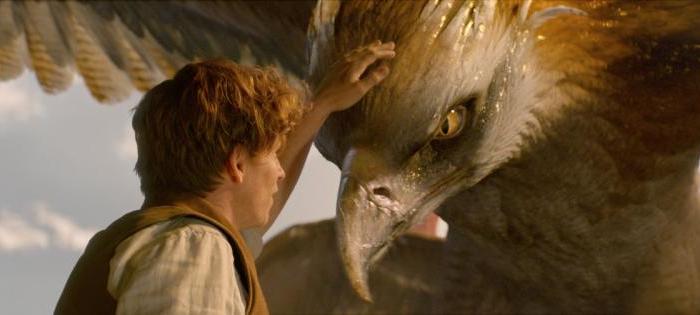
From the first pages of Harry Potter and the Sorcerer’s Stone to the last pages of Harry Potter and the Deathly Hallows, however,  my inner child was allowed to romp at will.  Fortunately, my younger kids were as absorbed in J.K. Rowling’s world as I was, so we shared the giddy anticipation of the next in the series of books, happily standing in line at midnight to grab a copy of the next book as it was released in the U.S.  We read Deathly Hallows,the last in the series, wept, and prepared to live in an ordinary world again, abandoned by magic and adventure … until the release of Fantastic Beasts and Where to Find Them,  exactly what I needed in a year that has been more than fantastic but hardly uplifting.  The film deserves thoughtful description, and I hope I can grab enough distance at some point to write without gushing, but, having bashed computer generated imagery in recognizing Ray Harryhausen’s contributions to film fantasy, a large part of my appreciation of this Rowling enterprise is in admiring the many  generated special effects that serve the magic in the film without drawing attention to themselves.  The fantastic creatures have their moments, of course, and are made to move as their character demands, but the greater fun is in the “ordinary” magic, apparition in particular.

I am indebted to the writers and artists who labored to create adventure I have experienced without risking life and limb.  The famous monsters helped me get through my own ungainly transformations, and the creators of fantastic worlds have allowed me to leave the world around me just long enough to restore my sense of wonder.


Just Do Our Job

When I tell friends that I’m not watching MSNBC or CNN these days, they assume I’m protecting my fragile hold on hope and faith in the future.  They aren’t entirely wrong, but my aversion to televised news goes deeper than that.

I felt so stupid on the after-morning when it was abundantly clear that my liberal convictions, beliefs I assumed were unassailable, grounded as they are in the tradition of rationality and compassion begun in the Enlightenment, were not shared by those in a majority of American states.  I had to reconsider the most basic principles.  Surely modernity had delivered scientific certainties and endorsed the celebration of a diversity of people.  Surely we had moved beyond racial politics.  Anti-Semitism?  Where did that come from?

And those polls.  And those commentators.

Apparently, thoughtful, articulate, experienced political pundits can be entirely hornswoggled by their own bias.  I don’t blame them for the outcome of the campaign, although I do wonder what the Republican primary might have looked like if the President-elect had not taken up so much air time.

I subscribe to the Washington Post and read their national and international news daily.   The district and surrounding counties have their own parochial interests, of course, but the Post seems to balance that with its responsibility as the paper of record in the capital and its interest in publishing a fairly wide range of commentary.  It happens that the Post’s editor, Marty Barron was the judicious voice of integrity at the Boston Globe, during the Searchlight team’s investigation of the widespread abuse of children by priests and the involvement of Cardinal Bernard Law in the reassignment of those priests to parishes unaware of the priests’ crimes.

Marty Barron is an unassuming guy, hardly a celebrity journalist, a tough character for Liv Schriever to play in the film version of the Spotlight team’s battle to get at the truth.

He’s not a character; he has character, as is revealed in the remarks he offered upon being awarded the Hitchens Prize in recognition of his long career as a journalist dedicated to the pursuit of the truth and the protection of free expression.  His remarks have been seen as a guide to responsible journalism in the Trump era, noting the degree to which candidate Trump excoriated reporters and the contempt with which some of his advisors feel for the mainstream press.

With customary humility, Barron described himself as an unlikely recipient of an award named in honor of investigative journalist and writer, Christopher Hitchens, but in recalling Hitchens’ reporting of the fatwah issues against Salmon Rushdie, the editor reaffirmed the importance of sticking to first principles and values.

Many journalists wonder with considerable weariness what it is going to be like for us during the next four—perhaps eight—years. Will we be incessantly harassed and vilified? Will the new administration seize on opportunities to try intimidating us? Will we face obstruction at every turn?

If so, what do we do?

The answer, I believe, is pretty simple. Just do our job. Do it as it’s supposed to be done.

Every day as I walk into our newsroom, I confront a wall that articulates a set of principles that were established in 1933 by a new owner for The Post, Eugene Meyer, whose family went on to publish The Post for 80 years.

The principles begin like this: “The first mission of a newspaper is to tell the truth as nearly as the truth may be ascertained.”

The public expects that of us.

If we fail to pursue the truth and to tell it unflinchingly—because we’re fearful that we’ll be unpopular, or because powerful interests (including the White House and the Congress) will assail us, or because we worry about financial repercussions to advertising or subscriptions—the public will not forgive us.

Nor, in my view, should they.

I’m collecting expressions of purpose that strike me as sustaining.  Marty Barron, an editor not given to hyperbole, put it simply.

“Just do our job.  Do it as it’s supposed to be done.”

Tell the truth.  Stand up for those who need help.  Offer kindness as often as we can.  It’s our job to stick to the important principles that were not endorsed.

Just do that job.  Do it the way it’s supposed to be done.

A full account of Barron’s remarks have been published in Vanity Fair, the magazine for which Christopher Hitchens reported.


Acts Of Kindness Aren’t Random

Acts Of Kindness Aren’t Random

A few months ago I wrote about Alison Guernsey, the teacher who went an extra mile for the students in her care.

“She had to see before she could hear.

Alison Guernsey is a teacher in a K-8 school in which numbers of kids simply stopped coming to school, some for considerable lengths of time.  Guernsey was saddened by the serial absences and the impact they had on her classroom and on the school.  Not surprisingly, she felt she had failed, or the system had failed, or the world had failed; she was overwhelmed by a problem she could not conceptualize.

She was puzzled.  Guernsey knew her students were happy at school; they had friendships that were disrupted by absence, and they missed significant special events.  Their absence did not make sense.  Finally, summoning her courage, Alison Guernsey went to her students’ homes to see if she could do anything to turn the situation around.  She persisted in asking the same questions and listening carefully, sticking with her visits long enough to build trust with her kids and their parents.

She found out that the children she taught often had no clean clothes.”

They have clean clothes now because Alison Guernsey found a way to bring a washer and dryer to her school.  Her efforts made an immediate difference in the lives of children and families and allowed other generous people to offer the same kindness to children in other schools across the country.  At the time, I was particularly moved by a teacher’s willingness to move past her own assumptions in asking parents to talk about their children and in listening thoughtfully to what parents had to say.

Listening is an act of kindness.

Last week, many news outlets presented the Thanksgiving feel-good story about  Jim Ford, a Repo Man with Illini Asset Recovery, who repossessed an elderly couple’s car, then paid off their debt, and returned the car to them free and clear.  He actually went father, paying for an oil change and a thorough detailing of the car.

Another act of kindness because Jim Ford saw the couple, Stan and Pat Kipping, and recognized their struggle in an instant.

“My grandparents are gone,” he said, “but, you know, I could see them in the Kippings.  I knew what was going on.  The cost of medications have doubled or tripled… I knew why they were behind.”

Truly seeing someone is an act of kindness, and the actions that follow are far from random.  Kindness follows connection, and connection arrives when we take the time or drop our guard enough to listen and to see.  Many voices remind us that there is no such thing as a small act of kindness, no wasted acts of kindness; each act of kindness speaks of connection, and  connection reminds us of what it is to be human and what it is to long for kindness.

Jim Ford and Alison Guernsey are ordinary folks who chose kindness; anyone can.

“My religion is simple.  My religion is kindness.”  His Holiness the 14th Dalai Lama