Sing in me, Muse …

Sing in me, Muse …

“Sing in me,Muse, and through me tell the story of that man, skilled in all ways of contending, the wanderer, harried for years on end, after he plundered the stronghold on the proud Height of Troy.”

The Odyssey translated by Robert Fitzgerald

Few of us who love The Odyssey imagined public debate about the merits of any translation, and even fewer might have guessed that a translator could emerge as a figure of controversy. Emily Wilson has taken issue with Christopher Nolan’s epic, a blockbuster stuffed with  celebrities and filmed on a gargantuan scale in the IMAX format, observing that the Odysseus in Nolan’s film is hardly a complicated man. Her response to Nolan’s script is straightforward:

“We need to have a protagonist with detailed, believable motivation… But these desires seem stripped from Odysseus. He doesn’t seem to want food. He doesn’t seem to want sex. What does he want?”

I haven’t read Wilson’s Odyssey yet, but I’m inclined to wallow in the translation that continues to delight and inspire me. My delight with Fitzgerald’s translation arrived as I set out to teach The Odyssey to high school sophomores, preparing to lumber through one of the translations I’d met as a student, anticipating weeks of dusty explication, a slog through a cultural landmine, a tough read for most of the kids I taught. I read that first sentence and was hooked. Sure, there were still a ton of names, places, gods and Hellenic practices that would need introduction and clarification, but there was something beautiful, or witty, or inspiring, or terrifying in each Book.

It’s interesting to observe that for a moment The Odyssey is a cultural touchstone, perhaps with the same half-life as Gladiator, Ben-Hur, or Braveheart, a spectacle and epic, slightly less successful than the tenth feature length film featuring Spiderman, but a fairly hot topic on public radio. I’m interested in the journey, not particularly in the cinematic set-pieces, less with the Cyclopes, Scylla, and Charybdis, Sirens and Lotus Eaters, the flesh rending Laestrygoniana, and more in the challenge Odysseus faces in restoring his marriage, his relationship with his son and his father, his country. He is the hero of his journey, but a very modern hero, contending with trial and loss, as Fitzgerald puts it, clever and damaged, deceptive, incomplete and often, literally, at sea. 

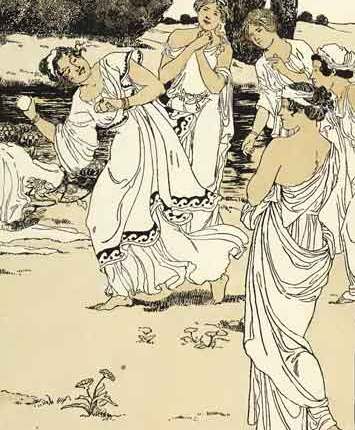
My days in the classroom are over, and my job today is celebration rather than instruction, so I’ll tout Fitzgerald’s wit in Book VI, “The Princess at the River”. I’m assuming that Nolan’s Odyssey abandons the structure of the epic, dragging Odysseus from Calypso’s Island straight to Ithaka, whereas Homer washes Odysseus up on the rocky coast of Skheria where he will meet Nausikaa, daughter of King Alkinoos and Queen Arete, find extraordinary hospitality, finally reveal his true identity, and narrate the details of his trials (essentially the movie) before being dropped off at home (finally) at dawn. The chapters which take place on Skheria among the people known as the Phaiakians demonstrate the Greek virtue of Xenia, the quality of “guest-friendship”, generosity, and reciprocity. Let’s assume for a moment that any stranger might be a god or goddess in disguise; it’s a good idea then, to welcome a stranger with grace, and so, the Phaiakians show Odysseus remarkable kindness.

The encounter begins as Odusseus is literally washed up in the reeds, and he is not in great shape. He’s naked, for one thing, and bloated, and brine stained, and generally a mess. Athena’s had a plan, of course, all along, and has arranged for the Princess Nausikaa to frolic with her handmaids on the shore, waking Odysseus from his stupor. “Skilled in all ways of contending,” maybe, but he’s a naked full-grown man, and she’s a young woman of the upper class. Fitzgerald paints an alarming picture:

“He pushed aside the bushes, breaking off

with his great hand a single branch of olive,

whose leaves might shield him in his nakedness;

so came out rustling, like a mountain lion,

rain-drenched, wind-buffeted, but in his might, at ease, 

with burning eyes – who prowls among the herds

or flocks, or after game, his hungry belly

taking him near stout homesteads for his prey.

Odysseus had this look in his rough skin

advancing on girls with pretty braids;

and he was driven on by hunger, too,

Streaked with brine, and swollen, he terrified them

so that they fled, this way and that. Only 

Alkinoos’ daughter stood her ground, being given

a bold heart by Athena, and steady knees.”

So, and this is the exchange that I relish, Odysseus has quickly figured out that he has to come up with some way of greeting that doesn’t horrify/terrify this girl meeting a naked mountain lion on the beach so begins as though it is Nausikaa who alarms him.

“Mistress: please: are you divine or mortal?

If one of those who dwell in the wide heaven,

you are most near to Artemis, I would say –

great Zeus’s daughter – in your grace and presence…”

We think of Odysseus as clever, and he is, but in this moment he is also graceful, and kind. He’s complimented Nausikaa by comparing her to a goddess, but to a goddess associated with the care of children and animals, lovely, superbly competent, and chaste. Best of both worlds and a comparison that both reassures and charms Nausikaa, allowing her to greet and protect Odysseus as Athena had intended.

I’ll return to the Odyssey again this fall, spending time in that season considering the consequence of Nausikaa’s bringing Odysseus into the court of Alkinoos, an introduction that eventually allows Odysseus to find his way home, to battle the suitors, reconcile with Penelope, become a father to Telemachus, restore peace in Ithaka, but which also brings great misfortune to the Phaiakians, the people of Skheria, whose kingdom is cursed for having helped Odysseus escape the wrath of Poseidon. A harsh consequence for their observation of Xenia.
MIASMA

MIASMA

Three reasons I haven’t seen The Odyssey yet:

  1. It’s supposed to be very loud.
  2. Imax theaters are fully booked, leaving only open seats in the front row … maybe even louder and offering only a distorted angle.
  3. I love The Odyssey, and it’s complicated, as I hope I can suggest in the paragraphs below.

I taught The Odyssey for years, grateful for the translation offered by Robert Fitzgerald, a translation recently described as “weighty with pathos,” a designation with which I could take exception, but one that does identify the humanity Fitzgerald brings to the poem. 

The introduction to Fitzgerald’s Odyssey was written by D.S. Carne-Ross, a classicist who held the chair in Greek Language and Literature at Boston University, and who was a spirited champion of translation as creative and critical art. He saw the epic as belonging to several genres. “If we call The Iliad a war poem, or with Simone Weil, the poem of force, The Odyssey is a post-war poem … We see Odysseus recovering from his long ,military service, putting himself together again, and learning the more difficult arts of peace, above all how to deal with women.” 

Carne-Ross goes on to argue,”Hence it is that The Odyssey is called the first novel, for our own great narrative genre has much to say about the relationship of the sexes, and is rich in the social nuances and psychological delicacies where Homer in his own way is no less at ease.”

In the postscript to the translation, written in 1961, Fitzgerald put his notion of the epic in simple terms: “The Odyssey is about a man who cared for his wife and wanted to rejoin her. In the resonance of this affection, and by way of setting it off, the poem touches on a vast diversity of relationships between men and women: lover maternal and filial, love connubial and adulterous, chance encounters lyric and prosaic. 

But Fitzgerald also considered the relationship between The Iliad and The Odyssey and between The Odyssey and the fate of Agamemnon, the tragedy in the background of Odysseus’ journey. That background adds a dark counterpoint to The Odyssey and brings a second layer of pathos to the transformation of the central character and to the resonance of affection.

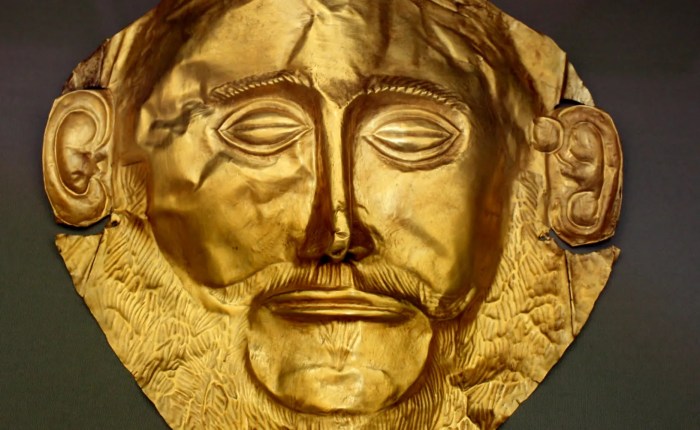
I’ll return to Odysseus in the next post, but Fitzgerald’s sensitivity to the counter-tale informs the humanity and yes, pathos, of Odysseus’ journey, and so, I’ll take a moment to set the scene of the story operating in the same continuum. Agamemnon’s story is rightly described as “miasma”, a contagious and multi-generational series of retributive disasters, the causes of which may be lost in the haze of time, but which have notable points of connection. 

Some of the wrinkles in The Odyssey and much of the gritty frustration in The Iliad can be traced back to Agamemnon’s story. His legacy includes his ancestry (Tantalus, Pelops), and a father, Atreus, who not only murdered his twin brother’s sons, but who cooked them and fed them to his brother, Thyestes, saving their hands and feet, which he used as a final taunting flourish. Thyestes was exiled for eating human flesh, but had another son with his own daughter. This son, Aegisthus, later killed Atreus and took back the kingdom which he ruled with his father/grandfather, driving Agamemnon and his brother, Menelaus, to Sparta, where Agamemnon married one of the Spartan king’s daughters, Clytemenestra, and Menelaus married another, Helen. They recover their father’s kingdom and send Aegisthus into exile, but he will return to avenge his father’s death.

The Iliad is an account of the quarrel between Agamemnon and Achilles in the final year of the war with Troy, but Agamemnon’s dark history had grown even darker in the war’s first years. Odysseus was a new dad, not only unwilling to join the ragtag armada heading for Troy, but so devoted to his wife and son that he dressed in rags, pretending madness to avoid impressment into the Greek coalition of forces. Agamemnon took the low road, threatening to kill Odysseus’ son, Telemachus, if he didn’t sign on. Then in a series of conflicts with gods and goddesses, Agamemnon’s hubris stalled the ships; no winds would blow, until he sacrificed his daughter, appeasing Artemis, and allowing the fleet to sail for Troy.

In year one of the war, Agamemnon takes the daughter of one of Apollo’s priests as a prize. Apollo does what gods do; he drops the plague on the Greek camp. Agamemnon has to return the priest’s daughter to lift the plague, but, being filled with pride, grabs the next-best prize, a human taken as a token of his value as a warrior, the lovely Briseis, held by Achilles, the army’s strongest warrior.

Achilles, insulted, withdraws from battle, the war is deadlocked for a decade, both armies suffering losses, until Hector, son of Troy’s king, Priam, slays Achilles’ friend, Patroclus, drawing Achilles back into battle and tipping the war toward a Greek victory, but not before Achilles is slain by Paris, Hector’s younger brother, the man who had stolen Helen from Menelaus and set off the entire war. In what might have been the final tinge of miasma, Agamemnon gives Achilles’ armor to Odysseus, a nice gesture, perhaps, although it literally drives the next-best warrior, Ajax, insane with injured pride, causing him to murder the men and cattle promised as sacrifice to Athena. This shameful and spiteful act leads him to commit suicide, in his final moment cursing Agamemnon and Menelaus. They for a bit consider leaving Ajax’s body to rot unburied but are convinced by Odysseus to give Ajax a proper burial. 

 In what are the earliest months of Odysseus’ long journey back to his wife, his son, his father, his kingdom, his legacy, his home, Agamemnon begins his own return to his kingdom, Mycenae, with Cassandra, a priestess of the Temple of Apollo, cursed to know the future but to never have her prophecy believed. “While you were gone…” Cassandra warns Agamemnon that his wife, Clytemnestra has partnered with Aegisthus, plotting to kill Agamemnon upon his return, but her curse prevents his believing her. 

This is Agammemnon’s homecoming. He and Cassandra die, miasma reigns, the land is cursed.

There are trials to be faced in The Odyssey and significant points of transition as Odysseus returns from war, but the entire journey leads to restoration, of family, of country, of meaning and purpose. Odysseus will spend time with the shadows, but no shadow is more powerfully illustrative of Odysseus’ humanity than that cast by Agememnon’s terrible miasma.