You Are Not The Primary Account Holder

You Are Not The Primary Account Holder

Let’s begin with the admission that I have more than enough trouble negotiating people and events in the actual world. I’m also nonplussed by repairs of any kind, do-it-yourself kits, maps, calendars, large animal medicine, preparing steel cut oatmeal, fractions, and breakdancing in the Olympics. The list goes on, but these are all present in the space time continuum known as here and now. In the virtual world, I might as well wear a virtual chinchilla costume and beg the trillion virtual commercial markets to skin me quickly.

Today’s flaying of character has to do with a puzzling and unwelcome message from our bank, Wells Fargo, a national bank, admired far and wide for its integrity, except when caught foisting invisible accounts on unwary customers. We joined the Wells Fargo family when we moved to Oregon and took on a mortgage. One of our best friends rode with the Wells Fargo Stagecoach in parades and round-ups across the western states. My daughter has a plush Wells Fargo horse in her collection of plush horses. 

So, our bank.

In days of yore, I could walk into a building and speak to a human; I was separated from the teller by thick glass, but I could see a person in there, clearly alive and present. During the early days of the pandemic, that branch closed its doors, still operating but not accessible to civilians. No problem; my on-line portal was responsive to my clever passwords and instantly coughed up the information I needed. There were the inevitable glitches from time to time, but they were almost entirely glitches born of my own ineptitude. 

Yesterday, however, came the most unkindest cut of all. The virtual bank recognized my password, brought up a familiar opening page, and then informed me that I was not the primary account holder and could not, therefore, get anywhere close to where I needed to go. A dozen phone calls and e-messages later, I came to fully understand that humans no longer inhabited this fiscal planet. I was, literally, screaming into the void. For the first time in my life, I tossed an ugly injunction to a recorded voice. 

Faint satisfaction there.

Not easily defeated, I’ll carry my dilemma to a branch not far from here. I’ve seen people there. Humans. The issue will likely be resolved, but the damage is done.The business of banking goes on, but my sense of self is once again wounded. 

Not the primary account holder? Not Me? Then Who?

Sure, the potential loss of our capital future is disturbing, but the demotion from prime account holder to mere observer reminds me of the puzzle that has been my identity from the start. I was born in Colombia and christened (I think) as Pedro Arango y Leighton. An ill-fated marriage ended relatively quickly, and I entered the United States a citizen attached to my mother’s maiden name, Elizabeth Leighton. She remarried and took on the name Elizabeth Wolff. I spoke little English at the time and not much Spanish, and for a multitude of reasons did not often hear my name. When my brother was born, I entered primary school as Peter Wolff. Fine with me. I liked having the same name as my brother, and my classmates seemed to find my name unexceptional.

For my sins, however, I was sent off to boarding school at the age of ten, registered as Pedro Arango-Wolff. This was notably less fine with me for any number of reasons. From that point on, I would have to explain that my brother was my brother, even though we had different last names. Bad enough. The more immediate impact was that the snakepit that was this junior boarding school was packed with boys who took great pleasure in taunting the easily identifiable other, a Hispanic kid with a Spanish name. Ok, a partly Spanish name. Some pruning took place as I left eighth grade and headed to the second boarding school, where I was registered as Pedro Arango. In my college years, I was Pedro Arango, P.L. Arango, P. Leighton Arango, and, to a small group of friends, “Boom” Arango. “Time to straighten things out,” I said to myself as my college bid me an uncelebrated and early farewell and I prepared to enlist in the US Navy. “I shall serve as Peter Leighton Arango-Wolff” I announced and took an enlistment oath under that name. Great fun in boot camp as our drill instructor loved to call me “Angry Wolf”, assuming I was Native American.

Returning to finish up at my poorly used college, I must have had a name, but I’ve lost my diploma. I assume I was still Peter Arango-Wolff as I was living on the GI Bill at that point. I changed back to Pedro Leighton Arango as I started my teaching career, but when I turned 50, I had to admit that I still did not pronounce my own first name well. I could manage “Pay-Dro”, which was better than one of my teachers who persisted in calling me “Pee-Dro”, but still. Back we went to Peter, and here we are.

Oh, lest I forget. In virtually any situation demanding the presentation of my last name, I have learned to spell it out, slowly and with emphasis on the letters as they follow one upon the last. One might not think Arango too much of a mouthful to manage, but, believe me, I’ve heard every mangled near and not-so-near miss. I’m actually quite fond of “Avenge-o”, great name for a superhero- Captain Avenge-O! Today I pick up the phone and spell it out – ARA – N- GO, always tempted to say, “pretty much what it sounds like,” but restrain myself. I’m often asked to repeat the spelling. 

So, there I was, happily opening a virtual conversation with my old friend and former mortgage holder, Wells Fargo, expecting the immediate connection to all that is mine, when the news hit home. “Sorry, pal. Not today.” Or more precisely, “Sorry Pal, You are not you today.” Whoever I was, I dialed every number I could find, spelling my name carefully when asked, “ARA – N -GO”. No dice. 

Still not me, apparently.

Once, as a sophomore, I was asked what name I would like to have, if I could have any name in the world. For reasons that escape me, I came up with “Stu Wepler”. I have not found it necessary to use that name in the intervening 62 years, but today, who knows?

Why Not Baseball?

Why Not Baseball?

This essay ended up as a reflection on the sustaining value of quality. I thought I might begin with friendship, or a book, or a film, but then, the tangled strands of memory got caught in the loom once again, particularly the transition from a partisan emotional attachment to a particular baseball team to a greater appreciation of genius, beauty, and character. Sure, I could have chosen literature or the arts as the medium, but why not baseball?

I was in my first year at my second boarding school in the autumn of 1960, the year in which the U2 Spy plane piloted by Gary Gary Powers was brought to earth by a Soviet missile, the US sent its first soldiers into Vietnam, The Civil Rights Act was signed by President Dwight D. Eisenhower, and JFK became the first president born in the 20th Century. I’m pretty sure all those events happened, but the most significant event from my point of view, was Bill Mazerowski’s ninth inning home run, a long line drive that gave the Pirates the deciding game of the World Series. My dormitory included one kid from Pittsburgh and a lot of guys from Connecticut, some of whom rooted for the Red Sox if they lived east of Hartford and some for the Yankees from the western half of the state.

I lived in northwestern Connecticut and had been devoted to the Yankees from the first wobbling images of Yankee games broadcast on WPIX, Channel 11, narrated by Mel Allen and Red Barber. The northwest corner wasn’t far from New York City, but television reception was iffish on crystal clear afternoons and virtually obscured as storms moved through the region. I counted on Allen and Barber to bring the games to life even as the screen was filled with horizontal bands of black. Allen was The Voice of the Yankees, mellow and blessed with a honeysuckle voice thick with witticisms that had traveled with him from Tuscaloosa, Alabama. Barber had been a notable announcer for the Dodgers whose broadcasts on Channel 9, WOR might as well have been filmed underwater, under muddy water as the signal hardly made it to my corner of the state. Barber was noted for the vivid expressions he had picked up in Mississippi – “Sittin’ in the catbird seat”, “slicker than boiled okra”, “tied up in a croker sack”, but holds my admiration to this day for his determination to keep profanity from entering his vocabulary at any time. His fear was that in a moment of excitement he might blurt out a vulgarism that would offend his listeners. I share his intentions and fail daily.

Mel was on the mike on October 13 when Ralph Terry tossed Mazerowski the fat ball that crushed my soul. 

“There’s a drive into deep left field, look out now…! That ball is going … going … gone! The World Series is over! Mazeroski … hits it over the left field fence for a home run, and the Pirates win it 10-9 and win the World Series!… And the fans go wild.”

This fan did NOT go wild; this fan watched Nick Litchfield, the kid from Pittsburgh, strut around campus for the next eight months. 

Life went on, of course, and my intensive “How to Become A Human Being” program took much of my time, but when Mazerowski was elected to the Hall of Fame, the dark and unattractive underbelly of this aspiring human took a nasty turn. In addition to recognizing a more complete understanding of the corroding power of resentment reanimated, I have to take a long look at what was bubbling up, and what animated the taking of myself back to Forbes Field in 1960 when in the present I sat in reasonable contentment, happily near almost all of the people I love best and without a virtual cloud on the horizon, with the exception of existential angst, of course.

I had forgiven Ralph Terry. Leave us not forget that the Yankees had allowed NINE runs before Mazerowski added to the tally. I was ok with Yogi Berra as well; Berra was too short to catch the ball as it cleared the fence. I have ½ inch on Berra, but I can’t see myself making the catch either. Aaron Judge, 6’7”, would have fielded it like a pop fly.

But alternate histories have no place here.

The plain truth is that from the age of five or six I really did not do well with humans. I can’t remember precisely when I shut the door to my room and lost myself in books, but books are virtually all that I do remember until I became a sports fan. I listened to games in my room and watched on television when my teams were in town. For several years children’s classics gave way to stories about baseball – about real baseball players, and fictional players, only slightly older than I, who defied expectation, overcame adversity, and played their way to victory. When asked what Christmas present was the best I ever received, the thrill of opening the wrapper and finding The Fireside Book of Baseball arrives as vividly today as it did in 1956.

Remarkable writers have written about sports, some of the most estimable about baseball. I won’t trot out the entire list of writers whose perception of the game has fired my imagination, but two, Roger Angell and George Will, are essentially men of letters who fell in love with the game and who write unapologetically about baseball in the same fashion that Joseph Campbell wrote about the power of myth. 

This was a new recognition that perfection is admirable but a trifle inhuman, and that a stumbling kind of semi-success can be much more warming. Most of all, perhaps, these exultant yells for the Mets were also yells for ourselves, and came from a wry, half-understood recognition that there is more Met than Yankee in every one of us. I knew for whom that foghorn blew; it blew for me.

Roger Angell

“All I remember about my wedding day in 1967 is that the Cubs lost a double-header.” George Will

Angell suggested that the only path beyond blind partisan allegiance is expertise, an observation which I took to mean an appreciation of greatness in players and teams other than one’s own. 

Do I cite Angell in order to mouth a mamby pamby paean to Mazeroski, a long-overdue tribute to a clutch ballplayer? 

Nah. One homerun does not a Hall of Famer make, and if defensive skill is the criterion, the list of exquisitely talented fielders not in the Hall is as long as an A’s losing streak. Do a search for Jim Edmonds. The first word you’ll encounter is “Catch”. Not this catch or that catch but the seemingly endless string of improbable catches, any one of which rivals the iconic catches in baseball lore. When Edmonds became eligible for consideration, he garnered 2.5% of Hall of Fame votes and was relegated to the heap of overlooked defensive wizards.

Like a runner inching his way down the third base line as a pitcher winds up, I am slowly edging toward the purpose of this confession. Having buried the lead several pages ago, my intention is still to describe the transition from juvenile devotion to a team, the Yankees, to an appreciation of grace, skill, and heart wherever it appears. As a child, I gave my heart to the Yankees for the same reason kids wear superhero costumes on Halloween and are fascinated by dinosaurs and sharks. I lacked agency, authority, power, and they were powerful. 

But childhood ends. In my case on October 12, 1960. All was not lost, however. That Pirates team, for example, included Roberto Clemente, among the most complete and certainly most graceful players of all time. In addition to Clemente, the National League was stuffed with greatness – Willie Mays, Ernie Banks, Orlando Cepeda, Stan Musiel, Eddie Matthews, and Hank Aaron. American League rivals included Ted Williams, Minnie Minoso, Nellie Fox, Brooks Robinson, Al Kaline, Luis Aparicio, Vic Power, and Harvey Kuenn. Against all odds, throughout the next 60 years, magical ball players continued to break into a lineup and blaze with glory. 

As I write, I am reminded of a spring training game in Peoria, Arizona, an early evening game in which the best seats had been sold out. My son and I sat on the lawn behind right field, above the bullpens on the side of the outfield. We were there to see Ichiro Suzuki, the Mariner’s newly acquired bushido batsman. His career in Japan had been extraordinary, and we would have made the trip if only to see him hit and run the bases. He won my admiration before spring training had begun. He’d worn the number 51 in Japan and had asked pitcher Randy Johnson if he could have the number in Seattle, assuring the pitcher that he would bring the number no shame. No shame? That year he was Rookie of the Year, AL MVP, won a Gold Glove and Silver Slugger Award, and was the first rookie to lead voting for the All Star game. On that evening in March, however, that was yet to come. We’d seen him hit a single and steal second in the first inning, more than excitement enough for us, but in the third, the Padres’ bats warmed up and runners were on first and second. Ichiro was playing relatively deep, read the batter’s stance, took off at the crack of the bat, and nailed the runner at third. Early in the regular season he would cut down Terrance Long of the A’s with a rope to third that was simply immortalized in Japan as “The Throw”. 

I can’t truly pay tribute to Ichiro as a hitter, but like Curry’s delicate shot from mid-court, like the mid-air acrobatics of Randy Moss, Ichiro Suzuki’s courtly extension of his bat signified a kind of kinesthetic genius.

I stopped in at the National Baseball Hall of Fame last week on the way home from a college reunion. Ichiro won’t be eligible for election to the Hall until 2025, but the museum had mounted an extensive display of records held by various players, many of which belong to Suzuki. Ichiro has visited the museum frequently, holding the bats of celebrated players, weighing them in his hands to feel the density, the “sweet spot” in each bat. He wanted to hold the bat used by George Sisler, former St. Louis Browns first baseman, whose record for hits in a single season had held until 2004 when Suzuki’s set the new mark of 257 hits. He visited Sisler’s grave in St. Louis, explaining,

“I wanted to do that for a grand upperclassman of the baseball world. I think it’s only natural to want to do that, to express my feelings in that way.”

Those of us who were devoted to his career remember his response when readying to face dominant pitcher Daisuke Matsuzaka – 

“I hope he arouses the fire that’s dormant in the innermost recesses of my soul. I plan to face him with the zeal of a challenger.”

So, the Yankees were pretty terrific in 1960,  but then the Giants were pretty terrific, and the Dodgers, and the Cards, and the Braves, and the Reds, and the Mariners, and now, the Astros and the Rays.

I stood in front of Ichiro’s locker in Cooperstown and reminded myself that more grace and more beauty is likely to appear when I least expect it, I wouldn’t mind being on the lawn above a bullpen to see it arrive

Welcome Back, You!

Welcome Back, You!

Against all odds I’ve lived beyond the confines of a 50th college reunion, now joining superannuated loyal alumni returning to campus as a“Perennial”, a tag that is far more generous and far less descriptive than “Shambling Husk of a Person Seeking Connection With a Life Only Dimly Recalled”. So it was as a Perennial that I drove up the hill again to find the campus essentially where I left it, but subtly altered as open views have been filled with new construction and familiar haunts have evolved into freshly coined businesses. A long central path runs down the backbone of this college town and campus, slightly more congested as classes return and Amish carts bring handmade goods to stalls along the path. Banners and signs waved a jaunty greeting as I parked between a dusty Dodge Caravan and a sleek Rolls Royce convertible. I can’t begin to guess at the slog the chipper development staff goes through – organizing this spectacle and housing pop up a week or so after the Commencement litter has been swept up. They were universally chipper on day one but somewhat brittle by Sunday mid-morning as they had heard one too many complaints about the fluffiness of towels in dormitory accommodations. 

The President made his rounds, dutifully extolling the generosity of the loyalists whose classes had contributed millions to the small college’s coffers. Some of the Perennials were in that cohort; most of my pals were still trying to figure out how we thought we could retire and still pay the cable bill.

But, happy to be back, and resigned to seeing flags and pennants reminding us of the many generations of graduates who followed our tattered retreat from the groves of academe in the riot of the late 1960’s. Most of the signs welcomed us back by class, but since some of us had outlived our reunions, one sign in particular struck me as oddly impersonal and unsettlingly familiar.

“Welcome Back, You.”

An unadorned “Welcome Back” fits all sizes and raises no curious flights of fancy. “Welcome Back … You”? 

The first impression is that the college thinks it should know me, but just can’t quite come up with a name. Rather than stumble and guess, “Welcome Back … Terry?”, the sign signifies a warmish welcome and the admission of the droll ravages of time. Almost immediately, however, I hear a different intonation as I consider the greeting spoken. Not just the word, “You”, but an elbow in the ribs, perhaps, or a light punch on the arm. “You devil, you.” “You scamp, you”, You joker, you”. This is a welcome accompanied by the curious mixture of affection and correction offered by those who know us well enough to see beyond our public personae. Nudge nudge, wink wink.

I suspect those whose collegiate years were filled with triumph and celebrity hear a different greeting, but those of us who tried the patience of the place understand that this reckoning is the gift that keeps on giving. I’m ok now, too long in the tooth to be dangerous and too diminished in charisma to be an attractive distraction. Welcome Back, Me, the college says, pretty sure the worst that will happen is that I complain about soap.

The theme song of my early years was, “I Did It My Way”, and while Sinatra may not have given much room to his few regrets, mine are heaped like kegs at a frat party, a simile I choose with some caution. I spent the summer before my freshman year in a house in the woods on the Upper Cape, above the elbow, near Thoreau’s cabin and a short walk from the Bay. I read everything I could get my hands on, especially histories of European literary and artistic movements. At the end of the summer, I packed a backpack, grabbed a guitar, and headed off to find the intellectual playground of my dreams.

I’m not sure I read anything assigned in the debacle that was my first three and a half years on that campus. I have no memory of riveting conversations with professors, no fault of theirs as I was only fleetingly and rarely in the classroom. Paradise Lost? More like Paradise Ignored.

I mention the social and academic wasteland that was my collegiate career to introduce one of the unexpected pleasures this Perennial found over the course of a weekend. I listened to my classmates and appreciated the lives they had lived. I sat with a friend who had taught in schools such as those I knew comparing notes on “the Duke of dark corners” in Measure for Measure and arguing whether Shakespeare intended us to see The Merchant of Venice as belonging to Shylock or to Antonio, the actual merchant, and if so, whether Antonio’s opening lines, “In sooth I know not why I am sad…” is an unarticulated, unintended declaration of his love for Bassanio, the moronic frat boy, and in that reading, if the character of Portia has to be reassessed. 

Regrets? I could have had a thousand conversations such as that in my college years and did not. But, welcomed back, I could bring the person I had become to a place that had wished me well. 

That sign now means something more to me. “Welcome Back, all that you regret and all that you love, and all that you are.” “Welcome Back, You”.

Hair Today, Dye Tomorrow

Hair Today, Dye Tomorrow

I’m not a punster; I am somewhat reluctant to foist my leaden and wholly obvious jests on an innocent public. My daughter, however, is both irrepressible and gifted. I’d give her credit for some of her best, but the loosely meshed trawling net that passes for a brain has perfected an easy-in, easy-out memory cleansing swirl that leaves me wondering why I am standing in front of the toaster. Recovering witticisms? Not today.

You have to believe me when I tell you I have heard some crackerjack puns, none of which are accessible at the moment, but uncertain imagination informs me that a good pun elevates the speaker and her audience. Puns clearly have their place, but is that place in the naming of hair salons, dog grooming boutiques, and tawdry motels? There are, of course, the good, the bad, and the unspeakable at play on business signs. Let’s start with the building blocks: Salons have two rich sources, hair and the tools used to do something with hair. Dog groomers have dogs, their breeds, their body parts, and things that dogs do. Motels and restaurants, well, I guess the gloves are off when it comes to them; anything goes. 

The number of “Dew Drop Inns” in America is both incalculable and inevitable. “Auto Stay Here”, “No Place Bedder” “, just sad. I came across a pretty nifty motel somewhere in the southern Berkshires of Massachusetts, “The Arms of Morpheus”. Classy, classic, and intellectually challenging enough to demand immediate check-in. Well done! Slicker and sadder motel spawn in somewhat the same vein – “Cupid Villa”. Once seen, not forgotten, however, an unwanted conundrum raises questions not worth asking. 

Let’s get back to hair with a slight jog into unnecessary and overwrought celebrity hair talk. I haven’t thought much about “The Slap Heard Around the World”, although a quick scan of those banned from the Oscars (all men) raises more doubts than certainties – Adam Kimmel (registered sex offender), Richard Gere (practicing Tibetan Buddhist who criticized China, Harvey Weinstein (serial rapist), Carmine Caridi (pirated Academy scanners), Bill Cosby (serial rapist) and Will Smith (slapper). Of the many unanswered questions jostling for space in my shrinking brain, why Chris Rock, whose documentary, Good Hair, a treatise on how Black women have perceived their hair, a documentary sparked by Rock’s three-year-old daughter’s question -”Why don’t I have good hair?” – that Chris Rock, would take a shot at Jada Pinkett Smith’s alopecia? 

Fine. Unanswered questions abound.

An incomplete list of salon puns would fill this space and spill into the next five editions of the Impractical Cogitator, but even a slight foray into the world of salon wit demonstrates the fluency of language. As I begin to gather some of the most evocative examples, I have to wonder why other enterprises wallow in bland uniformity.

The obvious and inevitable place to start is with “hair puns”, a genre I did not imagine exploring, and yet …

Hair Today, Hair Today and Gone Tomorrow, Hair and There, Hairphernalia, Hair Loom, Hairanoia, Hairway to Heaven, Thairapy, A Breath of Fresh Hair, Heroes and Hairoines, Millionhairs, Vanity Hair, Hair When You Need It, Hairforce One, The Hair Port, Hairs Johnny, Hair Apparent, Hair-O-Dynamics, Hair We Are Again, Hairely Human, Hair-O-Space, The Gang’s All Hair, and an oddly personalized greeting – Fancy Meeting You, Hair!

Not even close to finished with that category, but, wait! There’s more.

A couple of generative homonyms, “sheer” and “shear” throw open wide the gates of invention. So, “sheer” can mean diaphanous, essentially see-through, and also unmitigated/utter (The sheer brazen dishonesty of some politicians is stunning) and precipitous (They faced the sheer face of the cliff with some distress). Obviously, “shear” is the action of clipping off the wool of something, well, wooly.

Let’s go!

Shear Madness, Shear Heaven, Shear Joy, Shear Luck, Shear Delight, Shear Determination, Shear Chance, Shear Variety, Shear Amazement … and so on. Of course, true wit is not confined by standard usage, thus, Shearlock Homes. 

The following enterprises are real, do exist, are open right now, and charge for whatever services they provide:

Che Bangs – Probably not a shout out to Che Guevara, maybe invoking Ricky Martin’s She Bangs. Bangs being associated with hair?

Lunatic Fringe – So, crazy good? 

Hair Today, Dye Tomorrow – Always good to suggest mortality in any commercial venture.

Anita Haircut – Let’s hope someone named Anita is involved at some level.

Julius Scissor – OK, let’s give credit for a classical reference, but knowing the general state of cultural literacy in the republic at the moment, can’t we assume this will be confused with Orange Julius?

Jack The Clipper – Not as off putting as The Rape of the Lock (mock heroic poem by Alexander Pope), but close, close. 

Equally menacing? I’ll Cut You.

Headonism – This one is interesting. The pitch is in the class of services located in faux boho, self-deprecating, pricey, shabby chic niche neighborhoods. West Hollywood – “WeHo”? Mission District? Wicker Park? Not my neck of the woods.

I live in a small town that presents three major styling options: The Hair Loft, peterdominic salon and spa, and Hair Gallery at the Mill. I don’t know Peter or Dominic, but they seem to share (and maybe shear) nicely. This is or was farm country, so the Hair Loft is like “Hay Loft” but … you know. I think of a “gallery” as an exhibition space, but whatever they do at the Mill is probably not what I might expect.

My son cuts my hair. I sit outside on a stool as he torches up the clippers, starts at the front and sweeps through whatever vestiges of hair I bring to him. Should he wish to go public, there seems only one appropriate name left.

Hair’s Looking At You, Kid.

A Picture Is Worth …?

A Picture Is Worth …?

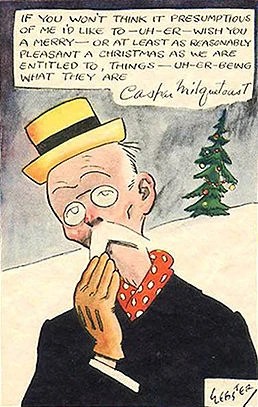
Recently a friend sent me some cartoons inked by H.T. Webster, whose signature character, Caspar Milquetoast, embodied many of the characteristics I have described as my own. They’re great (the cartoons, not the characteristics), and I’ll hunt down some of his other work, particularly Life’s Darkest Moments, a lighthearted romp through the indignities that give our untroubled lives some savor. I’m grateful to have met Webster at a distance of almost a century, and will add him to the curious band of cartoonists and illustrators who, for better or for worse, in childhood molded the strange confabulation of personalities which is your author.

I spent a great deal of time alone as a child. How that came to be is a matter for another day and, probably, another platform. For a variety of reasons, then, I sat in some quiet corner reading anything that sat nearby. The usual collection of books, and stacks of newspapers, magazines, comic books, and comic strips. Comics, cartoons and cartoonists zig and zag all over the cultural map, some self-consciously world aware, some chuckling along with mindless vapidity. The mainstream, Sunday comics I met in the 1950’s were more than odd enough.

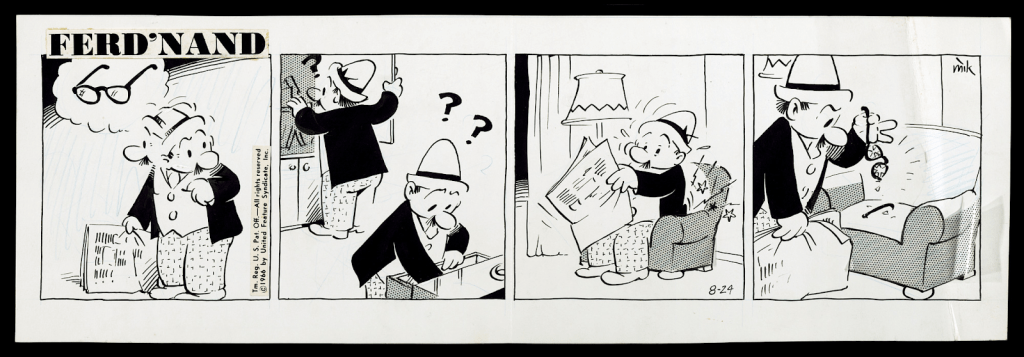
Let’s start with FERD’NAND, a cartoon character drawn by a Dutch artist. FERD’NAND was vaguely European, apparently mute, a silent man-child like Charlie Chaplin meeting ordinary circumstances with mildly unexpected consequences.

See? He sat on his glasses! 

I didn’t roar with laughter, but I got it. 

Snuffy Smiff, however …

This was in “The Funny Papers” …  so, apparently funny? Great Granny’s Bussle! I could decode some of what was going on. Two Appalachian men (Clem and Rufe) know each other. That was about it. Over the years I came to understand that uneducated poor people were apparently considered funny. I could also visit Dogpatch where L’il Abner was immune to Daisy Mae’s short skirt and open blouse and folks also bludgeoned language. 

I missed a lot of semi-heavy handed satirical action in Dogpatch, but a primitive political sensibility seeped in as I happily read Walt Kelly’s Pogo. Set in a southern swamp with some of the curious language used by less educated creatures, Pogo, an opossum, was thoughtful and insightful; his best friend, Albert the alligator, was considerably less intelligent and almost insufferably self-centered.. Miz Mam’selle Hepzibah, a skunk, longed for Pogo as Miss Piggy was to long for Kermit. The swamp’s bard was a mud turtle, Churchy LaFemme, whose lyrics once heard could never be forgotten. No holiday is complete, for example without this stirring modern carol:

Deck us all with Boston Charlie

Walla Walla Wash, n’ Kalamazoo

Nora’s freezing on the trolley

Swaller dollar cauliflower alleygaroo

It was Walt Kelly who gave Pogo the phrase that remains the most concise assessment of the modern age:

One of my most treasured possessions is the campaign button touting Pogo for President in 1956.”I Go Pogo!” I also have a Nelson Rockefeller, George McGovern, and Ross Perot campaign button, but can’t find my Elvis Christmas cookie tin.

I am now the age my grandparents were when I landed on them for weeks or months at a time. I think I’m fairly spry and reasonably competent; I’d love to have my granddaughter stay, and I’m pretty sure I’d stock the house with books, toys, and games she might enjoy. My grandmother was a classical pianist who had gone deaf and whose literary interests were impenetrable, but maybe closest to a spiritualist conviction that spirits continue to evolve after death, and by evolve, she meant creep from graveyards to overtake the living. My grandfather was less deaf, nervous, more than kind, but perpetually hunched in what seemed a state of permanent dyspepsia. My only clear memory of him is the sound of his urgent stifled belching and the ring of dried Maalox around his mouth.

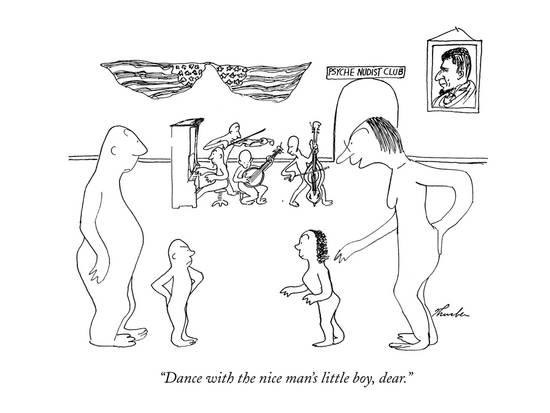
They took the New Haven Register, so my comic needs were met. They did read, or had read; there were books in the house. Most were as arcane as my grandmother’s poetry, but three oddities had somehow remained on the shelf: Is Sex Necessary? Or, Why You Feel The Way You Do by E.B. White and James Thurber, The Peter Arno Pocketbook, and We Buy Old Gold, a collection of cartoons by George Price. I knew E.B. White as the author of Stuart Little and James Thurber was a local celebrity and much admired in our house. Thurber’s illustrations were fanciful at best and terrifying taken out of context. Here’s one I found in the empty hours in a silent house:

James Thurber was a cartoonist whose drawings were barely representational but oddly evocative. This exceedingly simple drawing has lomg been a model of understated comic genius. So many questions unanswered.

At the age of seven, everything I knew about sex I’d found in Peter Arno’s cartoons in The New Yorker. I knew Arno’s work was sophisticated because several of our family friends had pasted his work in their guest bathrooms – always a sign of approbation in our circle. I have come to admire Arno’s wry wit, and it has been suggested that his cartoons “saved” the New Yorker in 1926 -1927 when his work appeared 63 times plunked in the middle of lengthy prose pieces.

He was particularly fond of drawing showgirls in various states of undress but stopped short of putting children in a nudist colony as Thurber had. 

This one was one of the few I could understand even as a lad untutored in the ways of showgirls.

I’ve saved George Price for last, in part because his sense of humor was absurd and touchingly humane. We Buy Old Gold is chock full of evocative cartoons, but as an extensive stay with grandparents came about as roads throughout the state were flooded and my hometown largely washed away, this one remains a poignant reminder of the pleasure Price brought in some lonely moments. I found the book in a “Take This For Free” basket outside a book barn in Maine and drag it out at least once a year to remember how grateful I am for humor.

I Just Can’t Change My Mind

I Just Can’t Change My Mind

I consider myself a thoroughly ordinary, inoffensive, fairly milquetoast kind of guy. I bathe. I floss. I know how to use a washing machine. I laugh too loud, some would say, although, come on. It seems, however, that some people (ok, my immediate family) find a few of my foibles somewhat jarring, and by jarring they mean maddening. 

For example, I tap. Tap my feet, tap a drum roll on any surface, tap the wall as I walk, tap the sink as I do the dishes, tap the computer as I write this sentence. There are variations of tapping, of course. Flicking a dishtowel, spinning a coin or bottle cap, riffling the pages of a book. Pens and pencils will be flipped, erasers or caps tapped, flipped back, perhaps lightly tossed in the air, returned to the hand for some reckless flip tapping, accompanied by a generous drum roll with the other hand. Apparently I tap my feet as I sit, and in moments of exuberance, “play” a tune with my fingers as my feet provide syncopation. Should this be brought to my attention, I freeze, carefully crossing my feet at the ankles to prevent tapping. Silent. Unmoving. Until I begin to rub the shoes together, gradually tapping one with the other.

Blissfully unaware of my curious and constant fidgeting, I am obviously  in need of intervention. None of us are keeping track of the number of times I am rebuked, shoved, poked, or swatted per day, but it’s a number alright. Never see it coming. I am startled and confused. My victims assume I’m on high rev, bursting with energy. How do I see myself? Well, the question doesn’t come up all that often, but when asked what sort of creature I consider my spirit animal, I’m inclined to nominate something fuzzy and slow moving. Maybe not slow moving, but deliberate. A panda, say, or a … no, a panda.

The zookeepers here, however, put me in the insect category. Which bugs are the most insistently in the face, constantly moving, humming with purposeless activity? Which are swatted away but which cannot be deflected? On a good day, they suggest, I’m a mosquito or moth; apparently on a bad day I’m a horsefly. 

Bad enough, but then too, I hum. The soundtrack of my life is on shuffle and with me throughout the day. I could burst into song and spout the lyrics, but even I observe the basic elements of common courtesy. No, I hum a quiet, steady hum, usually sticking with one song at a time, but occasionally slipping from one to another. I used to assume that I was not alone in waking each morning with the song-of-the-day playing in my brain. I also assumed that everyone kept a constant concert, just popping up. I wake with a tune in my head (“Stay” by Maurice and the Zodiacs, “The Pirate King” from The Pirates of Penzance, “Rum and Coca Cola” as performed by the Andrews Sisters, “Luck Be A Lady” from Guys and Dolls, and the everpresent “Zip-Ah-Dee-Do-Dah”). The range of uninvited tunes is impressively random. Then, as the day progresses, a thousand words encountered in a thousand contexts, put the needle in a new groove. I make oatmeal, and cereal reminds me of the Sugar Pops jungle – “Kell-Ogs Sugar Corn Pops (Bang! Bang!) Sugar Pops are tops!”. That pushed aside, I grab a spoon and hear Doris Day – “By the light of the silvery moon, I want to spoon”, which reminds me of ten other Doris Day songs – “Que Sera Sera”, “Teacher’s Pet”, “Everybody Loves a Lover”, and on and on.

Today’s selections began with the Beatles’ “You Never Give Me Your Money, you only give me your funny paper …”, morphed into “O-O-O-O-O-Klahoma, every night my honey lamb and I sit and talk and watch a hawk making lazy circles in the sky”, and is currently hovering near “Take me home, Oh Muddah, Faddah, Take me home, I hate Grenada. Don’t leave me, out in the forest, where, I might, get eaten by a bear.”

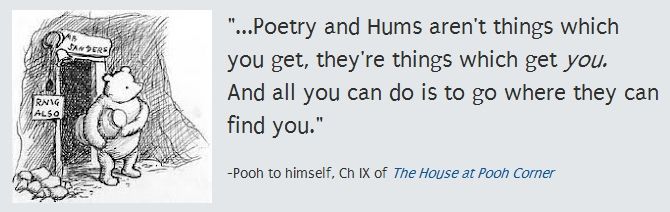
 My fictional spirit mentor, Winnie the Pooh, was a hummer. Some of his most insightful moments arrived in the midst of one of his hums. Several are wedged pretty close to the surface, so I’ll stick to only one, knowing it is likely to come dribbling out aloud at some point in the next few hours, probably when my wife is trying to read captions as we watch a Finnish detective procedural together.

The more it snows (tiddley pom)

The more it goes (tiddley pom)

The more it goes on snowing

And nobody knows (tiddley pom)

How cold my toes (tiddley pom)

Are growing

So that’s in there now. 

I drive my family nuts, I know, and I regret my involuntary tapping and singing as it intrudes unbidden in their lives. I stop (mostly) when corrected and really do try to squelch the most obnoxious of behaviors. Someone told me that the best way to escape an earworm is to begin singing “It’s a Small World After All,” as the mindless monotony of the tune blots out any other song that might have wished to persist. Good luck getting that one out once it arrives. The tricky part for me is that tapping and singing seem to be part of who I am. I don’t mind constructive commentary about my brain, but the brain does what the brain is built to do, and mine has a built-in jukebox and a time keeping metronome.  

There are more significant questions than “Who Put the Bomp In the Bomp Bah Bomp Bah Bomp?” but I’ll leave those to better, clearer minds and tap my way to bed, knowing there will be a fresh playlist queued up when I awake.

Whose Afraid of Artificial Intelligence?

Whose Afraid of Artificial Intelligence?

Well, there is certainly a lot of flap about artificial intelligence these days. The fear-ray has been activated as the prospect of robots taking every job in every sector of the economy becomes pretty much a sure thing. At first I thought, “what about pizza?”, but no, I suppose a robot could punch dough, flip it in the air, and shove it in the oven. Actually, you know, I can’t flip a pizza worth a darn, so is that danger or progress? Hard to say.

But what really got my tail feathers in a knot was this idea that humans have a monopoly on intelligence. I’m not going down the rabbit hole in suggesting that animals, I guess like rabbits, have intelligence, because, of course, they must, or they’d be sitting on the lawn somewhere saying “Dum De Dum” while coyotes tossed them in the air like, well, pizzas. No, I’m talking about the tools that have always been around, and by always around, I mean, who knows where they came from? 

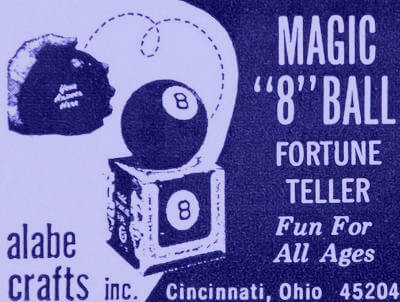
Especially the Magic Eight Ball.

Look, magic is tricky. That’s why I never let my kids play with a Ouija Board. Scares the nostrils off me. They aren’t hard to find. I think Hasbro makes one, which isn’t all that surprising since they also make the GI Joe guys like Cobra Commander and Snake Eyes. They make Twister too, so I guess they know something about the human need to twist on top of people, which isn’t exactly what a Ouija Board does, but which is semi-creepy.

Anyway, the magic eight ball hasn’t grabbed anybody’s soul as far as I know – not like Captain Howdy and the Ouija Board took Linda Blair in The Exorcist. 

As far as I know  

… but, really … How WOULD I know? 

There could be kids upchucking sulfur clouds all over the world, and I wouldn’t know. Stop to think about it, kids are looking pretty strange these days… you know, kind of grubby and spaced out. 

Vaping? Tik Tok? Probably not the eight ball.

The thing is, I have figured out that the ball can only answer yes or no questions, which simplifies the process and explains why when I asked, “Where is Love Island?”, the answer was “Reply hazy, try again”. But chuck it any number of questions it can answer, and the future arrives the slosh of a twist.

Will I live to be 90?

“Don’t count on it.”

OK, will I live to be 80?

“Outlook not so good.”

Fine, 70?

“My sources say no.”

60?

“Better not tell you now.”

My hands are sweating, and I put down the buttered Twinkie I usually have for breakfast and consider my options. Either the ball is full of crap, and it won’t matter what I do, OR … the ball is right, and it won’t matter what I do.

I’m writing with my mouth full and ordering my Ouija board from Amazon.

The Rancid Panda

The Rancid Panda

Feckless. That’s one of a number of words describing my character in my final year as an undergraduate at a fine institution chock full of feck. I assume I was admitted as the college’s ability to meet payroll had become problematic and retained for the same reason. There hadn’t been much feck around during my primary and secondary years, but the feck factor slid to zero somewhere in the fall of 1964. Nevertheless, against all reasonable laws of man and God, I stumbled toward graduation some number of years later without the slightest hint of preparation for a life outside a cosseting institution. 

Allowance. Another word that characterized the length of rope from which I hung until I bid my college years a dazed farewell. I had been allowed to wallow in a life of ease provided by others and had been able to pay for the sundries I felt necessary (Dunhill cigarettes and Marvel comics) because I was sent a monthly allowance which lasted a week.

The which is to say, the specter of employment haunted the final days of my youthful cavorting. The title of this piece refers to my best stab at writing advertising copy for an eminent midwestern ad agency. I liked the idea of wearing a gray flannel suit tailored at Brooks Brothers so I completed an application which included the task of coming up with names for a number of products and enterprises, including an upscale restaurant in Chicago.

I was not familiar with Chicago, but I had heard that the city boasted a number of ethnicities and highly regarded ethnic restaurants. My first stabs at summoning Italian and Greek cuisine were unfortunate; I spent the day searching for an evocative title for a classy Chinese restaurant in the heart of the city.

And here’s where the problem resides …

The name, “The Rancid Panda”, arrived with full force at noon, driving out every other possibility and convincing me that my brain was allergic to sensibility. Today I like to characterize myself as whimsical; the truth is that I’m moderately insensible for much of the day and increasingly goofy when asked to generate original material. Others refer to “writer’s block”, the condition in which words simply fail to appear. I suffer from “writer’s monsoon”; the words arrive with the urgency of a hurricane and flood the levees of reason and graceful discourse. Remember the apocryphal Dutch boy with his finger stuck in the dike? My writing hours are spent in plugging and replugging gaps in congruity. I’ve written elsewhere of the wrath with which a football player received the Biology essay assigned him and passed on to me for typing well after midnight. I consider “The Mating Habits of the Bering Seal” among my best work; apparently, however,  Professor Burns was not amused by my description of the languid twitch of flipper by which a randy seal invites reproductive congress.

Whimsical? The hulking football lineman thought not.

I did not finish the ad agency’s application; I never bought the gray flannel suit. In my feckless fashion, I applied for a job as a teacher of Psychology in a boarding school. I hadn’t majored in Psychology. I took one course, “Complex Learned Behavior in Insects”, in which I presented an essay on “The Waggle Dance of Honeybees”, a topic begging for whimsical pseudo-behavioral blather. Once again, I suspect I was hired because there were no other applicants, the job included living in a dormitory with teenage young men with dubious impulse control, and coaching soccer, a sport I had played with the same level of seriousness I gave to any enterprise.

I became a teacher by default. 

Hapless is not a word that describes that career. 

The world was filled with hap when I found myself in a classroom. Was I goofy on occasion? Yup, and we all survived. I retired after almost 50 years of teaching with my head held high, and when asked where I wanted to have my celebratory retirement dinner, what did I suggest?

You got it. The Rancid Panda.

Top Shelf Memory’s Closet

Top Shelf Memory’s Closet

We three bums from Joe’s sloppy bar

Tried to smoke a rubber cigar

It was loaded and exploded

All over Joe’s sloppy bar

I must have been ten, maybe eleven, when I heard that refrain for the first time. Every element at work in that composition impressed me then and impresses me now. Like the best of doggerel, it has no provenance, no author. It arrived intact and flawless on a bus trip to a fish hatchery, performed by kids a year older than I; it scans perfectly as few parodies do. Ianesco and Beckett’s tributes to absurdity may have been more polished, perhaps, but the forceful rhyming of “Joe’s sloppy bar” with “Joe’s sloppy bar” is genius. And Joe’s Bar? Must have been a million of them. Joe’s Sloppy Bar? What a concept. With a word, I imagined puddles of spilled beer on tables, filthy rags used to smear the glasses, the steady drip of an untended tap as a corroded barrel emptied itself on a floor of mucilage. The coup de grace for me came in self-identifying as one of three bums dumb enough to try to smoke a cigar made of rubber, an idiotic premise made more unlikely by the packing of the rubber stogie with explosives of some strength.

Like the most profound expressions, there is no explanation, no further action. Bums, explosives, tattered rubber smokes, sit forever in the sloppy bar, static, unchanging.

Perfect.

There are relatively few experiences that have a place on the top shelf in memory’s closet. Most are the sorts of ordinary and miraculous events that define the course of a lifetime, but a few are random moments of awareness and appreciation. Beethoven’s Ode to Joy is right up there, and Frank Lloyd Wright’s prairie houses, and Ball of Fire, a comedy starring Gary Cooper and Barbara Stanwick, but featuring an all-star collection of character actors whose mannerisms and voices still bring unvarnished delight. These are names to conjure with – S.Z. “Cuddles” Sakall, Oscar Holmoka, Henry Travers, Leonard Kinskey, Allen Jenkins, Charles Lane, and Elisha Cook, Jr., the actor most likely to be killed within the first fifteen minutes of his appearance on screen. Astaire and Rogers. Cary Grant and Katherine Hepburn. Willie Mays, Ichiro Suzuki, Sandy Koufax. 

I’ve written about visiting the Field of Dreams with my son, but dreams and fields seem to pop up everywhere I look.

For reasons that escape me, I spent a summer trying to peddle encyclopedias from door to door in Wisconsin, Illinois, and Iowa. One August evening, I drove through Beloit, Wisconsin, a small city due north of Roscoe, Illinois. I don’t know that there is a word or phrase that describes the last moments of twilight, when the metal halide lights bark into white/yellow stripes above a freshly mowed small town baseball field. Players cast exaggerated shadows and the smell of popcorn and hot dogs seeps from the cook tent or bunker behind the backstop. I pulled over, sat on the hood of my car, and watched an entire game as Beloit slipped into darkness.

I never found out who was playing. Didn’t matter. 

About the encyclopedias: I am relieved to say that I never sold a set. I did my time in the encyclopedia sales school in Madison, an unpaid week in which I had to memorize the pitch for Collier’s encyclopedias word for word. The professional encyclopedia hawkers left no room for freestyling in casting Colliers’ net. I’ve forgotten the exact patter used to propel us from the stoop into the living room, but the gist of it was that the lucky inhabitant had been selected to win a set of encyclopedias ABSOLUTELY FREE! That’s right. A complete set of 23 volumes (QRS, TUV, and XYZ were combined in three) was theirs for the taking. All they had to do was agree to purchase the annual supplements … FOREVER. Should the fortunate family not rise to the bait, we were to compare the cost of the supplements on a daily basis to the cost of milk, and who … we were to ask … who would deny their children milk? 

I got to that point in the sales pitch once, in Iowa, and realized that the people foolish enough to have allowed me into their home, might actually lock themselves into perpetual indenture to Colliers. I closed my sample case and scuttled into the darkness of an Iowa night.

Not selling encyclopedias was not an Ode to Joy/Field of Dreams alive in my memory experience. Please. What it was, however, was the reason I lived in a borrowed apartment, foraging for cans of soup and vanilla icing left in the storage cellar; I was flat broke and spinning my wheels until I could return to a college dorm and the college meal plan. Madison, Wisconsin was one of the centers of student unrest and a swinging hot spot when the sun went down. Student bars roasted bratwurst and served up dollar pitchers of beer as coeds flaunted their imperviability to the rhythm of two lyrically disappointing hits – 96 Tears and The Last Train to Clarksville. 

No brats or beer for me. No coeds either, but that’s … a story for another day.

Inexplicably, what I did have was a ticket to a concert on July 8, 1967. The apartment in which I was roosting was on University Avenue just south of the School of Agriculture and a block from the Association of Women in Agriculture; the concert was at the Dane County Coliseum, about eight miles away. I can’t remember how I had the ticket or how I got to the coliseum, but I can pretty much recall the set list for the three acts improbably touring together that summer.

The headliner was Frank Sinatra who had traded the company of the Rat Pack on tour for Sergio Mendez & Brasil ‘66 and The Buddy Rich Band. Brasil ‘66 opened, played a full and magical set (Mas Que Nada, One Note Samba, Going Out of My Head). Sinatra had recorded with Antonio Carlos Jobim; Brasil ‘66 was a tip of the hat to younger Sinatra fans. Sinatra also performed with The Buddy Rich Band, the group that had just put out the remarkable Big Swing Face album. The band played a set on their own, upbeat swing versions of Love For Sale, Mexicali Rose, and, uh, Norwegian Wood. Rich was a remarkable drummer and his band was formidable. They stayed on stage after their set, and the lights dimmed … drum  roll please … and Sinatra stepped into the spotlight. 

Frank Sinatra’s career was not quite at its peak when he landed at the Dane County Coliseum. He’d sent audiences swooning in the 1940’s, emerged as an actor and Jazz singer in the 50’s, and had pretty much recorded all of what we now call The American Songbook, evolving into his persona as “Chairman of the Board”, head of the Vegas Rat Pack, chief advocate of the late ‘50s jet-set ring-a-ding hedonism. He’d just been bounced from Vegas by Howard Hughes, still recording hits, but shifting quickly to catch the wave of current popular music. Witness the appalling duet with his daughter, “Something Stupid”. 

But on that night, in that sold-out arena, he was magical. Sinatra purists celebrate the extraordinary phrasing with which Sinatra animated even the most familiar of tunes. I can’t imagine how dispiriting a tour of midwestern arenas might be, but Sinatra SOLD every song he took on, singing for more than an hour.

Other concert experiences have not made the top shelf in memory’s closet. Well, to be honest the Chuck Berry concert in Springfield, MA was grotesque enough to continue to trouble my dreams, but Brasil ‘66, Buddy Rich, and Sinatra, on one stage, on one night was perfect.

And, I must have been able to get back to the apartment in time for a post-concert snack of Vanilla icing.  

Something For Everyone – A Christmas Sampler

Something For Everyone – A Christmas Sampler

There’s no accounting for taste, particularly my taste in holiday movies, but as Haruki Murakami so aptly observed, “Whether you take the doughnut hole as a blank space or as an entity unto itself is a purely metaphysical question and does not change the taste of the doughnut one bit.” The object here is to dunk a few speculative doughnuts in the holiday punch and see if any stand up to closer examination.

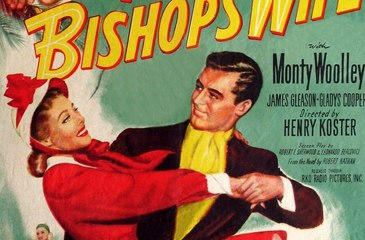
The Bishop’s Wife

The slate of long-treasured Christmas classics is rife with sentimental favorites. I haven’t missed screening White Christmas since 1958. Almost entirely overlooked, however, is 1947’s The Bishop’s Wife, remade somewhat clumsily in 1996 as The Preacher’s Wife with virtually the same plot but less charm.

The set-up is simple: Carey Grant is a dashing and urbane angel whose mission has something to do with assisting a frustrated cleric, a bishop played by David Niven, an actor whose career was primarily in playing dashing and urbane, somewhat under-energized, British toffs. From the start, however, it’s clear that the angel has a far more powerful effect on Loretta Young, the bishop’s neglected spouse, a sad beauty brought to vivacious animation by the attention given her by the dapper angel. Annually overlooked in the schlockfest that begins with My Little Pony:Winter Wishday, The Bishop’s Wife is a reminder of the nuanced emotional charge the studios’ in-house screenwriting teams could bring to any sort of material. Grant’s performance as Dudley, an angel with a cleft chin and great suits, is complicated, combining heavenly serenity with a hint of self-satisfied seduction. The only critical piece I’ve seen on the film goes right to the real question: Is this angel a player?   

“ … the script touches on all the wholesome tropes of the Christmas movie without dipping too deeply into schmaltz. Dudley helps locals ice skate. He magically redecorates a Christmas tree. But, as was often the case with films made during the era of the production code, there are hints of something more dangerous beneath the surface. What exactly are Dudley’s intentions towards the Bishop’s Wife? The polished Cary Grant persona never entirely concealed the promise of nocturnal transportation.”

“Nocturnal transportation” is a phrase rarely used in scriptwriting these days, but I suppose one’s imagination may occasionally wander into unseemly thoughts as Loretta is in semi-swoon, but no matrimonial harm is done, and the angel’s work with the bishop is clear by the end. No “nocturnal transportation” in this elegant Christmas tale.

Surviving Christmas

Routinely included in the pantheon of worst Christmas movies, Surviving Christmas is frequently cited as the nadir of Ben Affleck’s acting career. Panned in the New York Times, the reviewer noted that the film, “found a clever way to use Ben Affleck’s disagreeable qualities. The actor’s shark-like grin, cocky petulance and bullying frat-boy swagger befit his character.”

No argument from me on that score; despite the rancor with which the film was reviewed, however, Affleck and a tone perfect supporting cast prove that in some instances, when it comes to disagreeability, more is more. Relentlessly annoying, Affleck sells his self-obsessed hedonism with true commitment. He’s alone and petulant, cocky and wealthy enough to rent the family living in his childhood home. Yes, he bullies James Gandolfini, essentially a grumpy Tony Soprano with a pitch perfect deadpan sense of humor. Less dangerous than Tony, certainly, somewhat sweeter, in this role, Gandolfini practices the same simple expedience when threatened, first meeting Affleck when knocking him to the ground with a snow shovel. Affleck’s rented mother, Catherine O’Hara, delivers biting commentary on her wretched with weary understatement, and no critic could have held Affleck in greater contempt than the sister who refuses to be rented, played with acerbic charm by Christina Applegate. 

The film’s gentle resolution includes a generally happy ending, transformation of character, and a series of jokes about incest. Jolly holiday fare? In its own way, sure. Knuckle gnawing awkwardness? A Christmas bonus!

Kiss Kiss Bang Bang

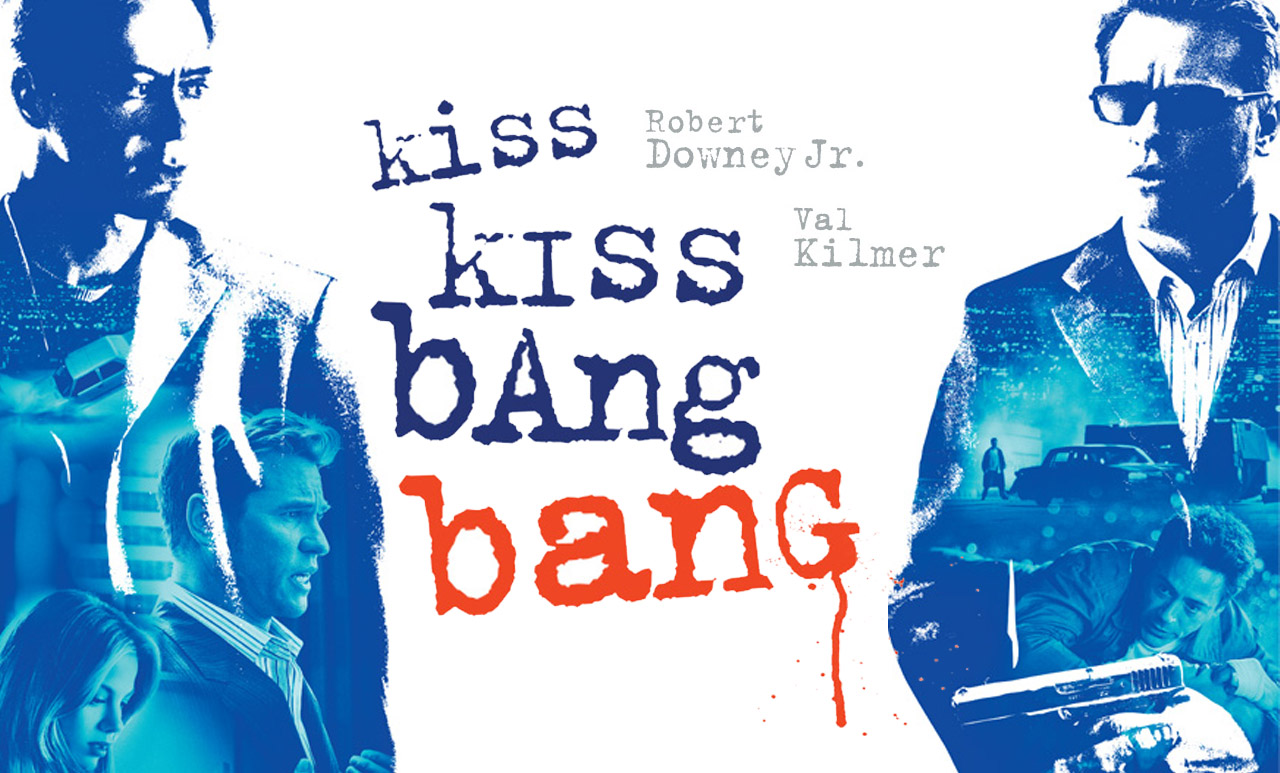
Had enough holiday treacle? Looking for a little grit in the Christmas punch? We’ve seen  Die Hard creep into the Christmas pantheon when we weren’t looking, popping up as a widely celebrated “holiday” fable despite its tangential attachment to Christmas. There are other eminently watchable films that have at least a scene or two set at Christmastime but are not truly in the holiday film category: Little Women, Trading Places, Bridget Jones’ Diary, Meet Me in St. Louis, Gremlins, While You Were Sleeping, Carol, The Holiday, The Family Stone, and Love Actually, the most Christmas-centric of the bunch. If you’ve heard that Bruce Willis Yipee-Ki-Yay once too often, you might enjoy an infrequently screened oddity with a quasi-holiday setting which makes Die Hard look positively cozy. I cannot begin to describe the plot of Kiss Kiss Bang Bang, featuring Robert Downey, Jr. and Val Kilmer, adapted from the novel Bodies Are Where You Find Them. I think this is the first time I have been forced to post a trailer in the hope of introducing an under-appreciated classic: Enjoy!

Last Chance For Christmas

On the other end of the spectrum, Last Chance for Christmas is a lovely, family friendly, goofy, sappy, feel-good romance set at the North Pole and at a reindeer ranch in Alaska. Unassuming and fun, this one is several cuts above the usual saccharine holiday romantic comedies, a pretty genial polar romp with actual development of character. It’s hard to get past the 750 Days of Christmas popping up in mid-November; Hallmark and Lifetime alone are responsible for several hundred Christmas themed movies.They’re made inexpensively, quickly, and always involve wrapping presents, finding the right tree, and baking cookies. We can almost smell the gingerbread. Every once in a while, however, something unexpectedly affecting escapes the treacle-fest, something deft, clever, even quirky. So, Last Chance – family friendly and smart.

You’ll be able to follow the plot. Prancer’s got a stress fracture in a hind foot. No Prancer, no Christmas; the North Pole is in a tizzy. Behind every successful man there’s a woman, Lifetime suggests, and feckless, befuddled Santa is lucky enough to have a tough and competent better half to whip the slaves elves into shape. She sends the reindeer trainer, a square jawed hunk better with animals than with people, to a beleaguered reindeer ranch in Alaska. Tough time for reindeer ranches too and for the gritty single mom staving off foreclosure. Formulaic, sure, but the kid and the reindeer are winning, and the goof from the North Pole has an awkward “Aw Shucks’ ‘ decency reminiscent of Gary Cooper as Professor Bertram Potts in Ball of Fire. 

Time’s running out; Christmas is almost here. I’ll have to wait until next time to wallow into the quagmire of holiday specials. For the moment, I’ll just suggest that Emmet Otter’s Jug Band Christmas is a Jim Henson gift to treasure.