Uh, 2016?

Uh, 2016?

Remember the Year 2K?  The Millennial anniversary that signaled the end of life as we knew it?  Unless I missed a memo, we ducked the digital meltdown and managed to get on with the familiar triumphs and trials almost as if the calendar was a convenient human invention rather than a playbook for the globe.

Having slipped by that one, we had to contend with December 21, 2012, which, as we knew all too well, was the date identified in the MesoAmerican Long Count Calendar as the start of the New Age.  Scholars steeped in the history of the Mayans assured us that they had found no accounts of doomsday predictions, and that the presumed collision with the planet Nibiru was not imminent.  Equally unlikely, they suggested, was the geomagnetic reversal (polar shift) that would set off an explosion roughly equal to that of one hundred million atomic bombs.

The temptation to catastrophize is always with us, and the events of the past year may, in fact, have consequences that turn out to be not-so-great, but my powers of prediction have turned out to be unreliable, and investment in prophecies that never materialize has not brought me much satisfaction.  All of that now being said, it seems right and proper to take a look at some of the signal events of the past year, not to give them more weight than they deserve, but to remind ourselves of the road we have travelled together.

2016 brought discussion of “fake news” and of viral accounts that were entirely manufactured, particularly those that were disseminated via Facebook.  The two runners-up in this year’s tally of Facebook shares are impressively vivid: ” Cinnamon Roll Can Explodes Inside Man’s Butt In Shoplifting Incident” and “Morgue Worker Arrested After Giving Birth To Dead Man’s Baby”.  The most shared story of the year, however, must have resonated with disaffected employees everywhere; 1,765,000 people passed this one along: ” Woman Arrested For Defecating On Boss’ Desk After Winning The Lottery”.

Wish fulfillment?  Magical thinking?  It’s hard to prepare an informed citizenry for the exercise of democracy when we can no longer trust the news our friends pass along.  And, by the way, the alleged Cinnamon Roll Can explosion would certainly move way past “incident” for any witnesses who happened to be waiting in line when the device deployed.

Real news, however, is stranger than fake, as is exemplified by the report issued by the Taunton, Massachusetts Fire Department, indicating that an arsonist attempted to use Cheetos as an accelerant in setting his ex-girlfriend’s house aflame.

The annual publication of the Darwin Awards celebrates the culling of the human gene pool as those most likely to reproduce the next generation of stunningly clueless mortals make mind-rattling and occasionally fatal choices, choices that suggest that they are unclear on a concept.  More than half of the awards have been given to criminals who, in the heat of the moment, have forgotten some of the central elements necessary to a successful crime, but 2016 was the year in which ordinary folks moved into consideration for the top prizes.  Both nominees failed to survive what must have seemed a perfectly reasonable impulse.  The first attempted to take a “selfie” with a crocodile; the second attempted the same photo op with two elephants in the wild.

2016 was the year of rampaging “killer clowns” as claims of abductions by clowns came from virtually every state in the union.  To date, no actual criminal clown activity has been substantiated, but schools and organizations did shut down in response to clown terror.  Urban myths spring fully formed, and this one took off quickly, not only prompting parents to form “clown vigilante” packs, but compelling “pro-clown” groups to march under the banner, “Clown Lives Matter”.

In 2016, the world of wanna-be-wizarding was rocked by J.K. Rowling’s disclosure that one of the students attending Hogwarts, Dean Thomas, had originally been named “Gary”.   Visitors to Pottermore – the digital heart of the Wizarding World took to the twittersphere to wonder at the meaning of the change of name.  Apparently Rowling had known a boy named Gary.  That’s it.  That’s all there is.  Gary.  The mind leaps, of course, to consider the other sorts of names that might have been been enrolled at Hogwarts had Harry, Hermione, and Neville not made the cut.  Chad Potter and the Sorcerer’s Stone, featuring  Chad’s loyal pals, Trixie and Stu.

The year that was brought controversy aplenty.  There was considerable flap over the sudden popularity of Lacroix Sparkling water, with particular concern that movers and shakers in Hollywood had adopted the fizzy stuff as the “insider” beverage of the year, hijacking what had been a down-to-earth product of the G. Heileman Brewing Company of La Crosse, Wisconsin and changing the pronunciation from “La Croy” to “Lah Crwah”.  Was the “French” pronunciation merely an affectation?  Hah!  Consider these among the TWENTY flavors of sparkling water now available:  Pamplemousse, Pomme-baya, Cerise limon, Pina Fraise, LaCola, and Mure pepino.  Zut Alors!

Finally, Pokemon Go was touted as the answer to the sedentary habits of gamers as the mobile application employed GPS in order to propel players through the “real” world, encouraging physical activity.  Maybe, but when players were directed to capture virtual creatures at the Auschwitz-Birkenau State Museum, The United States Holocaust Museum, and the Hiroshima Peace Memorial Park, when players were directed to trap creatures on the railroad tracks in Holland, when Bosnian players stepped into mine fields, when Japan reported seventy-nine Pokemon Go related auto accidents, when a stabbing victim in Forest Grove, Oregon refused treatment so that he could continue his hunt, when a boyfriend said, “Catch ’em all” instead of “I love you” when dropping off his girlfriend, we had to wonder.

And, just to send the old year off with proper fanfare, let’s remember that in 2016 we treated our celebrities well.  The Forbes list of Highest Paid Celebrities has a few surprises, but I’m certain we all agree that every penny is well deserved.  Leading the tally, Taylor Swift hauled down $170,000,000 last year, Dr. Phil McGraw counseled his way to $88,000,000 (How’s THAT working for you?), and Kevin Hart came in at $87,500,000.  Howard Stern will have to get by with $87,000,000.  Madonna still cashes a hefty check, coming in at $76,500,000 while the lovely and talented Rush Limbaugh tops that with $79,000,000.  Some surprises might include Kim Kardashian at $51,000,000 and Judy Scheindlin (Judge Judy) at $47,000,000.  I’m going to assume it’s residual income that brought Jerry Seinfeld another $43,500,000 last year, but how did virtually retired Tiger Woods bag $45,500,000?  The universe is now finally in balance,however, as supermodel Giselle Bundchen earned a mere $30,500,000 while hubby Tom Brady pulled down $44,000,000.

No room for resentment here.  I wish them a happy new year and pass on this urgent advice to the rest of us. Put down Pokemon Go, don’t take selfies with a crocodile, and if you win the lottery, steer clear of your boss’ desk.


Snow

Snow

“The Moon on the breast of the new-fallen snow…”

We don’t get much snow in this valley.  The passes are often socked in, and the mountain pines are flocked for much of the winter, but down here we are accustomed  to only a few dustings each winter, nothing awkward or inconvenient, a bit of accent snow to heighten the effect of holiday lights.  Novelty snow.  Window dressing.

Yesterday, however, we found ourselves inside a snow globe.  Apparently the local weather team was equally surprised by the appearance of snow, by the weight of snow, and by the generous and ongoing delivery of snow.  Attempting to recover the appearance of prognosticating expertise, they have been quick to announce that today’s snowfall has not eclipsed the record set in 1919.  So, no big deal; it’s only been almost a century since anything like this snow has settled here.

I have a friend who happens to be an Eskimo.  He was raised in Oregon but speaks the Yupik language, and so, has an opinion on the perennial linguistic squabble that bedevils academic anthropologists.  Do the Eskimo-Aleuts have more than a hundred words for snow?

Don’t expect a simple answer to what turns out to be a complicated question.  Of course, he argues, people who live and work in a northern climate are likely to have words specific to their immediate experience of their world in the same way that city-dwellers have all sorts of terms that country folk do not need.  Any Angelino is happy to tell you that taking the 10 or the 60 is brutal at rush hour, but the 101 can be carmagedden from the 134 to the 118 0r 126.  His short(ish) answer is that while snow falls in several varieties, it is the relationship of snow to all other elements and actors that matters.  Gradations of wind, temperature, sunlight, cloud cover, all affect snow, no matter how crystalline or granular it happens to have been at the point of precipitation.  Toss a person, a family, a tribe out there, and the relationships between observer and event become complex.

In the morning, I took the dogs into snow so deep that the smallest of the border collies had to leap from pocket of snow to pocket of snow in order to stay up with the rest of the pack.  Our largest and furriest, often miserable in mid-summer, settled into a drifted bank and sat contentedly watching the others frolic.  Finally, exhausted by having done some leaping myself, and very cold, I called the other dogs to the kitchen and delivered the expected biscuits.  Our frosty fur bag wouldn’t budge; the world suddenly made sense to him.

Later in the day, I approached snow-related chores, attempting to free a car so that we might pack in some supplies and get my daughter to the plane she needed to catch that evening.  I don’t own a snow shovel.  I have a pitchfork,and a chain saw, neither of which was of any use.  I had a snow shovel, and a toboggan, when we moved from Michigan in 1989, two of the many objects I have cast aside in moving from region to region.  I knew I would need them; why, oh why, did I listen to the voices of “reason”?  This is exactly why I haven’t discarded the ventriloquist dummy and the LP Christmas albums.  Who knows when they will be needed?

I’ll admit that my feelings about snow were altered as I faced the challenge of freeing the car.  I wasn’t annoyed, exactly, but let’s just say, less appreciative, as the-second-worst-snowfall-since-1919 filled my boots.  An ill-spent youth in Connecticut had taught me how to gently rock a car from tire-spinning stuckness to a semblance of traction, so I did manage to get to the store, and I did manage to walk my daughter’s luggage to the end of the long drive, and I did manage to get her to the airport, which is a journey of sadness for me as I hate to see her leave, but which is also necessary to her taking her place in the world as a competent and impressive young woman.

Mission accomplished, daughter safely delivered, I entered into the next stage of this complicated relationship with the elements.  As I rocked the car from its parking spot, I became aware that as daylight had faded, softly puffed snow had turned to ice.  I had been caught in an ice storm outside Portland last winter, terrified to find that I could not control the car and aware that I was not alone in careening across the highway .  I slid to the first exit and spent the night at a motel, hoping for a melt in the morning.  This region doesn’t deal with extremes easily; no crews plow or sand the roads.  Last night, I drove slowly, noting the cars already abandoned off the edge of the highway, slightly skimming sideways on the last leg as I took our dark country road, tapping my brakes until I docked at the now dark end of the drive, under fanned pine boughs still heavy with snow.

As I walked toward the house, however, I left the trees and stood in the light of a first quarter moon.  Moonshadow stretched from the trees, but the snow covering the orchard and the adjacent pasture was  unbroken and glowing.  Had the moon been full, that snowscape might have been more sharply gleaming, but in quarter light, I could appreciate Clement Moore’s figurative moon on the breast of new-fallen snow, not giving the lustre of midday to objects below, but softening fences, bushes, trees, the pasture shed.

Today the trees have shed much of their snow and are again green against a bright blue sky.  Deep snow has now been pocked with dog play and the oddly straight tracks of deer walking head to tail, scrambled slightly on either side of fences as the deer spring, then straightened and precise as they resume their ordered march.  Some small beast has made a home in the bramble at the south end of the larger pasture, having dug a path under that fence; the piled snow is matted now, so we can see where the skunk or woodchuck likes to sleep.

Tomorrow’s snow will be different; I won’t have a word for snow that has melted a bit, moved with the wind, refrozen, and ended up near a short tree.  It won’t come into being until I see it after all, and I may be pleased to spend another day snowbound in our cozy house, or I may be cabin crazed and desperate to find more coffee at Trader Joe’s.  Snow and I will meet again and we’ll figure things out.


Living On The Edge … Of Paradise

Living On The Edge … Of Paradise

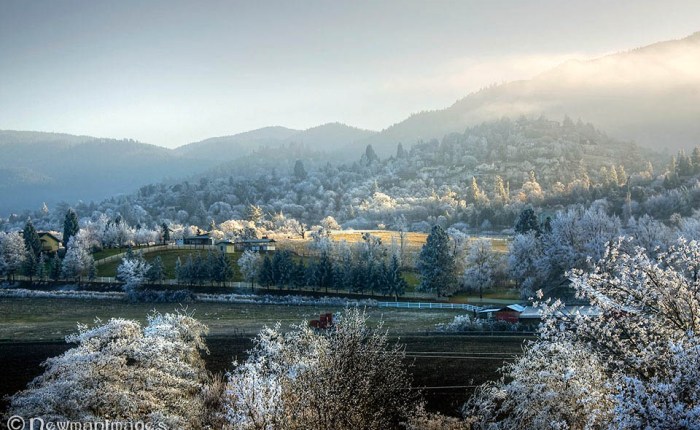
The temperature has been dropping over the past few days; rumors of real snow abound, and travel plans through the mountain passes have to include snow tires or chains.  I live in the Rogue Valley in Southern Oregon; the hills on both sides of the valley are forested, green until November, then flocked with snow until May.  The higher peaks don’t melt until the middle of July.

I walked across a parking lot yesterday morning, forgot about the errands I had planned, and stood looking to the south and north, grateful again to live each day against a spectacular backdrop.  People who grew up here describe the climate as “pear friendly”, the growing season is long, and sunshine and water arrive as the trees have need of them.  Summer days are long and occasionally very hot up here, but each of the seasons brings dramatic lightscapes and plenty of interesting weather.

My days, for the most part, are spent in Ashland, a small city of about twenty-five thousand people.  Ashland is the home of the Oregon Shakespeare Festival, an ambitious repertory theater company which produces plays in three separate theaters  from March until November.  In the course of a decade, the entire canon of Shakespeare’s work hits the stages, but Broadway musicals, original work commissioned by the Festival, Restoration comedies, French farce, and reimagined classical works will all have a place.  Southern Oregon University is here as well, and coffee shops, restaurants, bookstores, horse farms, and orchards.  People move here, mostly from California, but from other parts of the West as well.  Locals put up with us; we admire the locals.

I’m lucky to be here, but I don’t live in Ashland.  I live in Phoenix, a village belonging to greater Medford.  We have a small home, fenced acreage, no near neighbors, and long views in every direction.  Home prices in Ashland are higher, and nobody I know drives to Phoenix for the restaurants or coffee shops, but I love the play of light in our part of the valley, and my fifteen minute drive to the south end of Ashland takes me by the loveliest panorama of mountains, a view Ashlanders don’t ordinarily see.

We moved here from Carpinteria, California, an equally small town, south of Santa Barbara, the American Riviera, packed with celebrities and tanned wealth of every sort.  We didn’t live in Santa Barbara, but in my fifteen minute drive to a Santa Barbara, I drove next to the Pacific and saw rainbows over the red roofs of the city.  My kids went to school in Santa Barbara; we shopped in Santa Barbara, found coffee shops in Santa Barbara, but drove home to a house in a less celebrated small town, adjacent to the hills of the Los Padres Forest, on a mesa, overlooking the Pacific. We enjoyed the same breezes that cool Santa Barbara in the summer and the same sunshine that warms it in the winter, but friendly Susan from the town’s bank called us when anything odd turned up on our debit card.

This pattern of living near but not in extraordinarily advantaged places began in childhood.  I grew up in Woodville, Connecticut, a community so small it can’t properly be called a village, much less a town.  As a non-census community, there has never been an estimate of population, but my guess is that the thirty or so households probably hold about a hundred people.  Woodville is one of five communities within the town of Washington, Connecticut, a large township with low population density. Today the population of the entire township (Washington Depot, Washington Green, New Preston, Marbledale, and Woodville) is about three thousand, five hundred, up about a thousand from what it was when I was in school.  Washington is one of the two or three loveliest towns in Connecticut; stately Georgian and Greek Revival houses flank the Green, and manicured estates follow the sweep of the rolling Litchfield Hills, the last extension of the southern Berkshire mountains.

Woodville is far from manicured; the truck route from Danbury to Torrington ran through Woodville, but there are few distinctive features to separate the stretch through Woodville from similarly undeveloped wooded country anywhere north of New Milford and south of Litchfield.  Long gone are The Armory (guns and knives) and Grandpa Snazzy’s Cabin, a tiny store that sold candy, sodas, and Hostess pastries, and which held the county’s only pinball machines.  My brother’s pottery (Wolff Pottery) was a landmark in later years, but in my youth, the building was still a mule barn.

Picture postcard Washington inspired the Gilmore Girls’ Star Hollow, and the famed Mayflower Inn has long welcomed guests from around the world.  The “commercial” area of  the town, known as Washington Depot consisted of the Hickory Stick Bookstore and Park’s Drugstore, a hardware store (The Washington Supply), a small market, the post office, the town hall, an art gallery, and a bank.  Marbledale had a grocery store, New Preston a package store, a grocery, a pharmacy, and a post office.  The town library, a smaller Park’s drugstore, the Congregational and Episcopal churches, and the Gunnery, a boarding school were on the Green.

I’m pretty sure the folks who live on the Green or on one of the expansive horse properties have no idea that there is a Woodville; not many Georgian or Greek Revival homes on the truck route.  On the other hand, main road aside, I was surrounded by pine forest and could easily walk to an unpaved road that followed the Shepaug River, branching off to meet Sabaday Lane, as horsey a lane as one can imagine and one that leads eventually to the top of Washington Green.  In the winter, when a cold rain was followed by a sudden drop in temperature, I could skate on that dirt road; in the summer, I could prop my bike at the trunk of a pine tree and walk down the bank into one of the pools made as the river dropped into a bend.

Years later, my wife and I were married in that post card church on the Green and celebrated by taking our tiny wedding party, including our dog, to the Mayflower Inn.  I have been tempted at times to feel sorry for myself as an outsider, far out at the fringe of gracious living, but the truth is that I have been fortunate from the start, lucky to find myself in extraordinary settings, delighting in the gifts that each season has to offer.

I spent much of this morning in the pasture with our four dogs.  Snow has been falling since before dawn; the dogs’ tracks fill quickly.  Despite the onset of winter, Blackberry tendrils have been throwing themselves far from the fences; today they are covered with snow, weighed down, far less likely to spring at me as I lop off new runners with a hedge trimmer large enough to fit a Norse god’s fists.  When the snows melt, I’ll gather up the piles of blackberry bramble and toss them on the burn pile.  For now, they sit snow covered, white mounds marking the fence line.


New Year’s Irresolutions

New Year’s Irresolutions

It’s the first weekday of the new year.  Resolutions fill the air.  The parking lot at the Y was packed today and every machine occupied.  I know my gym, its rhythms and its denizens; these were not my people.

I sweat next to the same people at the same time of day six days out of seven.  That’s not to tout my dedication, discipline, or resolve; I’m a creature of habit, currently retired, and without much to distract me on a day-to-day basis.  Were I not at the Y at the same time every day, I’d be shuffling around the house reminding my wife of the correct way to stack dishes, fold laundry, bring order to the silverware tray.  None of these would be welcome instructions, and my wife’s generous patience with my fussiness would quickly evaporate.  I would also be spending my declining years sitting in front of the TV, eating Cheetos, and watching the Game Show Network.  As the days and the pounds mounted, as my fussiness increased, my free-floating discontent and anxiety would chafe me into a state of sleepless exhaustion, driving me back to the cupboard for another bag of Cheetos and to the couch for another hour of Family Feud.

And so the world ends, not with a bang but with the remote in a death grip of fingers stained orange.

But I go to the Y, hop on a recumbent cycle, and pedal my way into sweet, sweet oblivion for an hour, hose myself down, and drive home ready to turn to reading, writing, and to the appreciation of all that my wife and each of my children bring me.  It’s a good life.

As I say, the air at the Y was thick with resolve; never has exercise been more earnest.  I have nothing against resolutions; they’ve never done me any particular harm.  Never done me any particular good either.  Generally, resolutions, like intentions, pave the road to whatever private hell we choose to inhabit.  Over the years, I’ve taken a different and equally ambitious path; I draw up a list of strongly held convictions from which I intend to escape, becoming mindfully irresolute.

For example, I intend to be irresolute in believing that disagreements reveal a lack of good judgment on the part of those who disagree with me.  I haven’t done very well in resolving to withhold judgment of others; by not done well I mean I’ve been laughably unsuccessful.  So, irresolution would lead me to say something like, ” I could be wrong…”.   “Hmmm.  You might be right.”  It will take practice, of course, but it seems almost possible to shift to the presumption that I might not have all information or all answers.

In an even more dramatic attempt at irresolution, I’m willing to release my frantic  attempt to control the future.  There is an outside possibility that what I believe is the inevitable course of events may, in fact, be nothing more than conjecture.  I often confide in a friend, wallowing in  the certainty of disaster and ruin ahead.  His advice is always the same; “Why don’t we wait until we get there?”

This impulse toward irresolution is put at risk as I move into resolution, so I’ve got no lists on the fridge, no deep thoughts on the bathroom mirror, no reminders hanging from the visor in the car.  To be irresolute is to be uncertain, and it is uncertainty I embrace as this new year begins.

I’ll grab my gym bag tomorrow, look for an open locker, hope a machine is available, and assume that once again, I have no ability to guess at which newly motivated, energetically resolved, fresh initiates will still be lumping along on the treadmill in a week’s time, or in a month.  Checking the certainty meter for a second, I’m reminded that I have no access to information about my own future.  I stand on the brink of a new year, then, irresolute and determined to stay so.

After all, you can’t argue with “who knows?”


…And A Happy New Year!

…And A Happy New Year!

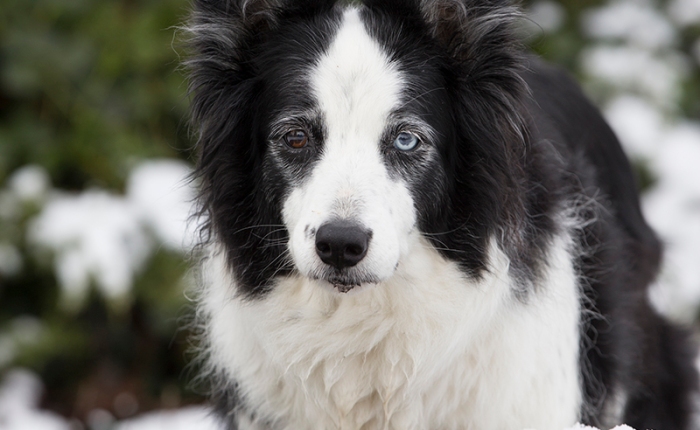
I write the last post of the old year in a corner of the living room.  I’m sitting in a small clearing, surrounded by the wrapping paper and cardboard boxes that still claim most of the floor.  I’m in the living room because the dogs are in the laundry room, adjacent to the kitchen.  They’ve been fed and had a jolly romp through the pasture, none of which contributes to their state of contentment or well-being.  All four dogs are border collies, which is to say, all four were bred to spend sixteen hours a day nipping sheep into various configurations and combinations.  There are varieties of border collies that have been poofed into caricatures of the breed in order to compete in beauty contests, but our pack, while lovely to behold, are rangier with a lean and hungry look.  These are working dogs currently under-employed, skilled in expressing their disappointment in the sloth this dog owner persists in enjoying at their expense.  It is the voicing of that grievance that pulls me into the living room, almost far enough away from the laundry room to ignore their importuning.

I’m not the Alpha owner.  That would be my wife, a practiced dog handler, dog trainer, photographer of dogs, and expert in almost all things canine.  I’m in the pecking order somewhere as the hand that feeds and the hand that scoops, but only slightly more important than their water dish.  I  do have a place in the nightly bedtime ritual, visiting each dog and providing affectionate tribute to each in turn.  The eldest, Jinx, is deaf and easily startled, so I approach her head on and work from her ears to the white blaze on her chest.  Rogue, the bossiest of the bunch, rolls on her back, paws bent in supplication, presenting her stomach for scratching.  Satch, largest male, doesn’t move when petted, but groans in satisfaction.  Banner, the wild child, likes to sleep in his crate, but slinks out, laying his head on my lap before trying to scramble his entire length into my arms.

Today the usual routine was slightly disturbed as one of the four, or perhaps all of the four, got into a garbage bag I had foolishly left out for disposal later.  Compared to the skunk attack on Christmas Eve, a spray of coffee grounds and a few mangled banana peels are hardly worth mentioning.  Someone got most of a chicken pot pie and another seems to have finished off the asparagus, none of which had any impact at all on their appetite as lunch hour drew near.  If there is blame to be tossed about, I’ll take it. The floor needed a good scrubbing anyway, and the fault clearly lies with the Beta owner who walked away this morning leaving a full bag of tempting garbage on the kitchen floor.

In addition, I was more than happy to be the designated scrubber as the Alpha owner had branched into yet another field of expertise.  For several days I had been mildly irked by a scratching sound that I took to be coming from the heating unit in the attic; irked, but not moved to do anything about the noise.  My wife, on the other hand, quickly decided that what I took to be the random clicking and clacking of the vents and ducts was, in fact, the scurrying of an invading creature or nest of creatures.

I’m inclined to live and let live, often moving spiders from the house to the great outdoors.  “I release you,” I say and watch them scurry back under the door jamb.  My wife takes home invasion seriously; after she heard the first set of scritches, she baited and set a trap in the attic and waited to see how many victims she could pile up in the course of a day.  Two flattened rats later the scritching was considerably lessened.  She’s convinced there is another one up there, and if there is, by gum,  my wife will find it, flatten it, and fling it.

I’m not dismayed by my tender heartedness, but I have made some notable errors of judgment in the attempt to rid ourselves of pests while meeting them with gentle termination, none more egregious than my decision to spare a band of invading rats in another home the indignity that arrives with the springing of a trap.  Much more humane, I argued, to use the newly invented rat glue pots, plastic tubs spread in the areas rats like to traverse.  The idea was, I guess, that the rat’s feet would be caught in the goo, immobilizing the rat and leaving him helpless so that a “kind” homeowner could pick up the glue pot, rat and all, and toss them both out, somewhere, away.  Had I thought about what would happen after an immobilized rat was pitched into the field behind the house?

I’m pretty sure I had not.

I had also not thought about how a rat would manifest its disapproval if partially glued to a plastic dish in our bedroom.  I certainly did not anticipate the rat leaping from the floor to the desk, hitting every key on the computer before leaping toward the window.  Unable to negotiate a clear path to the window, the rat (and glue pot) careened around the room until it managed to lug itself over the sill and out the window.  Landing in a bed of gravel, rat and glue trap continued to make a statement throughout the night.

No invading species has tumbled to the ground recently; the rain has pretty much let up, and I can take the dogs back outside for one more outing in which I pretend to be a recalcitrant sheep.  I’ll have a new episode of the Great British Bake Off by this evening, and our New Year’s celebration will include two out of our three children.

Among my gifts this holiday was a pair of socks.  They’re comfortable and useful, and they are emblazoned with the phrase, “I am grateful”.  I sit here, looking back at a year filled with gifts of every sort,  wiggle my socks, and wish my readers abounding good fortune in the year ahead.


“Why all the fuss about Carrie’s admitting she had an affair with Harrison Ford? I have to admit I slept with her father!” Debbie Reynolds

“Why all the fuss about Carrie’s admitting she had an affair with Harrison Ford? I have to admit I slept with her father!” Debbie Reynolds

Debbie Reynolds was America’s Sweetheart from the moment she appeared in Singin’ In The Rain as a fresh-faced aspiring singer and dancer, more than holding her own with Gene Kelly and Donald O’Connor in what most critics think was the best movie musical ever made. She was just eighteen when she was cast in the film, an accomplished gymnast but not a dancer.  Fortunately, Fred Astaire saw her potential and brought her along quickly enough that her performance in the film is flawless.  In the course of a long career, she made some other good films (The Affairs of Dobie Gillis, The Tender Trap, Tammy and the Bachelor, The Unsinkable Molly Brown, Divorce American Style), and some less-than-good films (The Singing Nun, What’s the Matter With Helen?).  She is the voice of Charlotte in Charlotte’s Web and Splendora Agatha “Aggie” Cromwell in Halloweentown and both Halloweentown sequels  Seemingly unaffected by time and circumstance, Reynolds remained an accomplished singer and dancer, recording pop hits in the 1950’s and 1960’s, and assembling a series of successful Las Vegas revues, performing until she suffered a series of strokes in the past year.

She was a talented entertainer, but what set Debbie Reynolds apart from the stars and starlets of her generation was her uncomplicated good sense, sharp wit, and authentic kindness.  She was the person she seemed to be, maybe a bit tougher than we thought a sunny girl scout could be, maybe possessed of a slightly more wicked sense of humor than we expected to find, but grounded and grateful for the opportunity to do the work she loved. To the delight of an adoring public, she married a slick pop crooner, Eddie Fisher, whose greatest success came with the hit single, “Oh My Papa”, absolutely as maudlin and saccharine as one might fear.  The fan magazines adored the couple, showering attention on Reynolds as she added her children to the family.  Behind the scenes,however, Eddie had taken up with Debbie’s close friend, Elizabeth Taylor.  The sultry Taylor had three marriages in her rear view mirror, including the last, to Michael Todd, at which Debbie Reynolds had been Taylor’s bridesmaid.  When Todd was killed in a plane crash, Eddie, an equally close friend, offered the sort of comfort any grieving widow might expect from a slick crooner, abandoning Debbie and the children and becoming Taylor’s fourth husband.  Taylor would go on to have eight marriages to seven husbands (she married Richard Burton twice) and to reconnect with Debbie Reynolds, becoming a close friend again at the end of her life.

The the very public affair and very public divorce filled the pages of the fan magazines for more than a year, during which time Debbie Reynolds managed to care for her children, return to her career, and remain above the fray.  The public might have hoped for vitriol, but Reynolds had not gone Hollywood; despite her early success, she remained principled and self-possessed.  As she would in later years, as her daughter Carrie fell into a cycle of destructive behavior, Reynolds summoned caustic wisdom, unexpected perspective in a celebrated performer.   As one columnist put it, “She was more steel than magnolia.”

The Carrie Fisher story included detailed descriptions of a life out-of-control, including the admission that she could include Harrison Ford in her catalog of illicit relationships.  Reynolds response?  “Why all the fuss about Carrie’s admitting she had an affair with Harrison Ford? I have to admit I slept with her father!”  Carrie Fisher’s The Princess Diarist and much of  Wishful Drinking, Postcards from the Edge, and Shockaholic document her battle with bipolar disorder, substance abuse, catastrophic relationships, her weight, and self-image, written with the same self-aware, deflective  humor  her mother had perfected.  Carrie’s appearance was the subject of a number of disparaging articles, and although she attempted to shrug off the charge that she had aged less gracefully than her mother, the taunts bothered both of them.  In roasting George Lucas, Carrie Fisher touched on the complicated legacy of having played Princess Leia, a hypersexualized royal in the first Star Wars cycle, suggesting that her proclivity toward things excessive derived from the role.  “… like any abused child wearing a metal bikini, chained to a giant slug about to die, I keep coming back for more.”

Debbie Reynolds was close to Carrie throughout the most difficult trials, as Carrie went through electroconvulsive therapy  treatments, “blowing out the cement in my brain” as Carrie put it.  Both women spoke openly and forcefully about their own struggles and both were widely admired.  “I want to be with Carrie,” Reynolds said upon learning of her daughter’s death.  The rare mutual regard between mother and daughter is the subject of a documentary airing on HBO in the coming months.

Equally rare is the objectivity with which these two women viewed their own careers and their lives.  Let’s start by agreeing that both fame and celebrity take a toll.  There’s no real baseline, I suppose, to present the case that Marilyn Monroe, Charlie Sheen, Macaulay Culkin, Corey Feldman, Amanda Bynes, the Kardashians, or anyone on Dr. Drew’s patient list might have enjoyed a robust and fulfilling life if not ravaged by life in the public eye; statistics suggest that the majority of families devastated by addiction and self-destructive compulsion are ordinary people.  If not for social media, the dreadful lives of afflicted ordinary people would remain undocumented, while the intimate and sordid detail of “life” among the celebrated is grist for the tabloid mill.

Some are born famous (Prince Harry), some achieve fame (Winston Churchill, Tiger Woods), and some have fame thrust upon them (Paris Hilton, Snooki Polizzi).  The last are celebrities;  celebrities, of course, are famous for being famous;  There seems to be something in our culture that raises otherwise undistinguished personalities to celebrated heights only to more fully relish their inevitable decline and fall.  Paparazzi exist in order to feed the beast, pulling us well past the boundaries of civility, hiding in bushes to catch them sunbathing, canoodling promiscuously,  mistreating their children.

They age, gain weight, lose hair; they disgust their fans. I have yet to buy one of the magazines that shouts the appalling news “Look who is too fat to wear a bathing suit!” Somebody does, it appears, as a new bloated body is shamed week after week in check-out lines across the country.  That is the sort of assault that Carrie Fisher withstood and one that Kelly Clarkson, Val Kilmer, Jessica Simpson,  Kirstie Alley, Kathleen Turner have all endured.  An entire segment of the publishing world is given to the flaying of those we once found attractive, an impulse particularly obscene when the object of vilification is a person, usually a woman, whose appearance has been altered by illness.  Rita Hayworth was “the love goddess”, the most popular pin-up girl during World War II.  In late-stage alcoholism and suffering from Alzheimer’s Disease, she was far from glamorous; photos published at the end of her life were intended to mock her for having become unlovely.

Watch Bright Lights: Starring Carrie Fisher and Debbie Reynolds if you can.  HBO has pushed the debut forward to January 7th; reviews from screenings at the Cannes Film Festival are excellent.  The producer describes the project as one that Debbie wanted to do for Carrie and one that Carrie wanted to do for Debbie.

“It’s life with Carrie and Debbie. It’s about both of them trying to stand upright, both having their frailties — age on the one hand and mental illness on the other. It’s a love story about a mother and daughter — they happen to be Carrie and Debbie,”


Keepin’ It Real

Keepin’ It Real

On Christmas Eve,  my daughter and I finished the thirty-third season of Survivor, Millennials vs. Gen X.  There had been some awkwardness earlier in the week as a dinner guest had suggested that Reality TV was idiotic, a charge we fully understood but we were unprepared to accept as we began the period of mourning until the next series (Survivor:Game Changers) arrives in March.  She carried the objection to the next level.  “You don’t actually think those shows are real, do you?”

Hmmm.  Real?  The farthest reaches of reality remain unmapped as far as I can tell, and the line between fiction and creative non-fiction is fairly fuzzy.  When do we participate in the real and when do we replicate the real?  How much of all that we see and know is a rough approximation of all that is?  Aren’t we all actors?  You know, on a stage?  Are we more “real” when unobserved than when in the company of others?  All those photos we save and trade were taken with cameras, ostensibly in order to capture something “real” to fuel our memory.  To Thy Own Self Be True, etc., but which self?  Which selves?  The ones we show or the ones we hide?

Look, I’m more than willing to discount the worst of the soul-soiling, exploitative, voyeuristic crud that travels under the flag of reality television – the celebrity hookup, breast augmentation, bizarre addiction, abusive dance mom, toddler exploitation, temptation island flesh peddling orgiastic bachelor hot tub shows – although cramming them all together would make for some irresistible tv  – and, I’m willing to believe that most home makeovers and restoration projects run grotesquely over budget and take months longer to complete than promised, that extreme weight loss may not be easy or permanent, that relatively few storage units contain DaVinci’s long-lost sketch book, that bounty hunting is probably not a viable profession, and Hulk Hogan probably does not know best.

I have been shamed on occasion for investing time in So You Think You Can Dance, Project Runway and Top Chef, shows that allow me to admire contestants for skills I do not and cannot posses, shows that allow me to see invention, resilience, and grit under difficult circumstances, and shows I can watch with every member of my family.  But I’m tough.  Bring the slings and arrows; I can withstand the chivying of high-minded devotees of everything British on PBS.

Fortunately, however, my last lingering concern about losing credibility as a thinker and human was abandoned as I read The Folded Clock, A Diary by Heidi Julavits.  Julavits has written three of the novels I most admire, The Effects of Living Backward, The Vanishers, and the astounding The Uses of Enchantment.  I give these novels to friends sure in the knowledge that they will become as devoted to Julavits as I have become.  Her diary, The Folded Clock, reveals the fascination Julavits and her husband, noted novelist Ben Marcus, have with The Bachelor and The Bachelorette.  So, OK.  I’m not alone.

I happen not to be hooked at the moment, but I have watched at least two seasons of The Bachelorette in their entirety, unable to turn away from the impending train wrecks, clinging to a mildly desperate hope that reason would prevail, that character would matter, that in some fashion propinquity would bring the first tender shoots of true love.

I’d dipped into both shows on occasion, usually in response to a colleague’s strongly expressed opinions of one contestant or another, but I found the bachelors too uniformly predatory and the bachelorettes tooconsistenty needy.  Enough of both to go around in my daily life.  I remain immune to The Bachelor; how many triumphant, self-congratulatory fist-bumping broments can any one viewer endure?  I haven’t returned to The Bachelorette since I had been won over by one bachelorette who stood apart from the vacuous, preening, laminated crowd.  I’d forgotten her name, but as the magazine of record, Time Magazine, maintains a description of every season,  I recalled Ali Fedotowski.

Alexandra Fedotowski was clever, articulate, poised, sunny, kind, and vulnerable.  She had grown up in Williamstown, a town we knew well, graduated from Mount Greylock High School, and earned a degree from Clark University in Worcester.  Unlike many of the bachelorettes, Ali had a real and promising career, and despite having reached the final four in the  “competition”, had chosen to leave The Bachelor in an earlier season in order to return to her job as an account manager with Facebook in San Francisco.  The Berkshire Eagle’s Meghan Foley broke the news of her succession as the next Bachelorette arguing that,”…her sexy, raspy voice and good looks made her a fan favorite.”  And she was.

I’d like to say that this exceptionally grounded, balanced, small town girl traversed the seamy corridors of the Bachelorette man hunt with discretion and dignity, but courtship in the public eye brought her to a familiar and  tawdry finale.  She threw herself at a bachelor who wasn’t interested in her, causing her fans to scream, “Can’t you see he’s not into you?”  It was high school all over again.  “What on earth does she see in the jerk?”  But the train had not completely left the track yet; there were choices left to make, and seemingly credible partnerships to be had.  In the end, this intelligent, educated, competent young woman walked into the sunset with a shambling, mumbling, former minor-league ballplayer, Roberto Martinez, known to popular columnists as “Hottie McDimples”.

Do I believe that all that Alexandra Fedotowski went through was real?  I do.  And beyond that, I believe that this cheesy, goopy contrived mess was worth wading into if only to remind me of the equally compelling reality that even off camera, people make truly awful decisions on a daily basis. Whatever unsolicited opinions I and countless viewers held, Ali, herself a person of substance, walked away from substantial contestants to frolic with Martinez whose ideal woman models swimwear and bakes cookies.

As I consider the ragged arc of friends over the years and family at times, it seems clear that the heart wants what the heart wants.  In some cases it’s worked out; both of my sons found their true love with the first real drive around the block.  In other cases, wreckage and collateral damage is still mounting.   Lacking a complete set of instructions and finely calibrated  behavioral adaptation, we fumble a bit, perhaps a lot, make the best of situations that surprise us, try not to wallow in self-pity or puff up with grandiosity. Nevertheless, virtually all of life comes at us at full speed and without benefit of rehearsal.

I’m grateful for any help along the way, and I’ve been given more than my share by a generous universe.  There have been wise and caring counselors and mentors,  but there have also been books that arrived at exactly the right time.  I’ve walked out of the theater transformed by a film or play that challenged my convictions.  Documentaries, dance performances, photographs, music – each has allowed me to see the world as a bigger, more vivid place.  And, against all expectation, these too-loudly hyped televised facsimiles of reality provide unexpected rehearsal for life.

I don’t want wax too ethereal in defending my fondness for Survivor; it’s essentially the adventures of a mismatched multi-generational Swiss Family Robinson marooned on an unaccommodating island, scheming to be among the final few at the end of the competition.  I’m aware of my own soft dependence on domestic comfort as I watch each season.  I don’t have what it takes to eat grubs and worms; I’m never going to volunteer to huddle under a palm frond during a typhoon.  I’m not built for adventure, but I do appreciate adventure second-hand.  There are life lessons galore having to do with loyalty, gumption, friendship, and betrayal, but the bottom line is pretty much always survival, and I’m aware that I take the advantages of my cosseted life for granted.

There are worse things that setting out to be a survivor with the basic tenets of humanity intact, and in times of challenge such as these, I intend to use the lessons I’ve learned at a distance to outwit, outplay, and outlast.


The Most Meaningful Last-Minute Gift

The Most Meaningful Last-Minute Gift

“I will honour Christmas in my heart, and try to keep it all the year. I will live in the Past, the Present, and the Future. The Spirits of all Three shall strive within me.’’

I’m a sucker for holiday movies, especially those in which a lost cause is won, a humble hero is celebrated, a hardened heart is softened.  I snuffle when kindness arrives without fanfare, when courage and generosity prevail.  As moving and heartwarming as those moments are on film, true compassion as practiced by real people is even more powerful.  Even in the darkest moments, there are folks who somehow find the will to do good, and in enduring despite the longest of odds, they restore my faith in … well … in all of us.

So much of value is at risk so much of the time; consider the work done by The Sierra Club, The Heifer Project, The International Rescue Project, The United Way, The Red Cross, Doctors Without Borders, Direct Relief, Habitat for Humanity, Make-A-Wish Foundation, and countless other effective agencies  It takes only a moment to make a gift of support to any of these, or any of another hundred more; and no more than a moment to make the gift in the name of a friend or loved one who doesn’t really need the gift purchased at the last-minute.

As it has to many families, terrifying challenge has on occasion come to mine; without telling a story that is not mine to tell, it happened that I was privileged to visit a session of The Hole in the Wall Camp, a remarkable facility dedicated to providing “a different kind of healing” to seriously ill children and their siblings.”  Founded and funded by Paul Newman in 1988, the camp’s facilities are designed to allow children facing dramatic illness the opportunity to find fun, adventure, and community in a setting providing extensive medical support.  Children with cancer, hemophilia, sickle-cell anemia, HIV/AIDS, metabolic illness and blood disorders find themselves in a setting that offers swimming, horseback riding, sing-along campfires, archery , arts, crafts, music, theater, woodworking, even a high-ropes adventure course.  A staff of physicians is on hand; medical facilities are extensive, but doctors wear t-shirts and shorts; nurses and counselors are indistinguishable.  And, of course, there is no charge to any of the participants, more than 50% of whom are children of color.

The camp itself is set in rolling farmland in northeast Connecticut, about forty-five minutes from Hartford.  The buildings have been designed  with the security of seriously ill children in mind.  For example, residential cabins have been built around a circular expanse of  lawn; it’s lovely, and it provides a staging area should a child need to be air-lifted to emergency care.  The infirmary is anything but institutional; it’s called “The OK Corral”, and seems to have been lifted from a tumbleweed-ridden western town.

I’m tempted to write at length about the camp’s many extraordinary programs, including outreach to hospitals, outreach to parents and siblings,  and “The Hero’s Journey”, a seven-day wilderness adventure program for teens too old to attend the camp, but at the end of a remarkable visit to the camp, I came away most impressed by the camp’s young counselors.  I met them as they travelled with their charges to activities, some carrying a child, each holding a child’s hand.  I met them in the dining hall, attending to each child’s needs, rising to sing their cabin’s spirited song, standing to perform a silly stunt or remarkable talent.  Their energy was seemingly inexhaustible; their good humor contagious.  Against all odds, the prevailing emotion throughout the day was joy.

I wondered how the camp’s director had found these remarkable people, most of whom appeared to be of college age.  Later, as I read testimonials that campers, parents, and counselors had written about their experience at the camp, I began to realize than many had a personal stake in the camp’s mission.

As surprised as I was by the joy I felt throughout my visit, an even less expected lesson was in learning that the camp provided a setting in which seriously ill children might be relieved of responsibility for appearing seriously ill.  A camper described his experience as liberating because he was able to see himself as something other than a victim.  ” There’s no other place in the world where I can sing at the top of my lungs, jump off a tower knowing that nothing would ever happen to me, feel love the second I entered, and most importantly, not be made into an awkward embarrassment because I had leukemia.”

As to the counselors, many of them had been campers or siblings of campers.  “I was the only long-term survivor in my chemo class of 18, and Camp was the only place in the world where I saw that kids like me not only survived, but thrived.”  Another wrote, “In 2007, (my brother) died when he was 10. I went back to Camp that summer, more scared than ever and certainly more fragile than the past. I met campers who had also lost their siblings and shared the stripping, raw sentiment of such an unfair event. My senior camper week filled me, and I left Camp with a realization that I was in none of this alone. I thought: I will never experience anything like this again.”  At the end of a summer as a counselor, this sibling wrote, “After this summer, I have no words. Once again, I continue to think: I will never experience anything like this ever again.”

Campers and counselors, the seriously ill, their siblings and families, because of The Hole In the Wall Camp, they are not alone.

There are other equally transformative initiatives at work, for children of course, each of which is both dependent upon and deserving of support.  A brief list of those would include Save the Children, the Shriners Hospitals, St. Jude Children’s Research Hospital, the Ronald McDonald House Charities, and SOS Children’s Villages.  Our dog-centered lives bring us in contact with a number of agencies providing services to children; one of the  most interesting is Canines for Disabled Kids, a relatively newly established organization and one that could use some help in getting great dogs to kids with disabilities.

It isn’t getting any easier to make a difference in the world, but it is remarkably easy to assist those who believe in doing all that they can, one child at a time.  We love our friends, and we love to give; why not honor the people we love by honoring those who work for the benefit of children?


All I Ask Are A Few Reindeer, A Train Set, And Kindness

All I Ask Are A Few Reindeer, A Train Set, And Kindness

Memories of Christmases past are inevitably brighter, more vivid, and sweeter than any holiday adventure available in the present.  Christmas trees were taller, packages more elaborately wrapped, feasts more elaborate, family and friendship more secure.

My wife and I had both been raised in Connecticut, she in a well manicured town, I in what was then dairy farm countryside.  We both grew up expecting what might be called the Classic Colonial Christmas experience, steeply roofed white houses welcoming a single evergreen wreath on the red, green, or black front door, candles flickering in every window.  Snow arrived on Christmas Eve as if on command; skating ponds froze convincingly.  Twinkling lights had begun to appear in storefronts by the time we headed off to college and our own lives, but the most garish display was in the stringing of colored lights on the town’s Christmas tree.

I wasn’t opposed to the more elaborate spasms of holiday decoration that began to appear as our children met their first Christmases, but I didn’t leap into ambitious or competitive illumination.  Did I buy a few tasteful inflatable figures?  I did.  Did I inflate them on the day after Thanksgiving?  I did.  Did I add a new character each year?  Possibly.

In a curious turn of events, we ended up in living in Huntsville, Alabama for five years, during which time, my eldest headed off to college himself, returning for Christmas to the great delight of our younger children.  Huntsville is in the foothills of the Smoky Mountains, about halfway between Nashville to the north and Birmingham to the south.  Snow fell only rarely and never as the kids waited for the scramble of reindeer hooves on Christmas Eve.  We might have felt significant cultural dislocation had it not been for the efforts of Dr. John Higginbothom who lived a short distance from our home in South Huntsville.

Higginbotham decorated his home with loving attention to detail.  His displays were bright but not gaudy, and all featured characters especially treasured by children ; holiday trains carried stuffed pandas, Charlie Brown fed Snoopy in front of the celebrated dog house as Woodstock perched  on Snoopy’s dish, Winnie the Pooh and Eeyore decorated Piglet’s tree.  All of these were hand-crafted constructions; lights shone upon them not among them.  In the early years, Dr. Higginbotham dressed as Santa, greeting visitors as they approached the house.  His neighbors quickly caught the holiday spirit, decorating their houses as well so that a trip to Horseshoe Drive became a Huntsville tradition.

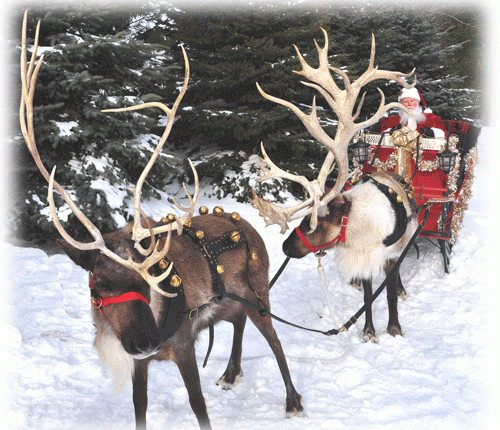
By the time our kids found Horseshoe Trail, Higginbotham had added other actors, elves, snowmen, and for several years, a bounding purple dinosaur.  The Grinch found his way to the troupe as well, but the greatest attraction of all was the herd of reindeer penned on Higginbotham’s lawn from Thanksgiving until New Year’s Day.

Reindeer wranglers allowed children to pat and feed the reindeer, advising my children that they preferred bananas to any other treat.  For years, they pulled on sweaters, mittens, and hats, then pulled a bunch of bananas into a sack before meeting the reindeer again.  They were particularly pleased to know that the reindeer liked bananas peel and all.

We moved from Huntsville to Carpinteria, California.  Local decorations there often put Santa on a surfboard or motorcycle.  We missed the reindeer.

A few years ago. John Higginbotham’s health began to fail; for several years the only decoration of the Higginbotham’s house was a simple wreath.  Today, his grandchildren keep his legacy alive by maintaining many of the displays we knew so well.  The reindeer, though, have been returned to a reindeer ranch north of Huntsville.

Last night, my daughter and I pulled on mittens and hats, boarded a bus, and set out on a tour of holiday lights in the Rogue Valley of Southern Oregon.  We walked through two neighborhoods that include willingness to participate in ambitious decoration as a condition of ownership.  The houses were similar, mini-plantation mansions nestled side-by-side, each festooned with blinking, sweeping, cascading lights.  I can’t guess at the wattage expended on a nightly basis, but I assume the neighborhoods can be seen from Mars.

The houses are certainly brightly illuminated, and I have to believe that each display costs a fortune to maintain, but within a few minutes, my daughter and I agreed that there was nothing charming in the excess of light.

We won’t return.

On the way home, however, we convinced the driver to take us by a display we had heard about in a less affluent part of the city.  It took some time to find the very ordinary neighborhood in which a man much like John Higginbotham had used his entire lawn to create a snowy landscape, a miniature village with gala groups dancing and skating, all of which was surrounded by train tracks on which five separate holiday themed trains ran in complex configurations, spouting steam and whistling.  The detail in the display was arresting.  My daughter and I stood in the cold, laughing as we caught sight of each display we had overlooked, such as the school teaching reindeer how to fly by suspending them from tall cables strung across the edge of the village.

There were no crowds lined up to see the trains; we were alone in the dark night, absorbed by the complexity of this small world.  As we prepared to leave, the owner of the house came out to make sure we had enjoyed the visit, promising to add another set of trains for next Christmas.

Of course we will return.

Both the reindeer house and the train house were authentic and charming; they were created with generous good humor and with the hope of bringing delight.  As I think of my children and the gifts they have been given, I am aware that kindness begins with caring.  The brilliant shows of light are decorative, reflecting the owners’ pride in their homes and in their ability to afford elaborate display.  Feeding reindeer bananas and putting Santa and elves on the train circling skaters on a pond – those better, funny, gentle, generous, gifts come from people who remember what it was to be a child and to encounter unexpected magic.


A Blue Christmas Becomes A Christmas Miracle

A Blue Christmas Becomes A Christmas Miracle

My Christmas wish was simple:  I wanted Jinx, our fourteen year-old dog, to hang on long enough to greet my daughter as she arrived from Massachusetts. My daughter was eleven when Jinx was born in December, on Friday the 13th.  She named Jinx and loved her wholly from the start and for the next fourteen years.  We’ve seen Jinx start to fail over the last few months.  She has been startled easily, by her food dish, by shadows, by her own paws.  She’s wandered off, increasingly deaf and now losing much of her vision.

She has been trying to play with the other dogs, but forgets where she is, bumps into them, is nettled when they upset her unsteady balance. She yips and corrects their behavior, and, as the senior dog in the pack, still has their respect, but they no longer invite her to join in their canine games.  She’s been alone outdoors more often recently; the faster, more athletic dogs have bounded away, leaving her to wonder where they have gone.

So, closing in on her final days but still gentle, sweet, and affectionate.  Over the course of the last few weeks, Jinx seemed to regain some of her former energy; she asked to have the ball thrown, ran purposefully to chase it down, then stood with one paw covering the ball, not actually retrieving but claiming victory.  We were heartened and felt certain that Jinx would hang on until our daughter flew in from Boston.

Better and better.  The temperature was dropping fast, and we had hopes of a white Christmas.  With a week to go before the holiday, our days were packed.  I did a shift as a volunteer at the Hospice Thrift Shop, finished most of my shopping, began planning the Christmas Eve dinner, and accepted invitations to concerts on Friday and Saturday night.  That was to be the end of holiday scramble; I wanted to clear the calendar so that I could give full attention to my daughter arriving on Sunday evening.

I walked from the concert hall at Southern Oregon University into the coldest night I can remember since moving here.  Compared to the frozen north, it will seem laughable, but for us, a stretch of cold weather in the low teens is plenty daunting.  I had turned off my phone, so powered back up as I began the drive home and saw that my wife had called repeatedly.

By the time I reached her, Jinx had been missing for two hours.  She has been easily disoriented and oddly off course for about a week, and last night slipped away  in a short moment as tone of the other dogs had to be tended to.  My first thought was that this fragile old lady would not survive much more time in the bitter cold; I raced home to help in the search, driving slowly with high beams as I approached our home.  I watched the road, of course, but also slowed in passing every deep culvert or dangerous ground above a creek running high this winter.

We searched through one of the coldest nights we’ve experienced here; the ground was hard with frost.  In full sunlight, I had to use a shovel to break the ice on the water trough in the meadow; the broken pieces were more than two inches thick. I drove down every nearby road, jumping out of the car to call her name and whistle.  Nothing.

My son and daughter-in-law hurried over, as did two good local friends.  They stayed out for as long as they could, combing every inch of our property and those adjacent to ours.

I went out on foot, again calling and whistling, clapping.  For several hours, I walked down every path I thought she might have taken.  I climbed down the banks of the creek, fearing she might have stumbled into coursing water.  I walked into meadows, fearing she might have been taken by a coyote or the cougar we’ve seen at the far end of the pasture.

By the time I finally gave up and came home, she had been out in the cold for five hours.  My wife and I had to face the probability that our frail dog could not have survived unless a kind stranger found her wandering on the side of the road and picked her up.  My wife posted alerts on every social media site she could find, but we began to fear a terrible and lonely end for a dog we treasured.  We were also heartbroken that our daughter would arrive only to know that we did not know how Jinx had died or what tortures she had endured.

Exhausted, we had to stop the hunt until morning.  I stepped into the room she’s claimed as her own, looked at the down comforter she’s been sleeping on for weeks, and wept.We left the kitchen door slightly open, in case she found her way home, and I slept fitfully on the couch near the door so that I could not fail to hear her should she make it home.

At first light this morning, we began again, walking up and down the same roads and across the same fields whistling and calling her name.  Still bitter cold, by mid-morning, as hope flagged,  we started to truly believe she hadn’t made it.  Our thoughts turned to the most dreadful fears of what she might have faced.

But it must have been our turn for a Christmas miracle.

The phone rang at eleven o’clock.  A caller with an area code far from our home, a volunteer working with a dog rescue agency,  insisted that someone had found Jinx.  She had fallen into a swimming pool almost a mile away, had been trapped in the pool all night.  The family had assumed that the dog barking through the night was a neighbor’s poorly behaved pet and did not go outside to check until mid-morning.  They found Jinx halfway out of the water, her front paws frozen to the cement at the edge of the pool.  The person responding had to use a hammer to chisel her paws free.

We grabbed every blanket and down jacket in the house, drove too quickly, and found our dog near-death, trembling almost unrecognizable, wide-eyed, in shock.  I don’t know if she knew us at the start; we simply bundled her and carried her to the heated car where I lay with cradled her in my arms.  As we pulled into the driveway, I told my wife that I would stay with her in the very warm car, wrapped in the very warm blankets, while she prepared a virtual sauna in one of the bathrooms.

We spent the whole day holding her..  She was able to eat and drink, wobble a bit to take care of her business outside, and sit up to greet the next admirer entering her warm tent.

I picked my daughter up that evening; she held Jinx that night.

The miracles that matter aren’t really accidents:  A stranger summons extraordinary kindness, long-overlooked gifts are finally recognized, generosity or forgiveness appears unsolicited.  Our Christmas miracle arrived because Jinx loves life too much to leave it easily.  She’s a gentle dog with a backbone of steel.

Do we deserve the loyalty and love our pets give so freely?  I’m not at all sure we do, but I know we are our best selves when we recognize their heart and make room for them in ours.

Merry Christmas!