Anyone Ready For Family Night Ethics Programming During The Pandemic?

Anyone Ready For Family Night Ethics Programming During The Pandemic?

We’re stuck for a while, and although there are many, many difficulties for those whose life has been upended, a few silver linings have shown through the tattered fabric of our days now spent at home.  Today’s silver lining has to do with the quantum jump in awareness of … everything.

My thoughts today turn back to the course I taught for several decades.  It had many names but was always directed toward ethics on the ground, practical ethics, ethical decision making.  My pitch was that life was going to be happening all around us whether we had thought about our ethical convictions or not.  In essence, the course provided practice in taking a stand.  I screened a series of films, both narratives and documentaries, each of which was intended to press as many buttons as I could identify.  In our discussions, we pushed each other to find our bottom line.  It often took heated conversation to reach the “Here I stand” conviction.

My suggestion is that instead of “Family Game Night”, you might enjoy “Family Ethical Hard Decision Night”.  I can almost certainly guarantee that there will be differences of opinion or conviction, even in families which have experienced similar circumstance of living.  Here are five films that invite discussion without any preparation on your part.  I won’t say you’ll enjoy these films; several are disquieting.  They are well crafted and worth viewing.

Return to Paradise  1998 

Vince Vaughn, Anne Hesch, and Joaquin Phoenix portray the central figures in a drama which presents an ethical dilemma played out over the course of several years and two continents. 

The heart of the matter is that Vaughn, a hedonistic opportunist, has spent a debauched holiday in Malaysia.  He is one of three men of roughly the same age sharing a beach cabana, a number of women, and pounds of hashish.  Vaughn is a clever jaded limousine driver.  His hammock sharing companions are a slick architect and a younger and idealistic naturalist on his way to Borneo to save orangutans.  Phoenix plays the naturalist as a good hearted and naive soul with whom Vaughn forms a passing friendship.  As the holiday ends, Vaughn and the architect leave behind Phoenix, a stolen bicycle, and a block of hashish. They return to New York, vaguely promising to stay in touch, but sink back into their urban lives.

After some time, Vaughn is approached by a lawyer played by Anne Hesch.  Phoenix has been arrested by those seeking the stolen bicycle, the hashish has been discovered, and the Malaysian court has decreed that Phoenix will be executed for the crimes unless the other two men return to Malaysia, accept responsibility, and join Phoenix in a prison for several years.

If the two men return, Phoenix lives.  

There are subsequent and bedeviling complications that add to the ethical distress Vaughn experiences, all of which make for lively discussion around the dinner table, or TV trays.  I found the film valuable; Kenneth Turan of the LA Times found it to be, “a lively piece of pulp not a profound exploration of of the vagaries of the human soul.” You decide which of us has it right. Take a stand, people!

The Life of David Gale

The next nomination has become even more problematic in the years since I last screened it.  Kevin Spacey plays a professor of Philosophy on Death Row.  The film presents his imprisonment and impending death through a series of flashbacks documenting the attempts by a journalist played by Kate Winslet to find the truth behind the sentence.  The film’s ostensible purpose is in questioning the death penalty, and there are a number of questionable circumstances worth discussing as the film plays out.  It is at the film’s ending, however, that my students found themselves at sea.  The director, Alan Parker, had an excellent reputation after his work with Fame, The Commitments, Midnight Express, and Mississippi Burning, but some believe that The Life of David Gale finished his career.  The reviews were not good.  Roger Ebert noted, “I am sure the filmmakers believe their film is against the death penalty.  I believe it supports it and hopes to discredit the opponents of the penalty as unprincipled fraudsters.”

That perplex is enough to keep conversation moving, but the subsequent revelations of Spacey’s sexual harassment of at least fifteen men and boys in the United States and another six in the UK essentially made Spacey entertainment poison.  He has several youtube videos in which in the character of Frank Underwood, his role on House of Cards, Spacey defends himself against the allegations. 

So,what ethical issues arise in choosing to view a film that features Spacey?  Or Roman Polanski, or Woody Allen for that matter?  Does criminality matter in one’s experience of the arts?  Does the specific sort of criminality matter?  Is the author/director/actor the work?  Does the work exist outside of the process by which it was produced?  Oh, and then the death penalty?

Not central to any discussion but fascinating/distracting is Melissa McCarthy’s portrayal of a Goth slacker giving tours of a murder house.

The Fog of War

Directed by Errol Morris with score by Philip Glass The Fog of War won the Academy Award as Best Documentary in 2003.  Subtitled Eleven Lessons from Robert S. McNamara, the film is an extended conversation with the brainiac who served the longest term as Secretary of Defense during the Kennedy and Johnson presidencies, during the escalation of the war in Vietnam.  The experience of entering into the fog in the company of McNamara, Morris, and Glass is an extraordinary complex of image, sound, and ideas.  

Any one of the eleven lessons is worth contention:

1.)Empathize with your enemy,2.) Rationality alone will not save us, 3.)There’s something beyond one’s self, 4.)Maximize efficiency, 5.)Proportionality should be a guideline in war, 6.)Get the data, 7.)Belief and seeing are both often wrong, 8.)Be prepared to reexamine your reasoning, 9.)In order to do good, you may have to engage in evil, 10.)Never say never, 11.)You can’t change human nature.

There are many moments during McNamara’s recollection of his role on the great stage in which an awakening viewer might scream “What the ….!”  Some remarkable observations are made with flat affect.  The segment carrying the observations made about maximizing efficiency resounds as the Glass soundtrack and Morris’ found footage document the extent of damage done during WWII to the civilian population of Japan, strikes that McNamara engineered for commander Curtis LeMay. McNamara himself wonders if he would have been executed as a war criminal had the outcome of the war been different, leading into his discussion of the cost/benefit calculation of dropping atomic bombs on civilians in Hiroshima and Nagasaki.

Not the jolliest of dinnertime entertainments, but once seen never forgotten.

The Baby Dance

It isn’t easy to find this film which originally aired as a Showtime film about adoption, produced by Jodie Foster, written and directed by Jane Anderson, starring Stockard Channing and Peter Riegert as a childless Jewish couple in Beverly Hills and Laura Dern and Richard Lineback as parents of four children living in squalor in a trailer outside of Shreveport, Louisiana.  The performances of Dern and Channing in this drama will forever change your estimation of them as actresses, and the quality of the script is devastating.  Yes, the film is about adoption, and surrogacy, but also about class and caste.  Virtually every aspect of this brokered “adoption at birth” is heartbreaking.

Anderson wrote the film after experiencing meeting the Paraguayan mother of the child she would adopt.  “The Baby Dance,” she said, “is the dance that these couples are doing to get a child and to give a child. It’s one of the most complex, delicate, dangerous negotiations. People are afraid of adopting because they feel there are no guarantees. You have this unknown being from people you don’t know and maybe don’t want to know. It is an act of faith to say, I will love this child.’”  It is a dance of a different sort in that it takes on the dirty little secret of poverty and wealth in America.  

“We’re still a country with enormous poverty and enormous wealth, which is half of what Baby Dance’ is about,” she said. “I was fascinated by the husband who has to give up his child because he can’t earn enough to take care of his family. The humiliation is so extreme and so awful. I have such sympathy for him. These people are all flawed and human, doing the best they can.”

The review of the film when first shown carried the title, “No Happy Ending Here”.  Lots to talk about.  The Baby Dance is available on VHS tape from Amazon.  I still have a copy.

OT: Our Town

The final film to be included in the series is a documentary directed by Scott Hamilton Kennedy chronicling the production of Thornton Wilder’s play, Our Town, by students at Dominguez High School in Compton, California.  Dominguez High School is an athletic powerhouse in Southern California, known for its football and basketball teams and for its marching band.  It’s a tough school in a very tough neighborhood.  An odd group of ill prepared but ambitious students show up to put on the school’s first dramatic production, Our Town as adapted by the teacher/directors Catherine Borek and Karen Green to reflect the immediacy of the life lived in their students’ town, Compton.  Gunshots ring out on the streets outside the high school during tech rehearsals, but they are met with calm acceptance by teachers and students working in conditions that do not promise much in the way of theatrical sophistication.  

And the production is not sophisticated.  But it is powerful.  Wilder’s play asked some big questions and the staging of the play was unorthodox in its time.  This version presents all those questions and many more as we witness a production that should keep conversation going for a few more housebound hours.

Warrior Nun

Warrior Nun

As a younger human I thought I ought to become a film critic, being perspicacious and all, but I apparently would have been obliged to deal with the minutia of filmmaking, such as plot, dialogue, and visual effects, which I knew were of interest to many students of film, but just didn’t rev my engine, you know? 

My keen critical faculties have remained keen, however, so it occurs to me that in this extended home stay, viewers who have been lumping along taking whatever Netflix or Prime or Hulu put out front might be helped in some small way by my hard scrabble media prospecting.  We (humans) are not all amused by the same sorts of diversions, but you’d have to be a pretty sour apple not to get a kick out of the show I’m touting.

Pretty sour apple.  I’m just saying.

I like to think of how shows are pitched to production companies before the first scripts are written or the shows cast.  Some are obvious.  The Castaway?  It’s about a castaway.  The Fast and the Furious?  Two compelling elements right there.   Speed and anger.  Irresistible, right?  Casablanca?  We know where we’re going.  Spider Man?   You get it.

Eternal Sunshine of the Spotless Mind? How did that film even get made?  I mean, come on!  What’s the pitch?  I know what they said- “It’s a nonlinear narrative to explore the nature of memory and romantic love.”  And …?   

“Brevity is the soul of wit” says one of Shakespeare’s biggest windbags, so compare Sunshine of the whatever with this piece of pith that speaks volumes in only two words:

Warrior Nun.

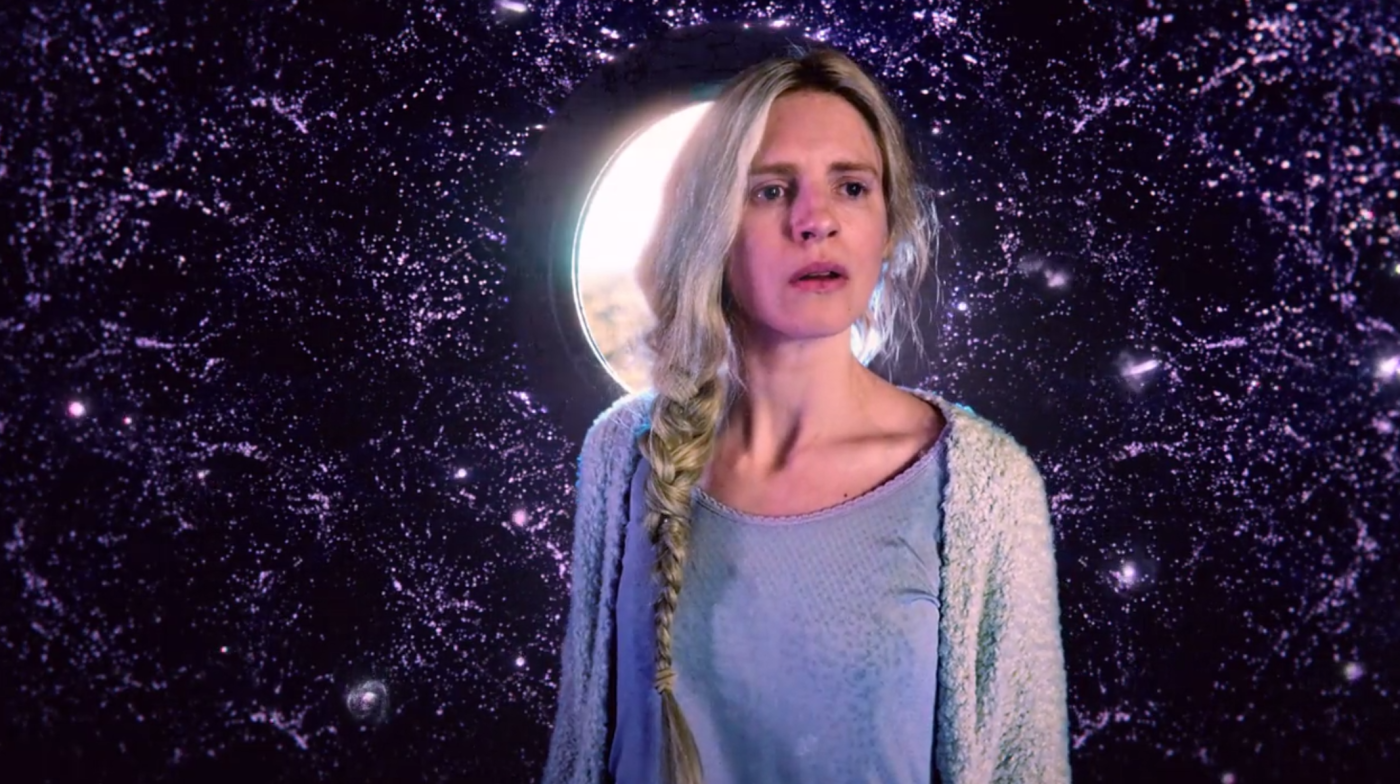
Ok, so, here we go.  You like Buffy the Vampire Slayer and The Sound of Music?  Take a pew and grab a spear, heat up Netflix, and open Warrior Nun, which, as I’m sure the original pitch emphasised, is ironic, as the central character is not a nun and doesn’t want to be a warrior.  There are actual (in the show) warrior nuns it turns out, but the lead is, as the pitch had to explain, a dead quadripeligic whose corpse is animated by the infusion of a halo donated by an angel sympathetic to the plight of nuns trying to muscle their way past the demons clogging the hallways of their sanctuaries.  

Yes, dead quadripeligic.  Wait, even better.  Coulda …mighta … been killed by a … nun!

The production value is excellent; the show is shot on location in Andalusia, Spain and looks very spiffy.  There are good nuns and bad nuns, so no matter how you feel about nuns, your needs will be met.  The dialogue works, the plot is as wonky as you would expect from the premise already mentioned, and the actors perfectly fine in a Divergent/Allegiant/Insurgent late teen rom/bomb kind of way.  The demons?  Meh.  But you said you liked Buffy, so …

Ok, it’s not Sound of Music.   That part, charming harmony, etc, is notably not present, although I’d give a lot to see a warrior nun break into song as she disembowels a demon, assuming that the midsection where demons seem to take most of their punishment is roughly the bowels.  Others know much more about demons than I do, so I’ll leave it to my loyal followers to sign in on that and other questions having to do with demons … or bowels.

There is a soundtrack, of course, leading to a conversation I am not equipped to facilitate.  There are a few shows out there at the moment that seem to default to pan-cultural, multi genre, generally quasi dreamstate performances.  I said I ‘m not the guy to parse this, but the three shows currently presenting fierce women warriors, Warrior Nun, Hanna, and Killing Eve for example feature music that works in terms of setting mood and place but which is vapor when I try to bring it back to mind.  The lineup of artists is currently not on my playlist, but are obviously popular, or at least respected, elsewhere.

Here goes:

Billie Eilish, Steve Z, Noia, Extreme Music, Vinyl Pinups, Night Panda, Message to Bears, Lykke Li, Patofonika, Yeah Yeah Yeahs, Self Esteem, Bishop Briggs, Unloved, Fireflies, Archie Bronson Outfit, Phoria, Liz Lawrence, Unloved … and many, many more.

A few more seasons of Warrior Nun and the others should broaden my musical tastes, but even while puzzled by what I hear, I remain fascinated by what I see.

Grab some chips and a cold soda, claim your space on the couch, and settle in to watch the three female warriors do what they do best.

That’s Funny?

That’s Funny?

I have no idea how the book arrived or how it happened to find its place of honor at the top of the pile of books to be read as soon as the manuscript I’d been working on had been sent out to publishers and agents in order to receive the traditional and entirely expected silent treatment.  The last proof finally read, the format finally corrected, the cover designed, the time had come to take a book from the pile, a leap of faith too long postponed.  I “read” two or three books a week, generally listening to one and calling the others up on my e-reader.  The pile contains actual hardbound and paperback books, for the most part books that are not newly published or currently admired.  Some are books I’ve meant to read, some books I look forward to reading again, and some, like the book I have just finished, wander in without invitation, hogging access to the many books I’ve been aching to read.

The title of the book is More Chucklebait: Funny Stories for Everyone.  Edited by Margaret C. Scoggins and published by Alfred A. Knopf under the impression of Borzoi Books in 1949, this copy of More Chucklebait is in good condition and features illustrations by Saul Steinberg.  One assumes that Chucklebait: Funny Stories for Everyone, the first collection, was so warmly received that Knopf contacted Ms. Scoggins begging for yet another collection of funny stories for everyone.  The pages of the New York Times sang out with glee when this collection appeared, unreservedly extolling Ms. Scoggins’ collection.  “There is no finer gift than laughter and Margaret Scoggins has given generously of it!”

According to Alice Fedder’s review, this collection is even more generous than the first, presenting twenty-two stories ostensibly baiting us into helpless chuckling whereas the first book offered only twenty.  Ms. Fedder also notes that although the book is primarily intended for teenagers, the book is “for all who are young in spirit.”

So many questions and a few reflections.

I was a teenager who combed library shelves looking for books that offered humorous stories.  I read James Thurber, Robert Benchley, PG Wodehouse, O. Henry, Mark Twain, Ring Lardner, Max Shulman, and Jack Douglas, whose two collections, Never Trust a Naked Bus Driver and My Brother Was an Only Child were, with Bob Newhart or Shelly Berman’s routines and Spike Jones in Stereo’s send up of horror movies, the unfortunate and permanent influences on my own sense of humor.  OK, throw in MAD Magazine and The Pirates of Penzance, a combo too rarely acknowledged as formative experiences.

The which is to say, despite the inclusion of stories that raised nary a chuckle in my youth or in this reading, Ms. Scoggins’ collection has merit, particularly in the inclusion of Charles Dickens and Jane Austen, whose voices I could not properly appreciate until I had moved past Spike Jones.  I’ve written elsewhere of Colin Firth’s role in restoring Pride and Prejudice to its proper place as a novel to treasure (his wet shirt moment was a show stopper in 1995!), but even the toughest case in my lit classes understood that Mr. Collins’ proposal to Lizzy Bennet is a masterpiece of comic prose.  Similarly, both Nicholas Nickleby and The Pickwick Papers make me giddy with delight.  So much more than chucklebait!

So, the question of chuckling now becomes necessary.  I can’t remember my last chuckle, and it is in that statement that the nature of chuckling is made clear.  Recorded laugh tracks chuckle, sit coms elicit an occasional chuckle, a viral meme summons a wisp of chuckle.  


Humor is a slippery thing in the best of circumstances, and I would contend that we are not living in the best of circumstances.  Roaring laughter is less common in our household these days; even the lowly chuckle is hardly heard.  My three children with three separate senses of humor can make me weep with laughter, but we are separated in this pandemic and so have to make do with virtual humor.

Even in the  most trying of times, Humor 101, however, consistently points to three scientifically observed sources of humor: Incongruity, superiority, and relief.  Carrying clipboards and wearing lab coats, these pundits reduce all laughter to these three states, none of which strike me as likely to elicit even a chuckle.  We expect one outcome, another arrives, zut alors, we laugh.  You are stupid;  I am not.  We laugh.  Children are trapped in a burning automobile, one of them farts, we laugh.  Or so, science would have it.  

I should quickly note that I found this parsing of humor in the same article that explained why we can’t tickle ourselves.  Stick with me here because theory busting is dangerous work, just ask Galileo.  Resolutely ignoring my concern that scientists are working on this question rather than finding the vaccine I need to enter the world again, I’m immediately pulled into what seems the obvious flaw in the same scientist’s opus on humor.  We can’t tickle ourselves, this theory contends, because laughter elicited by tickling depends upon two key elements – surprise and tension.  

Fella in a hockey mask holding a chain saw jumps out from my closet.  No lack of surprise and tension there, and yet, somehow, I am not tickled.  The mask is a Mickey Mouse mask, and thus incongruous.  Not laughing.  I see that the electric cord from the chain saw is not plugged in.  Not too swift, pal. Still not laughing.  Finally, the saw wielding closet leaper reveals herself to be my girlfriend, just kidding around.  Yoks galore?  Not so much.

Ms. Scoggins is far more brave than I.  No way would I announce that the work I produce is funny.  It is funny, but nothing is less likely to allow a reader to find it funny than to be told it’s funny.  An author can get away with describing work as terrifying or romantic.  “You’ll love this book.  It’s really scary.”  Yes, there are expectations in working with a genre, but readers generally withhold judgment until they’ve spent some time with the book.  A book that’s touted as “funny” better have the reader on the floor by page two or all is lost.

I’ll close with a quotation from Mr. Popper Gets a Penguin, the final story in Ms. Scoggins’ anthology.  “Ork, said the penguin.  Or perhaps it was the service man.”  

Next Generation Ultra Quirky Guide to Binging in Quarantine

Next Generation Ultra Quirky Guide to Binging in Quarantine

In a recent interview, an expert on choice warned that although we demand an unlimited array of choices in every sector of our existence, wading through them all can be exhausting.  Just to put that into perspective, it would take eight months of non-stop viewing to watch everything NEW on Netflix this year, which may sound like an appropriate challenge to some, and if so, go for it, but for the rest of us, some parameters of choice are helpful.

Lots of binging advice is out there, and those recommendations are useful for the most part, but they tend to coalesce around generally fairly widely viewed options.  This guide opens doors which have been opened less frequently with the expectation that some will cause the reader to tingle in anticipation and some to shudder.

I Like Sketch Comedy, But I’d Rather Not Have The Horrible Reality of My Life Today Thrown In My Face Again This Week      

SCTV

A tribute to SCTV, the Canadian comedy universe that aired from 1976 to 1984 will be airing on Netflix in May.  Directed by Martin Scorsese, 

the collection of clips and interviews with cast members can only whet the appetite for the sustained comedic genius of Toronto’s Second City actors, including John Candy, Martin Short, Eugene Levy, Andrea Martin, and Joe Flaherty (pictured here) as well as the “Hoser” humor of “The Great White North” featuring Rick Moranis and Dave Thomas.

Jimmy Kimmell hosts and an appreciative audience responds to the clips and commentary, but, folks, this is only the gateway enticement to a world that defies description.  

For the Comedy Iconoclasts of 'SCTV,' a Joyful Reunion Tinged With ...

The photo above includes Martin Short’s character, Ed Grimley, later teleported to SNL, but the episodes of particular note begin with SCTV’s Monster Chiller Horror Theater, hosted by Joe Flaherty’s Count Floyd.  Those who have not seen John Candy at the top of his game as Doctor Tongue ought to watch the entire run of Monster Chiller Horror Theater.  A quick jog through the titles only hints at the treasures that await:

Dr. Tongue’s Evil House of Wax, Dr. Tongue’s 3D House of Cats, Death Motel, Dr. Tongue’s 3D House of Stewardesses, Slinky – The Toy From Hell, Dr. Tongue’s 3D House of Beef, Blood Sucking Monkeys, The Making of 3D Stake From The Heart, Dr. Tongue’s Evil House of Pancakes, 3D House of Slavechicks

Your Best Bet:  Monster Chiller Horror Theater: The House of Cats, in which Dr. Tongue turns women into cats, also in which Dr. Tongue perfects the 3D experience  by moving closer or farther away.

I Really Like The Mind Bending Shows That Warm The Heart But The Next Season Of Russian Doll Hasn’t Appeared Yet … Oh … And It Could Be Set In Toronto, That’s OK, Even If This List Turns Out To Be Pretty Canadian

BEING ERICA

Being Erica – totally Toronto, and if you are ok with therapeutic time travel a pretty nifty way to combine second chance do-overs with tangling up fate, the present, the past, and dating.  

Erin Kapluk plays Erica Strange, seated here on a couch with her therapist known as Dr. Tom, played by Michael Riley.  

Erica is a moderate mess, 32 years old and overqualified for the lousy job from which she is fired in the first episode.  So far, so what, but as she has a nut allergy, the plot thickens when she drinks a cup of hazelnut coffee, ordinarily NOT the magical whatsit that carries an adventure off to Fillory, Narnia, or Oz.  In Erica’s case, screwed up personal life, professional life, family life have all been sparking like thunderclouds waiting for Erica to be hospitalized where an uninvited counselor, Dr. Tom hears an account of her dilemmas and offers to help.  When she finally hits bottom and crawls into Dr. Tom’s office, he asks her to list a lifetime of regrets.  He picks the 1992 Fall Formal as her first time trip, allowing her to return to the humiliation of having gone full-vomit after binge drinking in high school, losing her boyfriend and beginning the slide of shame from which she has not recovered. We and Erica assume she’s just going to make a few good decisions, erase the legacy of shame, and return to a world in which the unsullied Erica might have thrived.  It will come as no surprise that time travel doesn’t work that way. The lessons she (and we) learn are more complicated.

 Hey, These Canadian Shows Sound Pretty Great, Eh?  Got Any More?

SLINGS AND ARROWS

Bunches of them, but the next option offers the rare opportunity to combine the occasionally venal, always absorbing life behind the scenes ala Waiting For Guffman with some surprisingly 

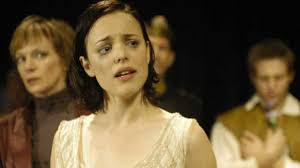
effective performances of  Hamlet, Romeo and Juliet, Macbeth, and King Lear.  Rachel McAdams (left) is the ingenue in the first season, replaced in the second and third by Joanne Kelly.  

Mark McKinney of Kids In The Hall, playwright and actress Susan Coyne, and Comedian Bob Martin created this excruciatingly wonderful account of three seasons in the life of the New Burbage Festival, a down-at-the-heels Shakespearean repertory company.  The cast of characters includes every sort of theatrical type, exercises in boundless egotism, directorial choices that defy description (A Romeo and Juliet in which the actors do not touch), and a fumbling executive director who fancies himself a musical comedy star.  Three wonderful seasons.

I Like British Humor, But British Situation Comedies Are As Lame As The American Versions

TASKMASTER

For sheer amplitude of wit, almost certainly obscene, the panel shows – Eight Out Of Ten Cats, Eight Out Of Ten Cats Does Countdown, The Big Fat Quiz Of The Year, Would I Lie To You – cannot be matched.

Taskmaster, described as “Clever and Stupid in Equal Measure” is a game show of sorts.  Host Greg Davis (Seated on throne) and flat-affected adjudicator Alex Horne, the show’s creator (Taking punishment on right) set tasks that comedians must complete in order to win the game/season/nothing?  The completion of tasks often strains credulity as in “Do something that looks impressive in an hour” which yielded Romesh Ronganathan’s short film classic “Tree Wizard”.  Other tasks (Knock all the rubber ducks to the ground) was widely hailed as “Stupid, stupid fun”

And what more can we ask of fine television after all?

If I hear Dick Wolf’s “Dun Dun” sound effect one more time, I will personally carry out a crime to be solved on Law and Order, but I like gritty police procedurals.

NO OFFENSE

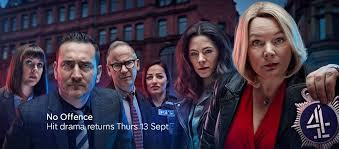
OMG, nothing like this anywhere on American television.  Turn on the captions as this procedural is set in Manchester, and for all I know, the accents are accurate, certainly indecipherable at times.There are a number of extraordinary qualities to the show, the first of which is the indelible cast of characters, many of whom are pictured here.  Detective Inspector (DI) Vivienne Deering (Holding the badge above) runs a division of the Manchester Metropolitan Police with blunt (more than occasionally obscene) tough love and good humor.  She and the several female detectives that make up this force are clever, tough, kind, and eminently competent.  This is definitely NOT a jiggle and bend Bay Watch company of kewpie dolls.  Imagine buddy cops who are smart, complicated, and completely developed characters.  The men on the show are as compelling, including a forensic specialist who may be among the most curiously effective odd characters to hoist a corpse.  Each season presents a complex of criminal and personal activity resolved for the most part by the season’s end, although as is true of the best of series procedurals, actions in one season have consequences in the next.

You said before that too many choices makes our heads hurt.  SO, Is that it?

HALT AND CATCH FIRE – THE COMPUTER REVOLUTION PICKS UP IN SEASON TWO

WIRE IN THE BLOOD – CRIMINAL PROFILING

THE OA – STILL AROUND – DIVE INTO SEASON TWO

PEEP SHOW – IF YOU’RE EAGER FOR MORE BRITISH HUMOR

BETTER OFF TED – YOU MISSED IT?  REALLY?

March 20, 2020: Twenty Things I Did Not Worry About Today

March 20, 2020:              Twenty Things I Did Not Worry About Today

  1.  Washing my car
  2.  Losing weight
  3. Remembering the name of that guy at the gym
  4. Renting the equipment to sand the deck down to bare wood
  5. Avoiding kids and moms selling Girl Scout Cookies
  6. Making sure there’s no dog hair on my sweater
  7. Avoiding Cadbury mini chocolate Easter eggs
  8. Being stuck behind the person who smells like sausage and sage in line at Safeway
  9. Music Award Shows
  10. Getting my bracket ready for March Madness
  11. Getting tickets on line for reclining seats at the movie theater – not too close to the screen
  12. Losing my car keys
  13. Losing my wallet
  14. Finding stations to listen to diurng the NPR Fund Drive
  15. Returning the call from the dentist’s office
  16. Making reservations for a cruise
  17. Wondering when Steph and Klay might both be healthy
  18. The state primaries
  19. Returning overdue library books
  20. The Royals, aliens, celebrity breakups – gossip papers and magazines at the checkout counter

Democrat’s Hoax Inconveniences millions in China, Iran, Italy, and South Korea

Democrat’s Hoax Inconveniences millions in China, Iran, Italy, and South Korea

There’s nothing funny about absurdity that puts lives at risk, but satire is the only response some of us have left.  

We are all at risk, of course, most notably those over the age of 50, but given the disservice partisan denial does to those who are told to discount the certainty of viral infection, the subgroup most at risk may be Republicans over the age of 50.  

Fox news and other right wing pundits have downplayed the risk of the novel coronavirus, explaining to viewers and readers that the pandemic panic is yet another ploy on the part of the left to attack the presidency of Donald Trump.  Fox host Sean Hannity observed that the current concern about novel coronavirus was, “Like they’re (Democrats) hoping Americans get sick and die and that we’ll all lose a fortune in the stock market because of the jittery stock market.”

Wow!

After the President’s disturbingly underwhelming press conference was cooly received by those who are concerned about the spread of the virus in the United States, Hannity put it this way:

““All the same people who have done the same thing for three straight years. … Russia, Russia. Ukraine, Ukraine. And impeach, impeach. Now, corona, corona.”

He’s not wrong that those issues have been and are being raised by the same people, those issues being attached to perceived assaults on the Constitution, but the tenacity with which Hannity and others make global pandemic a partisan issue is confounding.  Apparently, there is efficacy in playing fast and loose with the truth in order to gain and keep power, and people only know what they are allowed to know, but …. an observable world does exist outside of Fox world, and one would think, well … one would think.

Ainsley Earhardt on Fox and Friends encouraged travel right now.  Apparently it’s not only safe to fly; now is THE safest time to fly.  Why? “Everyone I know (sic) that’s flying right now. (sic) terminals are pretty much dead.”

Uh huh.

One would think.

As has been true since the start of his term, the president’s relentless egoism and self-interest has been enabled by a Senate majority that has abdicated moral authority.  Vice President Pence’s gushing testimonial to the president’s leadership provided an Alice in Wonderland upside down window into the attitudes of the coalition of yes men and women standing in El Jefe’s shadow, but the impeachment process which offered Senators the opportunity to consider the president’s vow to support and defend the Constitution revealed the reality of partisan politics.

Today’s reality, however is not about politics.  It’s about all of us. Today our hearts might be with the sons and daughters of parents languishing in nursing homes and critical care facilities.  As reported by CNN, yesterday’s declaration of National Emergency a change in guidelines for nursing homes and long-term care facilities from the CDC. 

“The guidelines now urge facilities to restrict all visitations except for “certain compassionate care situations, such as end of life situations.”

“She said she woke up crying this morning,” Bridget Parkhill said, whose mother is in the Life Care Center in Kirkland, Washington. The center has been linked to 25 coronavirus cases, according to the Associated Press.

Parkhill and her sister, Carmen Gray, sat outside their mother’s window with a picnic, trying to soothe her on the phone. They say their mother came to the center for rehab from a knee replacement and ended up getting coronavirus.

Parkhill says the process has been horrible and both sisters try their best not to show their mother the dread they feel.”

The dread we feel.

Good News! If You Have Symptoms, You May Be Able To Wait For Testing

Good News!  If You Have Symptoms, You May Be Able To Wait For Testing

Good News!  If You Have Symptoms, You May Be Able To Wait For Testing!

What do the NFL, the NBA, Broadway, the Pope, and the Disney Corporation understand about this pandemic that the Trump team has yet to figure out?  

Only moments ago, the president of the United States declared what he called a National Emergency, as he put it, “Two very big words.”  Apparently that declaration arrives even as he contends that “we are in very strong shape.” Disregarding the best advice of every practicing physician, clinical care giver, and ordinary informed citizen, he then shook hands with the ranks of corporate chiefs flanking him in this celebration of the union of government and business.  The declaration was buttressed by the insight that the president had memorised the Stafford Act which allocates funds to states and localities in times of emergency.  

I, like Will Ferrell as Mugatu, feel like I’m taking crazy pills.  For example, I’m pretty sure I heard the President offer this opinion two days ago:

“The vast majority of Americans (sic): The risk is very, very low.  Young and healthy people can expect to recover fully and quickly if they should get the virus.  The highest risk is for elderly population with underlying health conditions. The elderly population must be very, very careful.”

Careful to …?  Come on, we’re elderly.  Throw us a bone. What’s the drill?

Ah, cover our mouths when we sneeze and stay away from people with symptoms.  Oh, and wash hands.  

The clear message from the assorted sycophants was that most people don’t need to be tested, this will pass, and that should people get sick, the new rules will allow doctors from another state to jump in to help.  Oh, and wash your hands.

In a press conference that went right past self-congratulatory to celebration, the president’s coterie thanked him effusively for his far sighted leadership in avoiding a health disaster in the United States.  Recalling yet another high point in unfortunate prognostication, the phrase “Mission Accomplished” comes to mind.  

Dr. Fauci, who also endorses hand washing, declared that the administration was, “proactive, leaning forward, trying to stay ahead of the curve.”  Unfortunately, both he and the president seemed somewhat confused about what had brought the downsizing of the Directorate for Global Health Security and Biodefense, often known as the pandemic office.  “I didn’t do it,” the president reminded the press, also clearly advising them that he was not responsible for the lag time in making test kits available. His words will ring through the annals of time.  “I don’t take responsibility at all,” a bold assertion for any head of state to offer a nation in crisis.

And even more good news:  We got a great deal on oil.  Apparently we are now “energy independent” which will be good news for all those flights, cruises, and auto trips … oh … wait.

Apocalypse Watch 2020 is getting tricky.  On one hand, the former governor of Alaska and former vice presidential candidate appeared on The Masked Singer as a bear rapping Baby Got Back, which, I gotta say, drove the dial pretty deep.  On the other, the unleashing of the full power of the federal government and the business partners in emergency response was displayed by Dr. Deborah Birx holding what appeared to be a Science Fair’s C minus poster upon which the path to testing was presented.

Actually, the poster was not really necessary, as the president’s opinion is that, “We don’t want people to take a test if we feel they shouldn’t be doing it and we don’t want everyone running out and taking(sic),  Only if you have certain symptoms.”

Ah Hah!  And it is this directive that brings Google into the picture.  The president seems to believe that Google has 1700 engineers working on a website as he spoke, a website that would allow virtual triage, probably in place by Sunday night.  Yesterday, Sundar Pichai, the Chief Executive Officer of Alphabet sent an email to employees advising them that Google is working on testing, also asking for volunteers to work on that task.  It seems that the president’s description may have been premature as Google immediately sent out a statement that the work was in the very early stages.

We can expect the Google product to match Dr. Birx’s poster, but it too essentially asks the responder to respond if symptomatic. A “YES” allows the subject then to begin the process of seeking testing, which we are lead to believe, will take place in a Walmart parking lot.

Tough choice as I post this piece.  Picture of the Birx poster or of Sarah Palin in a bear costume?  Pretty much a toss up when it comes to meaningful response to a pandemic already very much here.

Free Bacon For Life

Free Bacon For Life

Just scrolling around, reading urgent nation-threatening stories from the Washington Post when the article on NATO was interrupted by a quarter page picture of bacon, the announcement, “Free Bacon For Life”, and the invitation to do whatever would happen were I to actually cick on the banner.

I don’t eat bacon or anything taken from or derived from mammals, observing that when I look in my dogs’ eyes, I see someone in there. The which is actually beside the point, as even if I were able to justify eating a slice of pig, one of the most intelligent of mammals, I’d really only need so much. And, there’s something about being attached to an endless supply of bacon for a lifetime that strikes me as oppressive.

“Honey, the bacon truck is here. Did you hose down the bacon vat?”

Once upon a time in a kingdom far, far away, I did enter an All-You-Care-To-Eat establishment, let’s call it The Captain’s Trough, a spacious establishment with the aforementioned trough running the length of the building. There are many issues at play in considering a dining option that promotes itself as a tribute to gluttony, the most unexpected of which is the mechanism by which the “food” is replenished. I’ll return to the actual “menu” and the actual “diners”, but it was in observing the teams assigned to the replenishment of the various tubs that I understood the scale of operations such as these. The runners (and they were moving!) sped from the kitchen to the groaning board pushing carts laden with comestibles defying description. Mashed potatoes, boiled cauliflower, sticky rice, Clamlike-chowder, the mixed vegetable medley, the lamb curry, the chicken curry, the gravy – all indistinguishable. Good news! The Pork entrees (B-B-Que Pork, Pork Choplets, The Ginger Pork, Chinese spareribs, and ham) were all fire engine red. Easy to spot. The chicken entrees, similarly color coded, were chartreuse, the beef dishes a coffee brown.

Once off-loaded, the steaming trays were quickly emptied then filled again. Did the same patrons return more than once, I wondered? Indeed they did. And again. Here too, my attention was hijacked by the same eager crew hit the tables, scooping up dishes as they emptied, clearing space, not allowing the feeders diners to rush the trough with plates dripping with the remains of the previous foray. The diners stood, the crew swept in, clearing and wiping, preparing the table for the next round.

I ought to find an illustrative photo to accompany this piece as words alone cannot convey the distance between recognizable and familiar protein and the approximation sitting in their approximated sauces. Some came closer as they were bound to a bone of some sort, but even I, no student of chicken anatomy, knew these bones were of a different species.

The trough, as I suggest, was unguarded, as was the chocolate fountain and the dessert bar, but drink were charged separately, and the establishment’s signature yeast rolls were parcelled out with a keen eye on each tray. The replenshing crew feigned ignorance when asked for another basket. “Huh! Rolls? I’ll ask in the kitchen.” This subterfuge raised a question that ought to have come to mind much earlier. “If the cost of providing rolls is a limiting factor in generating profit, how inexpensively has this chicken broccoli surprise been tossed together?”

Best not to ask the unanswerable question.

To return to the provocation of this reflection, I do wonder exactly how this Bacon-For-Life thing works, and thus the quandry. In order to find out what this offer actually entails, I have to click on the banner, and with that action a chain of events is launched, immediately out of my control. Not only do I place myself on the this-guy-is-nuts-about-bacon data base, I am tagged forever as a consumer eager to buy and buy again, as long as the product is offered in bulk … and for a lifetime.

Some things are best left to conjecture. The mind wanders through a labyrinth of untended thoughts, now tinged with the aroma of soggy bacon.

Another good day.

What’s In A Name?

What’s In A Name?

For a brief moment, before my wife snapped me back to reality, I thought it might be a great advantage to name our newly born son “Senator” or “General”, figuring most people don’t pay close attention to much beyond the name, so what the heck, why not start at the top? As I have said with regret on numerous occasions, “seemed like a good idea”, and yet, so not.

As my first thought is almost always entirely off base, cheerfully acknowledging my questionable judgement, I surrendered. Not one to let a challenge slip away, however, I have been keeping track of equally presumptuous names over the course of the last thirty years or so and now offer my observation that in the sports world, some names are strikingly more predictive than others.

The world of sports is wide and filled with wonderfully evocative names. Let’s cut to the chase (we’ll return to that name before we’re done) and begin by assuming that some of the most striking names were received rather than given. Did Mother Berra look at a squalling child and say, “That’s my little Yogi?” Probably not. Similarly, we can be assured that Rabbit Maranvill, Dizzy Dean, and Hacksaw Reynolds did not spring from the womb with the names by which they came to be known. More contrived nicknames such as Darrell “Dr. Dunkenstein” Griffith and Charlie “Piano Legs” Hickman arrive on a yearly basis, but my interest is in the actual given names that seem to predict a particular sort of career in sport, in football to be precise, and as quarterback to be particular.

Let us return to Chase, shall we, a name that demands superior athletic ability; pity the sluggard named Chase. What hope has he if not at the deep end of the athletic pool. Yes, a banker named Chase could probably skim by, but your attorney? Your masseur? Your psychic? No, Chase is an athlete’s name, and widely applicable across several sports. Baseball has a few Chases (Utley, Headley, Whitley and, in a stunning departure from the “ley” tag, Anderson and Wright), football (Daniel, Blackburn, Coffman); boxing and wrestling (Stevens, Beebe, Tatum) and auto racing (Elliott, Austin) have their share. Chase is fairly evenly distributed across several sports and, in an odd crossover, seems to be ok for Country musicians as well. Not neutral; the stakes are still high for anyone walking around as “Chase”, but there is some range of opportunity. Less obviously annointed athletes, such as the McCaffreys, Christian and Dylan, could be running backs, point guards, folk singers, or corporate executives.

You name a kid “Colt”, however, or “Troy”, or “Peyton”, or “Brett”, or “Cam”, or “Ty”, or “Kellen”, or “Carson”, or “Landry”, or “Kirk”, or “Gage”, or “Cole”, or “Shea”, or “Bryce”, or “Brock”, and the world will expect that kid to be calling a snap count in his sleep before the first day of school. These are not interior linemen; these are quarterbacks. Of course there are quarterbacks of some quality who have climbed to the top with ordinary, more pedestrian names. “Tom” has done well. “Aaron” and “Matt”, “Russell”, “Philip”, “Patrick”, all earn a hefty paycheck, but they could as easily have ended up as running backs, wide receivers, or even grunts digging their paws into the turf at the line of scrimmage.

“Shea” is not a hard-nosed brawling tackle with a penchant for grabbing runners by their nether bits. “Colt” isn’t spitting teeth while jamming his knuckles into kidneys and ribs.

Another obvious difference between quarterbacks and the rest of the universe, I am shallow enough to admit, is that quarterbacks with a few notable exceptions, are handsome. Other positions have a claim on good looks as well; J.J. Watt is a god, Clay Matthews does Thor, Reggie Bush looks great on the field and off, but … most of the shakiest of Division I or II quarterbacks and almost any NFL quarterback is posterchild material.

Let’s just do the not-Tom Brady – not Aaron Rogers – not Russell Wilson quarterback sweep and see what turns up.

Mat Leinart? Come on! Jesse Palmer? Whoah! Case Keenum? Teddy Bridgewater? Nick Mullens? Ryan Tannehill? Drew Lock? Brett Hundley? Matt Barkley? Chase Daniel? A.J. McCarron? Blake Bortels?

I was on a roll there, and then … alright, there are some goofy looking quarterbacks as well. I have to admit that after watching this season’s Hard Knocks, Mike Glennon’s improbably long neck remains an uncomfortable memory. Similarly, Ryan Fitzgerald’s beard is off-putting; just too much. Josh Rosen deserves a better deal that he’s had with the Dolphins, but, ok, maybe not a poster. There’s something about Trevor Siemian’s eyes. Too close together? Moving in opposite directions? On the Trevor track, Trevor Lawrence? Am I the only one to see an Afghan hound?

Look, I’m a balding short guy with no chiselled features and a decidedly uninspiring midsection; I have no room to cavil. At least, and perhaps this is the weakest of defences, I am not matriculating down the field as a Chip, Chase, or Colt.

That would be a lot to live up to, and I suspect my wife’s excellent instinct has saved our children considerable grief. Good thing I can’t name my grandkids.

Grandma’s Mike Drop

Grandma’s Mike Drop

My son recently returned from a happy reunion with good friends. They’d gathered to celebrate the marriage of a college pal whose family threw themselves into celebration with great abandon. Families are tricky under any circumstance and downright dangerous when the spirits rise. A relatively jolly round of toasting had warmed the room when the groom’s grandmother grabbed the microphone and annonced:

“The time has come for me to rank the grandchildren.”

The plug was pulled, the amp cooled, and most of the audience was spared grandma’s itemized assessment of an entire generation. She went on at length, with brio, but without amplification. One or two tender shoots may have been bruised, but most of her spawn were spared.

Awkward? Certainly. Worst ever? Probably not.

Toasts are almost guaranteed to bring acute embarassment and lingering regret. The Best Man stands and raises a glass to the groom and a former girl friend, the Father of the Bride describes her toilet training, a friend tries to make a profound connection between favorite food (hot dog) and husband to be -“He’ll be the hot dog you swallow now.”

Cringeworthy.

Fear of public speaking is endemic, and a spur-of-the-moment toasting raises the stakes for anyone not comfortable ad-libbing in front of a crowd. On the other hand, some of the most carefully prepared toasts can miss the mark every bit as grotesquely.

“60% of marriages end in divorce, and in the rest you get to live happliy until death.” Glasses raised. “”Here’s hoping you die.”

I’m old enough to have heard my share of mangled speeches welcoming new employees to the team, one of which went south immediately and sank more emphatically with every effort to recover some slight vestige of dignity. The speaker, a man of about sixty-five, hoped to introduce a new employee who had been a childhood friend of his daughter.

“Here’s Leslie” would have sufficed, but, no, the impulse to get personal could not be squelshed.

“I remember when Leslie used to come over to our house, a cute kid with braces and a pony tail. She was more developed than Emily who was jealous of her figure…”

This aside was intended to prepare the audience for an appreciation of Leslie’s mature judgement and precocious ability as a manager, but slid sideways from the start.

“Boys were crazy about Leslie, surrounded her in droves, but she managed to beat them off without hurting their feelings.”

He must have been aware of the sudden shocked silence in the room. He reddened and tried to recover.

“I mean with a stick or club.”

Nice try.

“Not hurt them, you know. She’s always had a great touch …”

By this time, Leslie had left the room, his wife and daughter were seething, and the event was permanently scarred.

I’ve made more than my own share of bungled announcements, almost all of which were delivered in earnest and all of which backfired even as I spoke. Intending to thank the chair of the school’s prom committee, a school mother named Hickey Bitsy. I’m pretty sure I called her “Titsie”. I’m still blushing. Later, also in school setting, I tried to call returning students to a higher purpose: “Don’t hold back. Let a Math teacher share his fascination with Math with you, let an English teacher carry you into books that can change your life, let a language teacher French you …”

Just shoot me.

Actually, looking back on a career and life filed with things I most profoundly wish I hadn’t said, ranking grandkids seems relatively benign. I am determined to keep my feet out of my mouth, but I may need a designated interrupter on hand at all times to prevent me from digging yet another trench from which there is no escape.